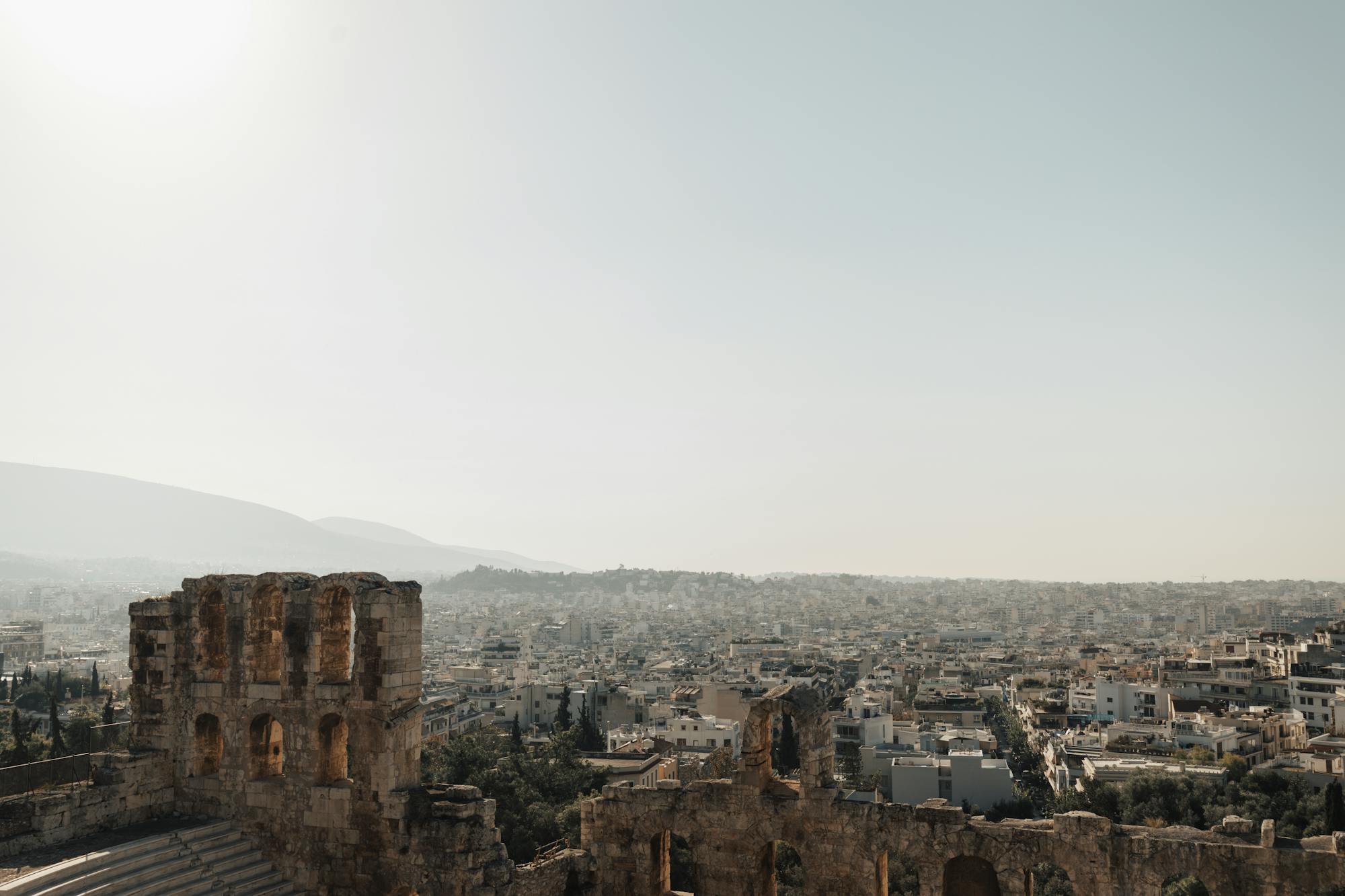
The Parthenon at dawn, Monastiraki's buzzing alleys, rooftop mezze under the floodlit Acropolis — Athens is a city where 3,000 years of history and a restless contemporary energy exist in thrilling, effortless proximity.
- Suggested duration: 2–4 days
- Best time to visit: Apr–Jun & Sep–Oct
- Budget: $$
Athens is one of those cities that rewards return visits. The first day belongs to the monuments — the Acropolis, the Agora, the temple of Hephaestus — which demand and deserve the full weight of attention they have been accumulating for 2,500 years. But return on day two with your gaze lowered from the heights, and you discover a city of extraordinary energy and invention: a food scene that has quietly become one of Europe's most exciting, a nightlife culture of legendary stamina, rooftop bars that frame the Parthenon like a living painting, and neighbourhoods that have transformed in the past decade from neglect to creativity without losing their authenticity.
The Acropolis and the Sacred Rock
The Acropolis is, simply, the most important monument in Western civilisation. The Parthenon — a Doric temple of such mathematical precision that its architects introduced subtle curved corrections to prevent optical distortion — has influenced architecture on every continent. The Erechtheion's Porch of the Caryatids, the Nike Apteros temple, the monumental Propylaea gateway: each element of the Sacred Rock is a masterpiece in itself. Arrive at opening time (8am) for the softest light and smallest crowds. Hire a private licensed guide to extract the full meaning from what might otherwise remain beautiful but opaque stonework.
- The Acropolis Museum (directly below the rock) is essential — allow 2–3 hours
- The view from Philopappos Hill at sunset, across to the Parthenon, is one of Athens' finest
- A combined ticket covers five additional archaeological sites — use it over two days
The National Archaeological Museum
The National Archaeological Museum is among the greatest museums in the world, and it is chronically underestimated. Its collections span the entire arc of ancient Greek civilisation: the Mask of Agamemnon and the Mycenaean gold treasures; the bronze Artemision Jockey, one of antiquity's most dynamic sculptures; the Antikythera Mechanism — the world's oldest analogue computer, recovered from a 2,000-year-old shipwreck. Set aside a full morning or afternoon; the experience repays any investment of time. The museum is rarely as crowded as the Acropolis, giving you space to look properly.
Monastiraki and the Plaka
Below the Acropolis, the Plaka and Monastiraki neighbourhoods form the city's ancient street grid, layered with Byzantine churches, Ottoman monuments, and a flea market of considerable character. The Monastiraki Flea Market on Sunday mornings is the finest time to visit: stalls overflow with antiquities, vintage clothing, vinyl records, and curiosities of every description. The Roman Agora and the Tower of the Winds sit at the edge of the Plaka, half-absorbed by the surrounding streets. Eat lunch at one of the tavernas on the Mnisikleous steps, where the food is simple and the view unchanged for generations.
Contemporary Athens: Koukaki, Psyrri, and Exarchia
Athens has developed an outstanding contemporary food and culture scene, concentrated in the neighbourhoods immediately around the Acropolis. Koukaki — walkable from the Acropolis Museum — has become the epicentre of the new Athens: natural wine bars, concept restaurants serving modern Greek cuisine, and boutique hotels that repurpose neo-classical buildings with intelligent restraint. Psyrri, older in its creative identity, houses gallery spaces, craft cocktail bars, and some of the city's best mezedopoleions — restaurants dedicated to the small-plate tradition of mezze. Exarchia, the anarchist-inflected neighbourhood to the north of Omonia, remains the most authentic and least touristic.
Practicalities and Season
Athens is an extraordinarily accessible city. The metro is efficient, clean, and links the airport to the centre in 40 minutes. The city is walkable at its core — most of the major sites sit within a 30-minute walk of each other. Spring (April–June) and autumn (September–October) are the ideal seasons: comfortable temperatures, clear skies, and lower hotel rates than summer. July and August are intensely hot; the Acropolis in August midday is a punishing experience. For accommodation, the area around Dionysiou Areopagitou — the pedestrian promenade below the Acropolis — offers the finest position, combining Acropolis views with easy access to the Plaka and Koukaki.