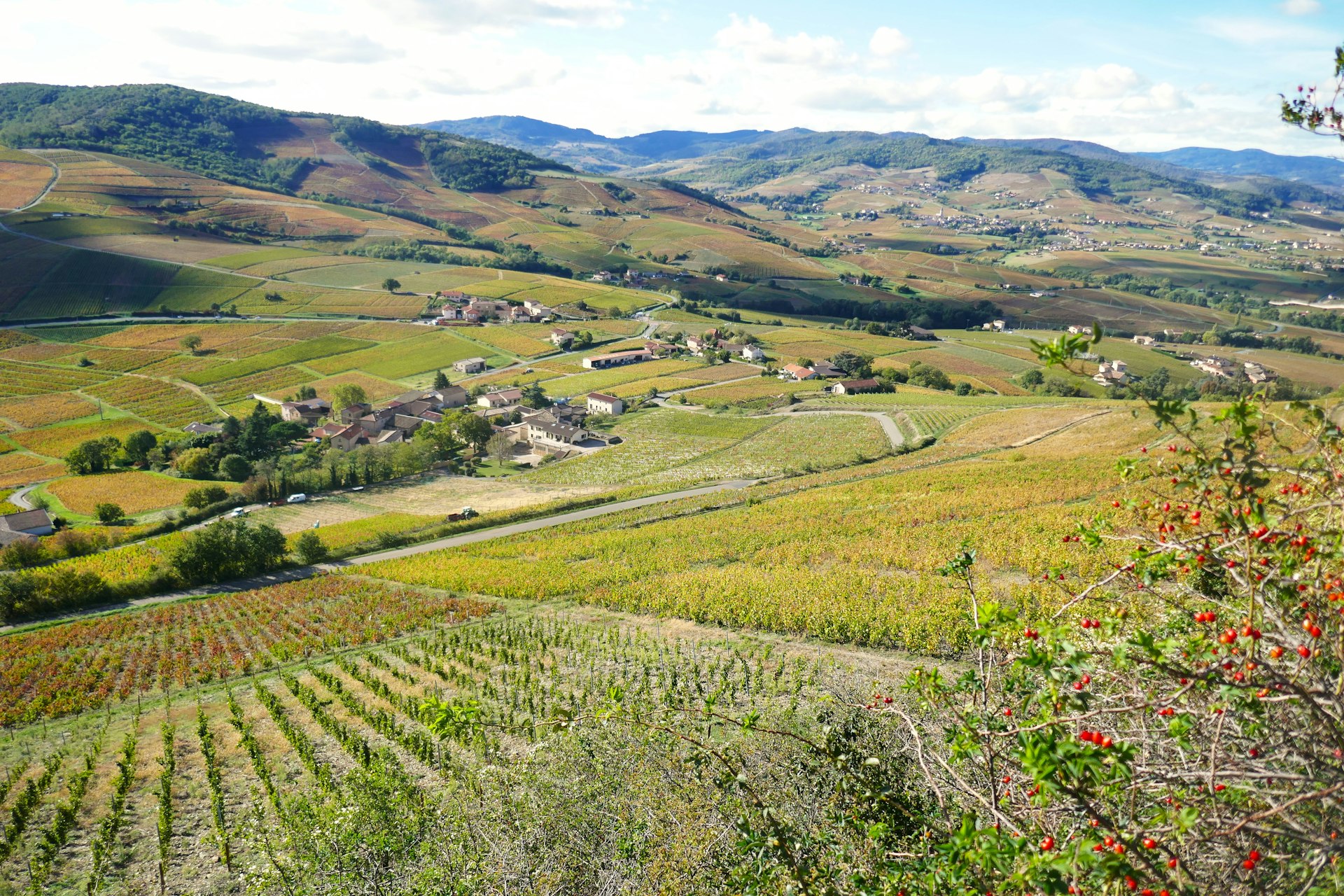
The Côte d'Or stretches south from Dijon in a narrow ribbon of limestone and genius — Pinot Noir and Chardonnay from names like Romanée-Conti and Montrachet that every serious wine lover recites like a liturgy.
- Suggested duration: 3–5 days
- Best time to visit: Sep–Oct
- Budget: $$$$
If France is the spiritual home of fine wine, Burgundy is its inner sanctum. The Côte d'Or — the "golden slope" — is one of the world's most intensely scrutinised agricultural strips: a 50-kilometre limestone escarpment between Dijon and Santenay where geography, geology, and centuries of monastic cultivation have conspired to produce wines of extraordinary individuality. To travel through Burgundy is to understand, viscerally, why the concept of terroir matters — why a vineyard on one side of a track can produce a village wine while its neighbour produces a Grand Cru that sells for thousands of pounds a bottle.
Beaune: Capital of Burgundian Wine Culture
Beaune is the natural base for exploring the Côte d'Or. The town itself is one of the best-preserved medieval cities in France, its ring of ramparts enclosing a handsome network of wine merchant houses, cellar entrances, and half-timbered buildings. The Hôtel-Dieu — a 15th-century charitable hospice with its extraordinary polychrome tiled roof — is unmissable, both architecturally and historically. Every November, the Hospices de Beaune wine auction sets the global benchmark prices for the new Burgundy vintage. The town's négociants — Bouchard Père et Fils, Joseph Drouhin, Louis Jadot — offer cellar visits and tastings that provide an excellent introduction to the appellation hierarchy.
- The Hôtel-Dieu's polychrome roof is among the most photographed buildings in France
- Book private cellar visits with négociants or domaines in advance, especially in September–October
- The Route des Grands Crus driving tour from Dijon to Santenay passes the greatest appellations
Dijon: Mustard, Architecture, and Gastronomy
Dijon deserves more than a passing visit. The former capital of the Dukes of Burgundy is an architectural treasure: the Palais des Ducs et des États de Bourgogne, the church of Notre-Dame with its hourly mechanical owl and black jacquemarts, and the medieval streets of the Quartier de la Visitation. The Musée des Beaux-Arts, housed in the ducal palace, holds one of France's finest regional art collections. Dijon's mustard industry — the city produces 90% of France's mustard — is best explored at the maison Maille on the Rue de la Liberté, where dozens of varieties are available on tap.
The Route des Grands Crus
The D122 road south from Dijon is the most hallowed wine route in the world. From Marsannay and Fixin, through the red-wine villages of Gevrey-Chambertin, Chambolle-Musigny, Vougeot, and Vosne-Romanée to the white-wine slopes of Meursault and Puligny-Montrachet — every kilometre introduces a new name that resonates with wine lovers worldwide. The Clos de Vougeot, a vast walled vineyard established by Cistercian monks in the 12th century, is the symbolic heart of Burgundian wine culture. A private guided tour with a Master of Wine or a top local guide transforms this drive from a scenic route into a genuine education.
The Burgundian Table
Burgundy's cuisine is as serious as its wine. Oeufs en meurette — eggs poached in red wine with lardons and pearl onions — is the defining dish of the region, deceptively simple and immensely satisfying. Boeuf Bourguignon, in a restaurant that actually makes it properly, is a revelation. Bresse chicken — the only AOC-designated poultry in France — is served roasted in cream with morel mushrooms at the best tables. The Michelin-starred restaurants of the Côte d'Or, from La Côte Saint-Jacques in Joigny to Laurent Peugeot's Charme in Charolles, represent some of the finest dining in the country.
Harvest Season: September and October
Visiting during the vendange — the grape harvest, typically from mid-September through October — is the ideal time to experience Burgundy at its most alive. The vineyards are in full activity, the cellar doors are open but focused, and the landscape has its richest colour. The air carries the faint sweetness of fermenting grape skins, and the vignerons — who have worked a full year toward this moment — share a warmth and openness that is particular to harvest time. Book accommodation and restaurant tables months in advance: this is Burgundy's busiest and most atmospheric season.