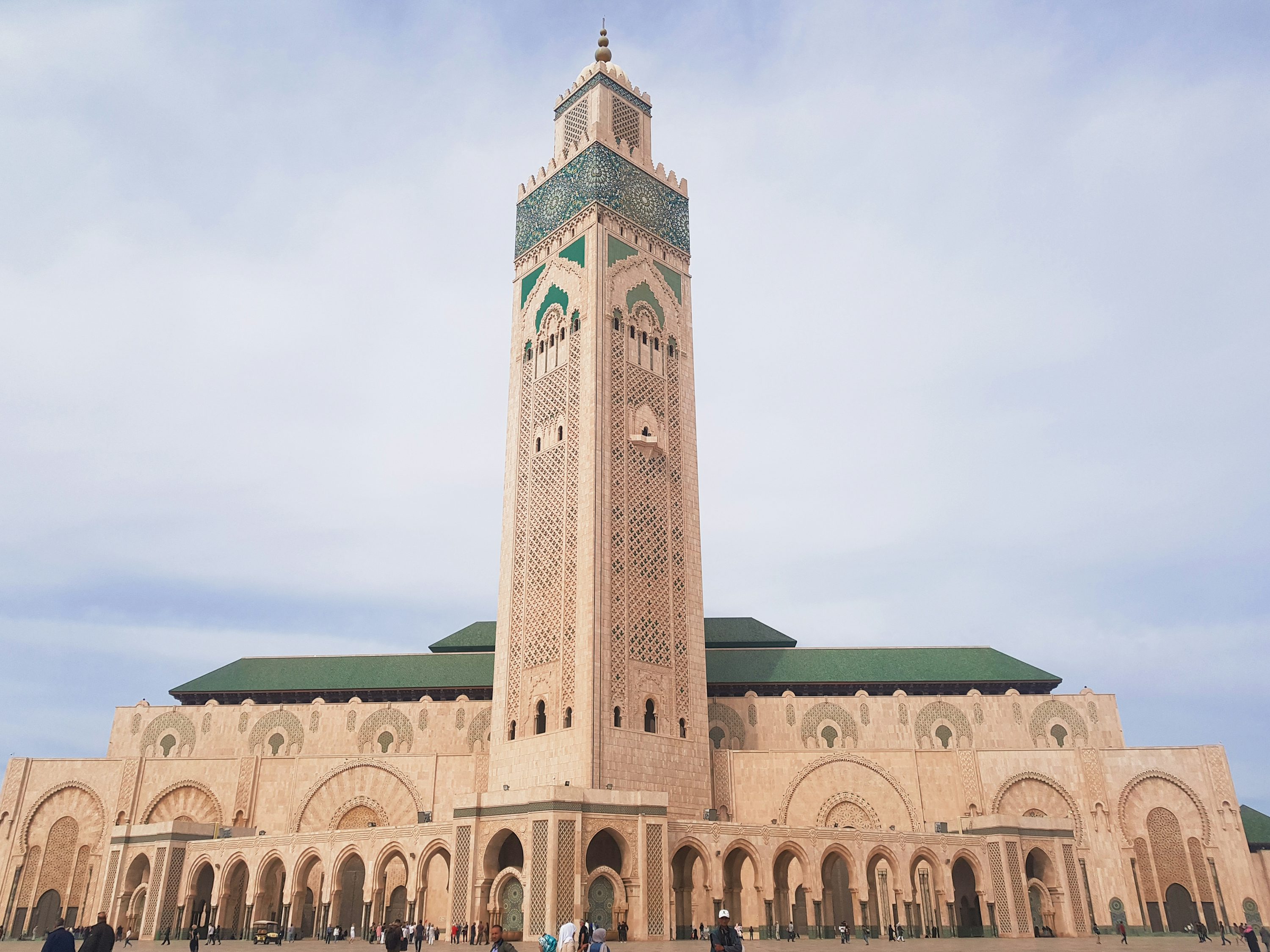
Casablanca is Morocco's beating commercial heart — a sprawling, ambitious city that looks outward to the Atlantic and forward to the future, even as its layered history peeks through the art deco facades and its cuisine keeps one foot firmly planted in tradition. Less visited than Marrakech or Fes, it rewards those who give it time with an authenticity that feels refreshingly unperformed.
- Suggested duration: 2–3 days
- Best time to visit: April to June and September to November
- Budget: Mid-range: $90–$160/day
Casablanca surprises nearly everyone who arrives expecting little else than Rick's Cafe. Morocco's largest city is a place of genuine energy — a business capital with a sophisticated restaurant scene, one of the world's most spectacular mosques, a UNESCO-worthy art deco urban core, and a long Atlantic seafront that comes alive on warm evenings. It is not a city of ancient medinas and souks, but a city of ambition, complexity, and a very Moroccan style of cool.
Top Experiences & Highlights
Casablanca's highlights blend the monumental with the intimate — a mosque that stands partly over the sea, a neighbourhood of 1930s French colonial architecture, and a corniche walk stretching along the Atlantic for kilometres.
- Hassan II Mosque — the world's seventh-largest mosque, built partially over the Atlantic with a retractable roof; guided tours open to non-Muslims on weekday mornings
- The Corniche and Ain Diab — Casablanca's seafront boulevard, lined with beach clubs, seafood restaurants, and the Atlantic crashing just beyond the railings
- The Art Deco Quarter — the Quartier des Habous and the streets around the central market preserve one of the finest concentrations of 1930s French colonial architecture in the world
- Rick's Cafe — not from the original film (which was shot entirely in Hollywood), but a lovingly recreated Humphrey Bogart-themed bar that has become a genuine Casablanca institution
Culture & History
Casablanca's history is surprisingly compressed compared to Morocco's ancient imperial cities — most of what you see dates from the French protectorate period (1912–1956), which left an indelible architectural and cultural stamp on the city.
- The Old Medina — smaller and less overwhelming than Fes or Marrakech, it is an atmospheric pocket of whitewashed houses and local craft workshops near the port
- The Habous Quarter — a Franco-Moroccan hybrid neighbourhood built in the 1930s, combining Moroccan courtyard design with French urban planning in charming results
- The Mohammed V Square and surrounding civic buildings represent the high point of the Mauresque architectural style, blending French modernism with Islamic decorative motifs
- Villa des Arts — a beautifully restored 1930s art deco villa that now hosts contemporary Moroccan and international art exhibitions
Food & Cuisine
Casablanca's food scene is the most cosmopolitan in Morocco — a city of business travellers and an affluent middle class has produced exceptional restaurants, from traditional Moroccan home-cooking to innovative modern cuisine and excellent seafood.
- Fresh Atlantic seafood — grilled sole, sea bream, and langoustines at the fish restaurants of the Corniche and the old port fish market
- Moroccan home-cooking restaurants in the Habous quarter — tagines, couscous, and harira served at formica tables, cheap and superb
- Patisseries and cafes — Casablanca's French-influenced cafe culture produces extraordinary pastries; sit outside on Mohammed V Boulevard with a cafe au lait and people-watch
- The Central Market (Marche Central) — a beautiful art deco covered market where local produce, spices, and fresh fish are sold alongside street snacks
Practical Tips
Casablanca is Morocco's main international gateway and the most straightforward Moroccan city to navigate, with good tram and taxi infrastructure and a relatively easy-to-read street grid in the modern city.
- The Hassan II Mosque tours run Tuesday–Sunday at 9am, 10am, 11am, and 2pm; book in advance during peak season as spots fill quickly
- Use the Casablanca tramway to reach the medina and central areas from the Ain Diab seafront — it is clean, cheap, and efficient
- Casa Port and Casa Voyageurs train stations connect Casablanca to Marrakech (2.5 hrs), Fes (4 hrs), and Rabat (1 hr) — worth combining into a wider Morocco itinerary
- Accommodation: the city has excellent international hotels near the Corniche; for more character, look for a boutique hotel in the art deco centre
Best Areas to Explore
Casablanca is a large, spread-out city, but its main points of interest cluster into a few navigable zones that can be comfortably covered on foot or by tram.
- The Hassan II Mosque & Corniche — the western seafront zone anchored by the mosque; the best area for a long evening walk and seafood dinner
- The Art Deco Centre — the streets around Boulevard Mohammed V and Place des Nations Unies, where the 1930s architecture is best concentrated
- The Old Medina & Port — the compact historic core near the Atlantic, with the fishing port, the Sqala fortifications, and local market life
- The Habous Quarter — the most pleasant neighbourhood for browsing leather goods, ceramics, and sweets without the pressure of a major tourist medina