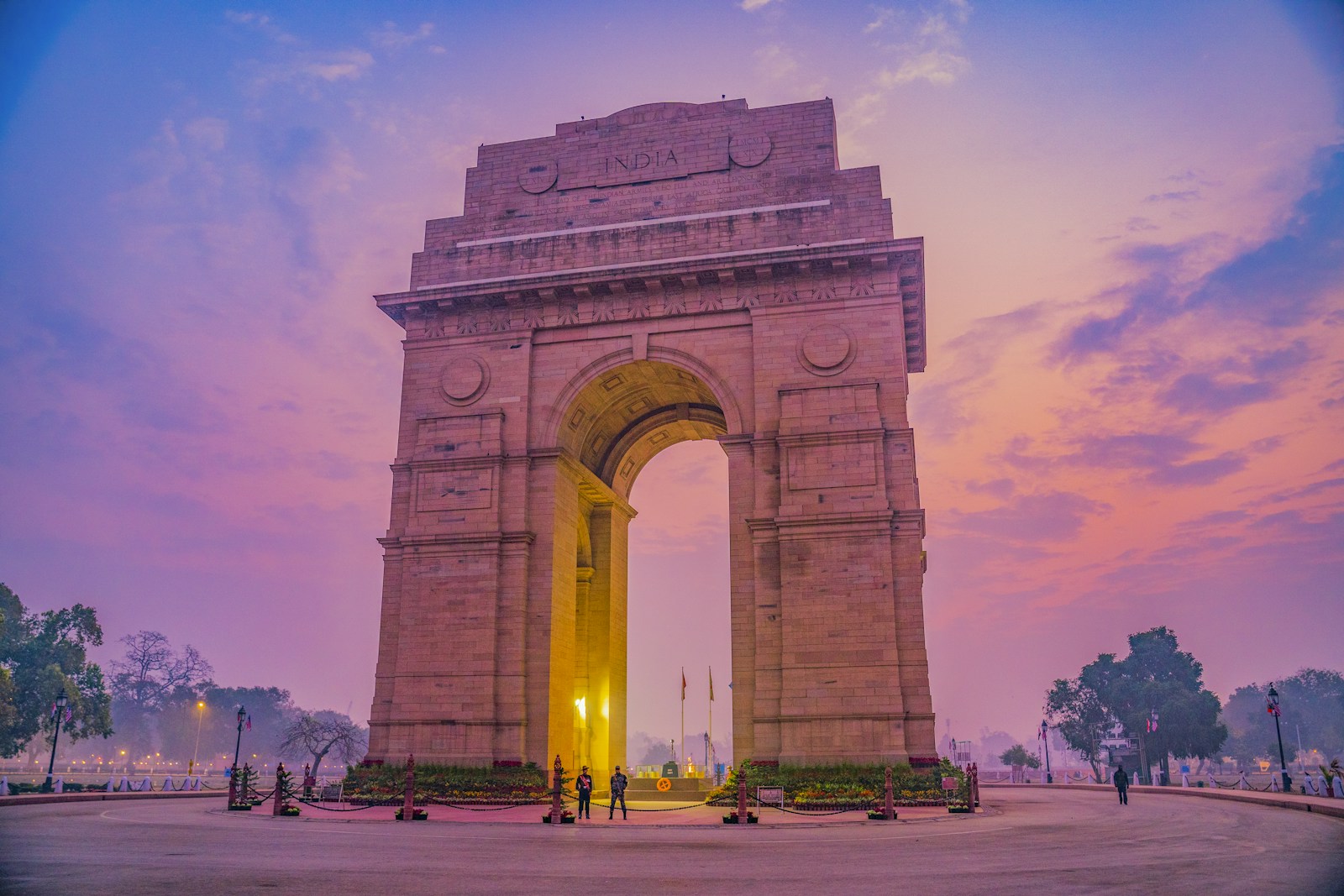
Delhi is a city of layers — literally. Beneath its modern metro system and soaring office towers lie the ruins of seven successive cities, each built atop the last. Old Delhi's Mughal-era lanes overflow with spice merchants and rickshaws; New Delhi's grand colonial boulevards lead to India Gate and the President's Palace; and between them stretches a modern, cosmopolitan capital of 30 million people. Navigating Delhi's controlled chaos is, for many travellers, the most exhilarating part of any India journey.
- Suggested duration: 3–5 days
- Best time to visit: October to February
- Budget: Budget–Mid-range: $40–$90/day
Delhi rewards those who surrender to its rhythm rather than fighting it. Plunge into the sensory overload of Chandni Chowk at rush hour, then retreat to the meditative quiet of Humayun's Tomb at dusk. This city can be both overwhelming and sublime within the same afternoon — and that tension is precisely what makes it so unforgettable.
Top Experiences and Highlights
Delhi's monuments are extraordinary in their scale and variety, spanning over a thousand years of empire-building. The Red Fort's sandstone ramparts, the soaring minaret of Qutb Minar, the Mughal geometry of Humayun's Tomb, and the colonial sweep of Rajpath culminating in India Gate — no other city in the world offers such a concentrated history lesson in stone. Add the vibrant Akshardham temple complex for a modern addition to a very ancient canon.
- Red Fort (Lal Qila): The seat of Mughal power for two centuries — the son et lumière evening show is spectacular
- Qutb Minar: A 73-metre minaret dating to 1193, UNESCO-listed and surrounded by atmospheric ruins
- Humayun's Tomb: The architectural forerunner of the Taj Mahal, set in beautiful Persian char bagh gardens
- India Gate: The 42-metre war memorial at the heart of Lutyens' Delhi, beautiful at sunset and illuminated at night
Culture and Heritage
Old Delhi's heart beats around the Jama Masjid, India's largest mosque, built by Shah Jahan in 1656. Climb one of its minarets for a rooftop panorama of minarets, market stalls, and a sea of humanity. Nearby, the havelis of Chandni Chowk date to the same era, and heritage walk operators run guided tours through lanes that have barely changed in three centuries. The National Museum on Janpath is one of Asia's finest, housing artefacts from the Indus Valley Civilisation to the Mughal court.
- Jama Masjid: India's largest mosque — visit at dawn or at iftar during Ramadan for an extraordinary atmosphere
- Chandni Chowk: Historic bazaar street with dedicated lanes for spices, textiles, sweets, and silver jewellery
- National Museum: Over 200,000 artefacts spanning 5,000 years of Indian civilisation
- Gandhi Smriti: The house where Mahatma Gandhi spent his last days and was assassinated in 1948
Food and Cuisine
Delhi's street food scene is legendary across India and has inspired some of the country's best restaurants. Parathas stuffed with potato and pickle at Paranthe Wali Gali in Old Delhi, chole bhature (chickpea curry with fried bread) at Sita Ram Diwan Chand, and kulfi from a street vendor in Connaught Place are rituals as old as the city itself. The south Delhi restaurant scene has exploded in recent years, with outstanding modern Indian, pan-Asian, and European kitchens competing for attention.
- Butter chicken: Invented in Delhi in the 1950s — try it at the original Moti Mahal or countless excellent imitators
- Chaat: Tangy, sweet, spicy street snacks — golgappe (pani puri), aloo tikki, and dahi papdi are essential eating
- Paranthe Wali Gali: A narrow Old Delhi lane devoted entirely to stuffed flatbreads, fried fresh to order
- Karim's: A legendary 100-year-old Mughal restaurant near Jama Masjid serving exceptional nihari and seekh kebabs
Best Areas and Neighbourhoods
Delhi divides broadly into Old Delhi (north), Lutyens' New Delhi (centre), and South Delhi's modern neighbourhoods. Visitors tend to sleep in Paharganj (budget) or the quieter South Delhi enclaves of Hauz Khas, Defence Colony, or Khan Market. Hauz Khas Village is particularly good for evening dining, boutique shopping, and a drink overlooking the medieval reservoir and deer park.
- Old Delhi / Shahjahanabad: The walled city of Shah Jahan — dense, historic, and overwhelmingly alive
- Lutyens' Delhi: Wide tree-lined boulevards, embassies, and the grand ceremonial axis of Kartavya Path
- Hauz Khas Village: Boutiques, rooftop restaurants, and a medieval reservoir surrounded by deer-filled parkland
- Khan Market: Delhi's most beloved upmarket shopping street with bookshops, delis, and excellent cafes
Practical Tips
Delhi's metro is a lifesaver — clean, air-conditioned, and linking virtually every major sight. For shorter hops, auto-rickshaws and app-based cabs (Ola, Uber) are inexpensive and reliable. Air quality can be poor between October and January due to crop burning and winter fog; check the AQI and carry an N95 mask if pollution levels are high. Delhi's best months are November, February, and March, when the light is golden and the temperature perfect for sightseeing on foot.
- Delhi Metro: A reliable, affordable network with direct links to IGI Airport (Terminal 3)
- Safety: Delhi is generally safe for tourists; standard precautions apply, particularly for solo women travellers at night
- Day trips: Agra (Taj Mahal) is just 2.5 hours by Gatimaan Express train — an easy and popular day trip
- Air quality: November smog can be severe; monitor AQI on apps like IQAir and adjust plans accordingly