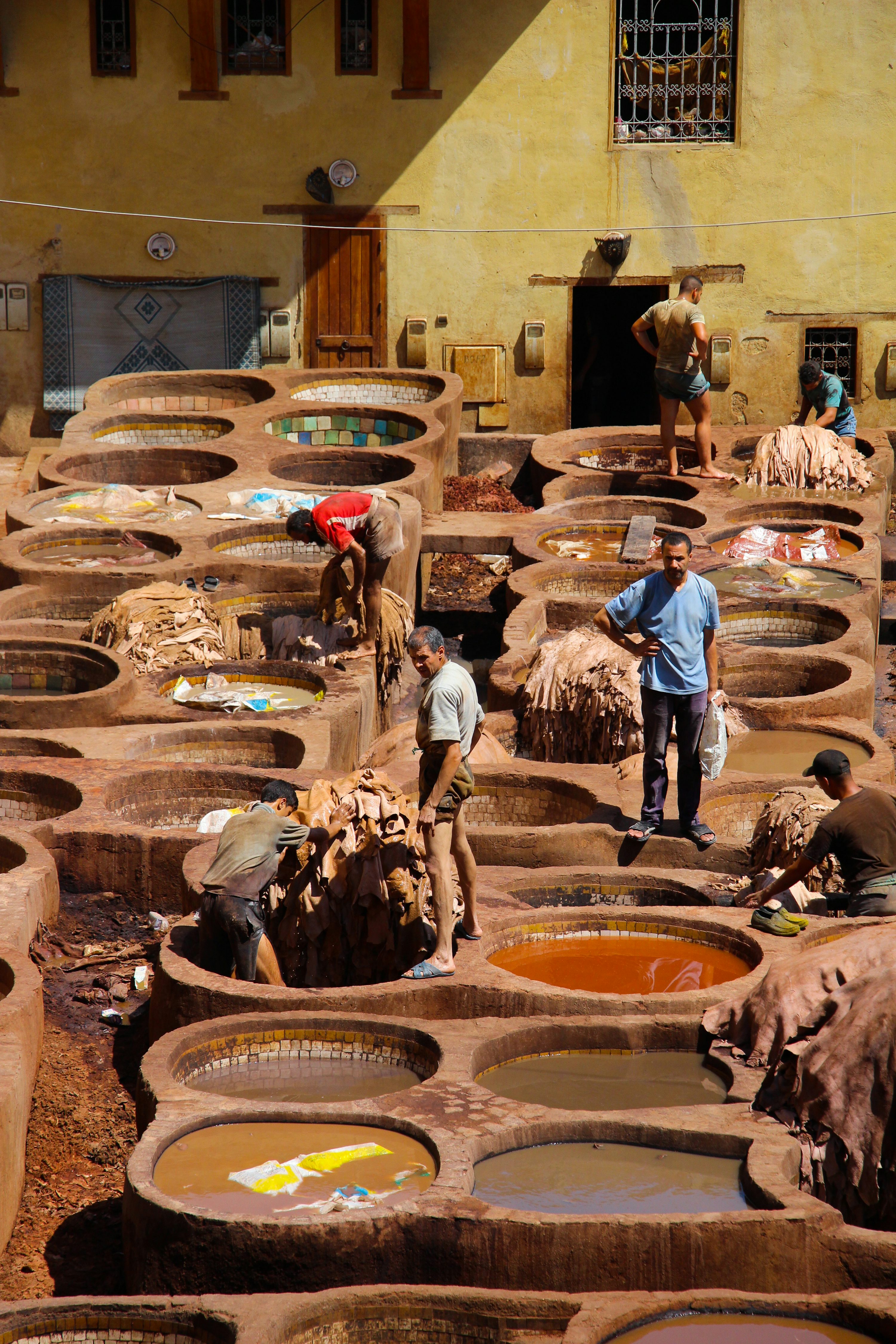
Fes is the city that time forgot — or rather, refused. The medina of Fes el-Bali is the world's largest car-free urban area and arguably the best-preserved medieval city on earth, its tangled alleys unchanged in their essential form since the 9th century. Here, leather tanners still pound hides in the same stone vats their ancestors used, and muezzins call the faithful to prayer from minarets that predate Notre-Dame.
- Suggested duration: 3–4 days
- Best time to visit: March to May and September to November
- Budget: Budget to mid-range: $60–$130/day
To walk into Fes el-Bali is to step through a portal. Donkeys carry deliveries down lanes too narrow for a car. The smell of fresh bread from communal ovens mingles with cedar sawdust from a woodworker's stall. Somewhere overhead, a student recites verses at the world's oldest continuously operating university. Fes is many things — overwhelming, intoxicating, disorienting — but above all it is irreplaceable, a living monument to a civilisation at its medieval zenith.
Top Experiences & Highlights
Fes rewards slow travel above all else. The highlights are not ticked off on a map so much as stumbled upon in the act of wandering, though a few anchor points help give structure to the labyrinth.
- Chouara Tannery — the world-famous aerial view of honeycomb vats filled with saffron, indigo, and poppy-red dye; best seen from a leather shop balcony above
- Al-Qarawiyyin Mosque & University — founded in 859 AD, it is considered the oldest continuously operating university in the world, though non-Muslims may only view it from the doorway
- Bou Inania Madrasa — the finest example of Marinid architecture in Morocco, with intricate carved stucco and a peaceful marble courtyard
- Getting lost in the medina — deliberately abandon your map for an hour and follow your nose; you'll find things no guidebook lists
Culture & History
Fes was founded in 789 AD by Idris I and rapidly grew into the cultural and religious capital of Morocco. For centuries it attracted scholars, craftsmen, and refugees — including thousands of Andalusian Muslims expelled from Spain — who shaped its unique intellectual and artistic character.
- The Andalusian Quarter (Andalib) was settled by refugees from Córdoba in 818 AD and retains its own distinct character and mosque
- The Mellah — the historic Jewish quarter — preserves synagogues, a cemetery, and townhouses with Andalusian-style interiors
- Fes el-Jdid ("New Fes") was built in the 13th century and houses the Royal Palace, with its spectacular gilded bronze gates
- The Nejjarine Fountain & Museum of wood arts and crafts, set in a beautifully restored 18th-century fondouk (merchants' inn)
Food & Cuisine
Fassi cuisine — the cooking of Fes — is considered the most refined in Morocco. The city's prosperity and cosmopolitan heritage created a food culture of extraordinary complexity and delicacy, and it is best tasted in a family-run riad restaurant.
- Pastilla — Fes's signature dish, a layered pastry of pigeon, almonds, and cinnamon dusted with icing sugar; a masterpiece of sweet-savoury cooking
- Mrouzia — a festive tagine of lamb braised with honey, raisins, and ras el hanout, the spice blend that Fassi merchants perfected
- Medina street food — brochettes, msemen flatbreads, fresh orange juice, and snail broth from the stalls of Place Rcif and surrounding lanes
- Atay (mint tea) and fresh-squeezed almond milk from the juice stalls near Bab Boujloud, the blue tiled gate that marks the medina's main entrance
Practical Tips
Fes's medina is genuinely disorienting — and that is part of its charm. A few practical notes will help you enjoy it rather than endure it.
- Hire a licensed guide for your first day — the medina has 9,000+ alleys; a good guide (book through your riad) will orient you and introduce context that transforms what you see
- Stay inside the medina in a traditional riad — waking up within the old city walls is an experience in itself, and the best riads are architectural treasures
- Visit the tannery early — the coloured vats are most vivid in the morning light, before the afternoon heat intensifies the pungent smell
- Watch out for "helpful" strangers who offer to guide you to the tannery for free — this always ends at a leather shop with pressure to buy; decline politely or accept with clear expectations
Best Areas to Explore
Fes divides into distinct quarters, each with its own personality and pace. A three-day visit can cover the main areas without feeling rushed.
- Fes el-Bali — the ancient medina, the core of everything, UNESCO-listed and the reason most people come to Fes at all
- Fes el-Jdid — the "new" 13th-century quarter with the Royal Palace and the Mellah; less touristed but equally atmospheric
- The Ville Nouvelle — the French-era new town, where good cafes, pastisseries, and the produce market of Place de l'Atlas offer a contrast to the medina intensity
- The hills above Fes — the Merinid Tombs at sunset offer the classic panoramic view over the entire medina, glowing amber in the evening light