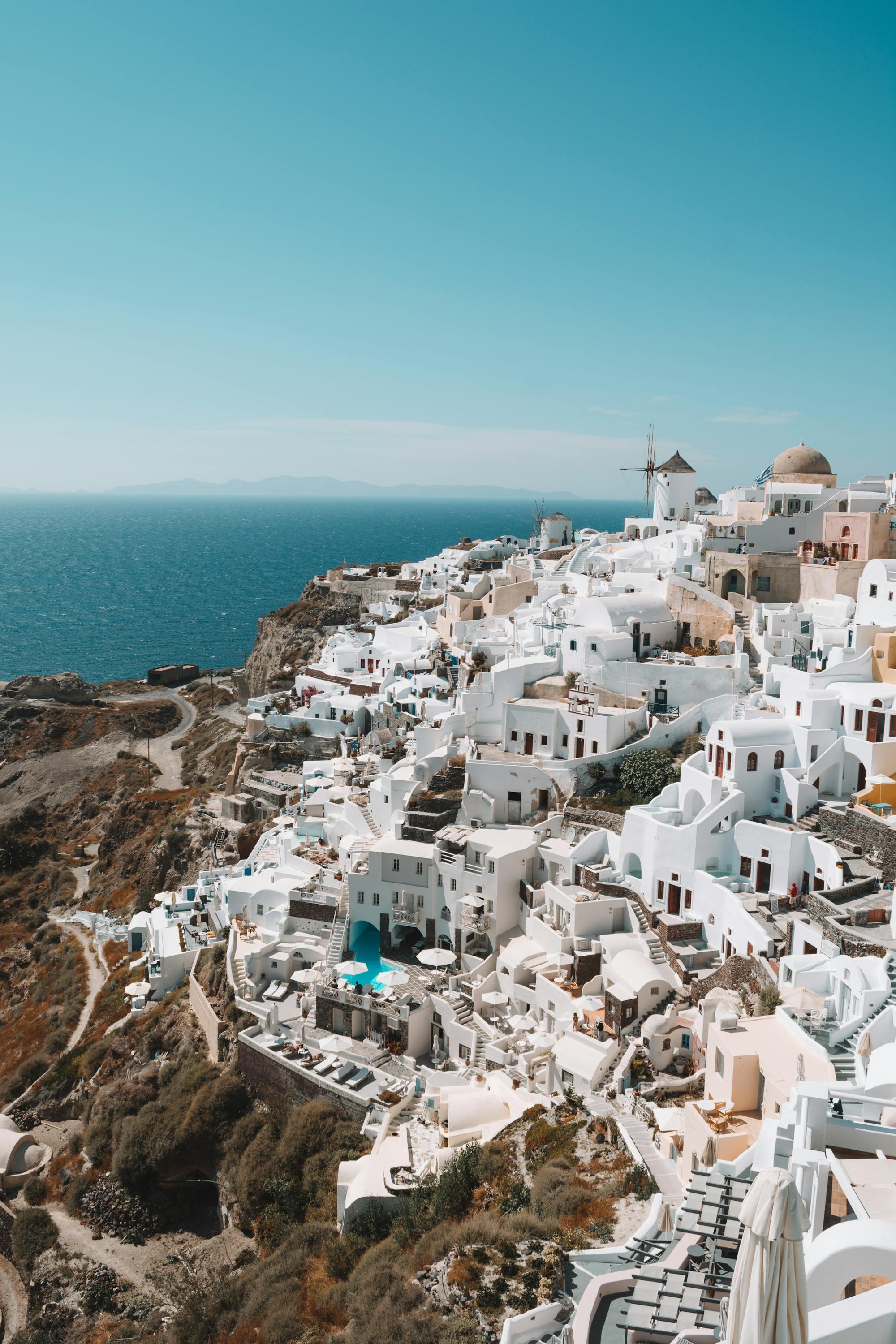
Ancient temples, whitewashed island villages tumbling toward a crystalline sea, and an ouzo sunset that seems to last forever — Greece carries the weight of civilisation lightly, with warmth, wine, and effortless beauty.
- Suggested duration: 7–14 days
- Best time to visit: Apr–Jun & Sep–Oct
- Budget: $$$
Greece has been drawing travellers for more than two millennia, and still it surprises. The Acropolis at dawn, its Pentelic marble catching the first light, is as moving as anything in the built world. The Cycladic islands — Santorini, Mykonos, Milos, Folegandros — offer a palette of blue domes, whitewashed alleys, and water of impossible clarity. The Peloponnese holds Mycenae, Epidaurus, and Olympia, roots of Western civilisation extending into the soil of a peninsula that has barely changed in spirit since the Bronze Age. Greece is ancient and alive simultaneously, and its generosity — of table, of welcome, of light — is its greatest gift.
Athens: Ancient and Contemporary
Athens has reinvented itself as one of Europe's most compelling city destinations. The ancient heart — the Acropolis, the Agora, the Theatre of Dionysus, the National Archaeological Museum — is without equal in the Mediterranean world. The Acropolis Museum, one of the finest purpose-built museum buildings of the 21st century, houses the surviving Parthenon sculptures and makes an eloquent case for the return of the Elgin Marbles. Around it, the neighbourhoods of Monastiraki, Psyrri, and Koukaki have developed a creative energy: rooftop bars with Parthenon views, natural wine cellars, concept restaurants serving modern Greek cuisine.
- The Acropolis is best at opening time (8am) or in the late afternoon — midday heat is punishing in summer
- The National Archaeological Museum requires at least half a day; the Mask of Agamemnon alone justifies the visit
- Rooftop dining with Parthenon views is a quintessential Athens experience — book ahead
The Cyclades: Island Life Perfected
The Cyclades offer Greece's most iconic island images: the blue-domed churches of Santorini's Oia against the caldera, the windmills of Mykonos above Chora, the lunar volcanic landscapes of Milos with its rainbow-coloured beaches. Santorini is the most dramatic — the caldera, formed by a Bronze Age volcanic eruption that may have inspired the Atlantis myth, creates a setting of operatic intensity. For a more serene experience, smaller islands such as Folegandros, Sifnos (which produces exceptional food), and Amorgos offer the same light and clarity without the high-season intensity.
Crete: Greece in Miniature
Crete is an island of such size and diversity that it rewards a dedicated trip. The Palace of Knossos, centre of the Minoan civilisation that flourished 4,000 years ago, is one of the most extraordinary archaeological sites in the world. The old Venetian harbours of Heraklion, Chania, and Rethymno are beautifully preserved. The Samaria Gorge, one of Europe's longest, cuts through the White Mountains to the Libyan Sea. And the food — Cretan extra-virgin olive oil, fresh dakos, slow-roasted lamb with stamnagathi greens — is among the healthiest and most flavourful in the Mediterranean.
The Peloponnese: Ancient Roots
The Peloponnese rewards those who venture beyond the island-hopping circuit. Epidaurus, with its acoustically perfect ancient theatre still used for summer performances, is a place where time collapses. Mycenae — citadel of Agamemnon, guarded by the Lion Gate — carries the atmosphere of myth made stone. The Byzantine ghost town of Mystras, a UNESCO World Heritage Site, offers medieval frescoes of remarkable quality in a dramatically sited hilltop ruin. The seaside town of Nafplio — elegant, manageable, with a Venetian fortress above and excellent tavernas below — is the finest base in the region.
Season, Food, and Hospitality
Greece in April, May, and early June has the ideal combination: mild temperatures, wildflowers carpeting the hillsides, seas warm enough to swim, and major sites without the high-season crush. September and October share these qualities, with the added pleasure of the grape and olive harvests underway. Greek hospitality — philoxenia, the love of strangers — is not a marketing slogan but a deeply embedded cultural value. A glass of raki offered without ceremony, a plate of mezedes that was not on the menu, a family who will not hear of you leaving without dessert: these moments are the true currency of travelling in Greece.