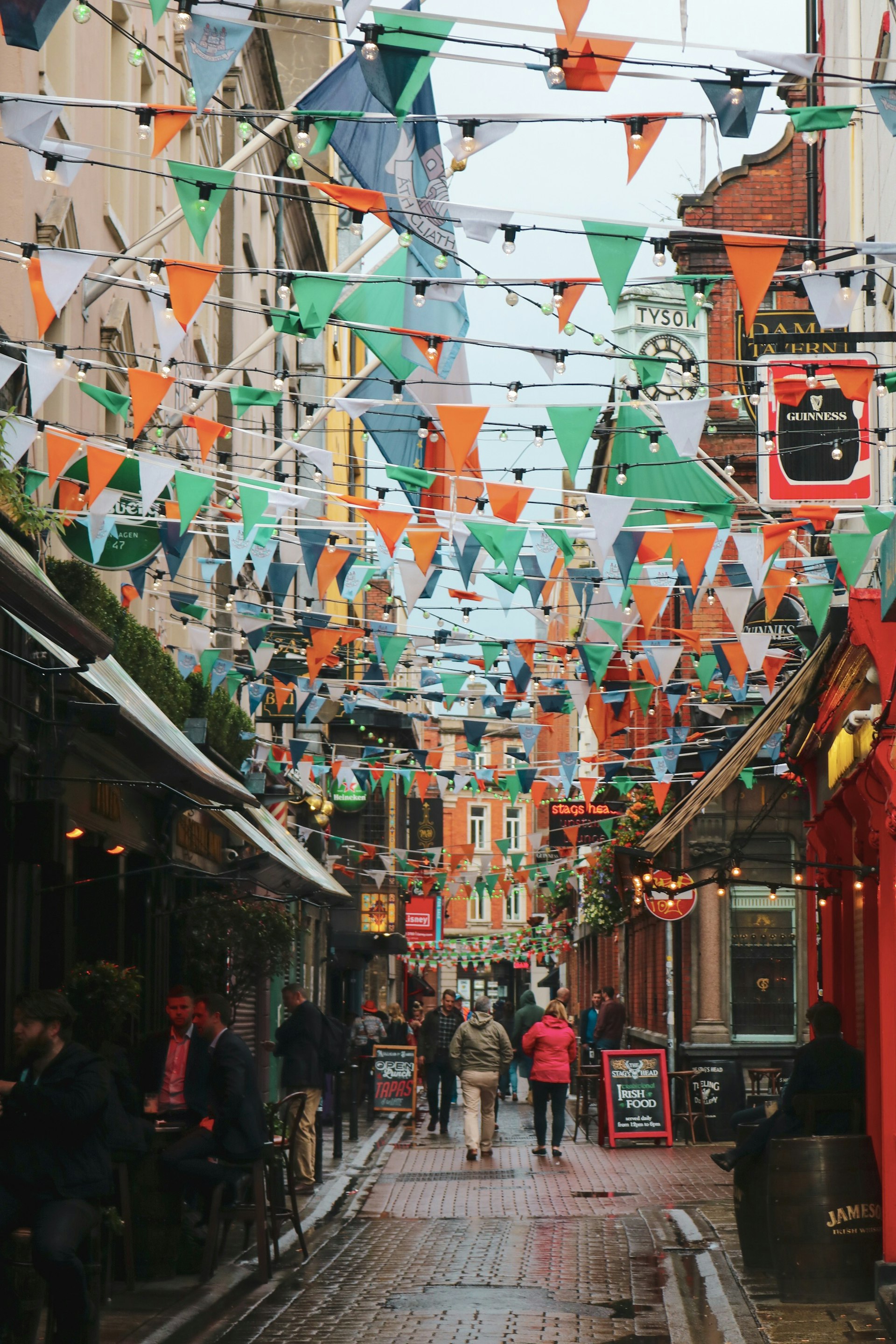
Ireland seduces with a combination that is almost unfair — wild Atlantic landscapes of startling beauty, stone villages where time has moved at its own pace, and a people whose instinct for hospitality and conversation remains one of the great pleasures of European travel.
- Suggested duration: 7–10 days
- Best time to visit: May–Sep
- Budget: $$$
Ireland is a small island with an outsized hold on the imagination — a place where landscape, language, and the quality of human encounter combine into something that is difficult to rationalise and impossible to forget. The Wild Atlantic Way, stretching 2,500 kilometres along Europe's most westerly edge, delivers cliff scenery, empty beaches, and fishing villages of extraordinary beauty. The interior offers a different kind of richness: monastic ruins emerging from morning mist, Georgian country houses now serving as some of Europe's finest small hotels, and market towns where the Saturday farmers' market is a social institution of long standing.
The Wild Atlantic Way
Ireland's great coastal drive is not a single road but a collection of connecting routes that trace the western seaboard from Donegal in the north to Cork in the south. The Cliffs of Moher, rising 214 metres sheer from the Atlantic in County Clare, are the country's most visited natural site and deservedly so — though they are best experienced at the quieter southern end of the cliff walk, away from the visitor centre, in the slant light of late afternoon. The Connemara coast north of Galway offers a more intimate drama: small islands, stone walls descending into silver inlets, and the Twelve Bens mountains rising behind.
- Dingle Peninsula: The finest coastal drive in Ireland — slea Head passes prehistoric beehive huts and views of the Blasket Islands
- Ring of Kerry: Deservedly famous; take the route anticlockwise to avoid tour buses
- Aran Islands: Three limestone islands in Galway Bay, accessible by ferry or light aircraft — Inis Mór and its Iron Age fort are essential
Irish Country House Hotels
Ireland's country house hotel tradition is among the finest in Europe. These are not merely hotels but lived-in estates — ancestral homes that have been opened to guests while retaining the atmosphere of private hospitality. Ashford Castle in County Mayo, built in 1228 and expanded across the centuries, occupies 350 acres of Connemara lakeland and offers falconry, clay shooting, and one of the most gracious dining rooms in the country. Ballyfin in County Laois — a Regency mansion of almost reckless grandeur — takes only 40 guests at a time and is widely considered the finest country house hotel in Ireland. The Merrion in Dublin provides the same level of care in a city context, spread across four Georgian townhouses opposite Government Buildings.
Whiskey, Stout, and the Table
Irish food has been quietly transformed over the past two decades. The country's green pastures, clean Atlantic waters, and artisan food culture have produced a larder of exceptional quality — aged beef, west coast oysters, farmhouse cheeses, smoked salmon cured by producers who have been doing it the same way for generations. Dublin's restaurant scene now holds genuine international ambition, and Cork's English Market, in continuous operation since 1788, remains one of the great covered markets in Europe. The whiskey revival has produced a new generation of single pot still and single malt expressions from distilleries across the country, making any visit an opportunity for serious tasting.
- Midleton Distillery: East of Cork, the home of Jameson and a clutch of exceptional single pot stills
- Dingle Distillery: Small-batch whiskey and gin in one of Ireland's most beautiful towns
- Galway's Saturday market: The best food market outside Dublin — arrive hungry
Planning Your Ireland Trip
Ten days is the ideal length for a first Irish journey that avoids the feeling of rushing. Dublin as a base for the first two days allows for the National Museum, Trinity College, and the Book of Kells; then a drive west through the Midlands to Galway; south along the coast via the Cliffs of Moher and the Burren's extraordinary limestone landscape; through Kerry and Cork before returning to Dublin. Ireland's roads outside the main corridors are small and occasionally surprising — the joy of the country is in not being entirely in a hurry. May and early June offer the best balance of good weather and manageable visitor numbers; July and August are warmer but busier.