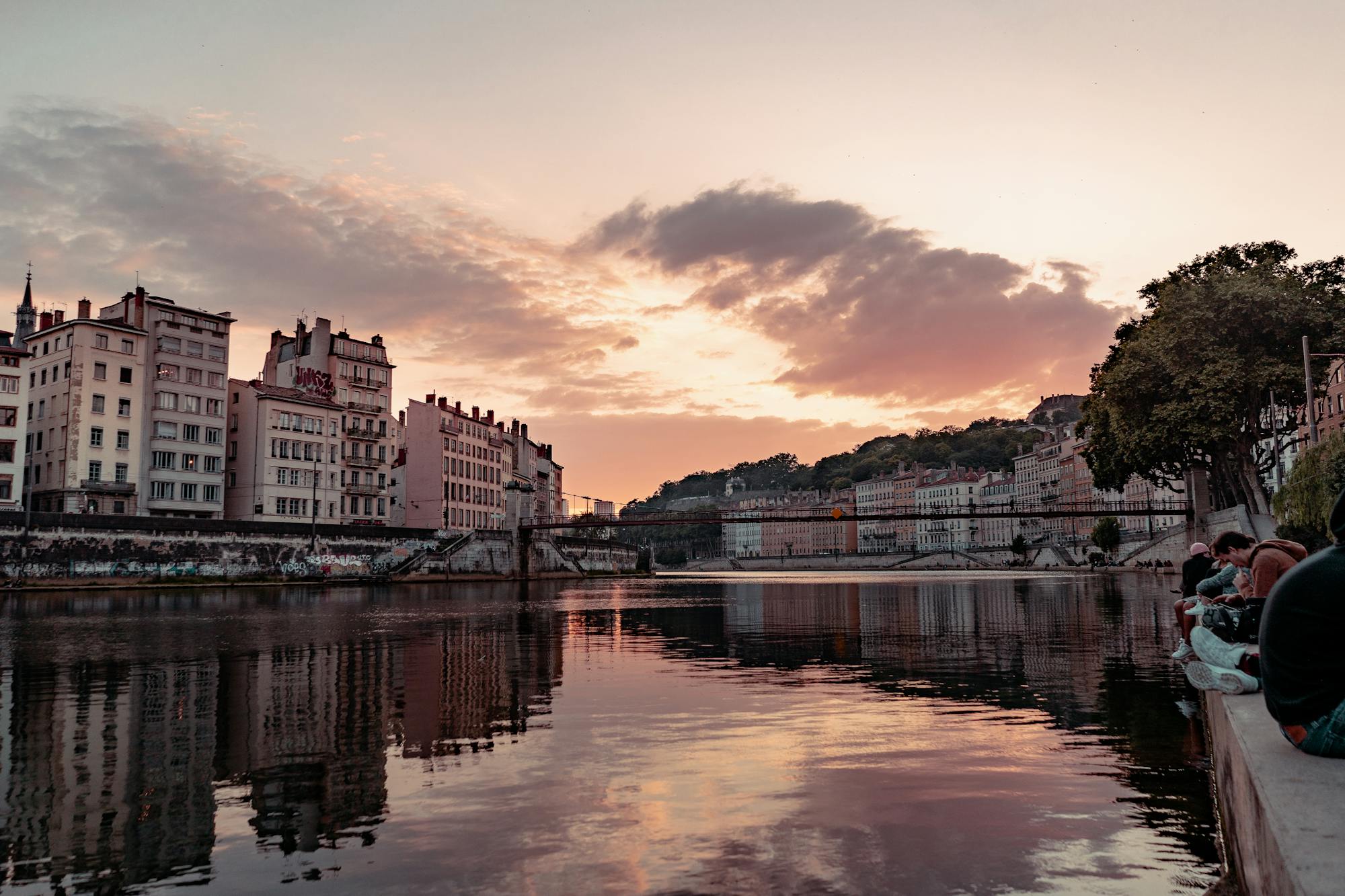
Lyon is France's gastronomic capital by any honest reckoning — the city that produced Paul Bocuse and gave the world the bouchon, a particular kind of convivial Lyonnaise bistro where quenelles and andouillette are served without apology. The UNESCO-listed Vieux Lyon quarter is a warren of Renaissance courtyards and traboules — secret passageways threading between buildings that once sheltered silk workers — now lined with boutiques and wine bars. The Fourvière hill rises above it all, crowned by a white basilica with views over two rivers, while December's Fête des Lumières turns every facade into a canvas of light. Stay in the presqu'île, the peninsula between the Saône and Rhône, for the finest addresses and restaurant access.
- Suggested duration: 3–4 days
- Best time to visit: April to June and September to November for pleasant weather; December for the extraordinary Festival of Lights.
Lyon's greatest paradox is that it combines the culinary reputation of the world's greatest food city with an architectural and historical richness that most visitors discover only after they have come primarily for the restaurants. The city rewards those who stay long enough for both.
The Silk Weaving Heritage: Soieries and the Croix-Rousse
Lyon built its extraordinary wealth on silk — from the 15th to the 19th century, it was Europe's dominant producer of luxury woven silk fabrics, supplying the courts of France, Italy, and beyond. The Croix-Rousse district, on the hill north of the presqu'île, was purpose-built for the canuts (silk weavers) who required the high-ceilinged ateliers — visible in many buildings today — that their Jacquard looms demanded. The Maison des Canuts museum tells this history with genuine depth, and working ateliers still operate in the neighbourhood. The traboules of Croix-Rousse are different in character from those of Vieux Lyon — longer, more industrial, and less visited.
The Fête des Lumières: Lyon's Greatest Night
Every December, for four nights around the feast of the Immaculate Conception (December 8th), Lyon transforms itself into the world's greatest outdoor light festival. The tradition began in 1852 when the city's residents placed candles on their window sills in gratitude for the Virgin's protection from plague; it has evolved into a global event in which the city's finest buildings — the Basilique Notre-Dame de Fourvière, the Hôtel de Ville, the Musée des Beaux-Arts, the Place Bellecour — become the canvases for extraordinary light installations created by artists from across the world. Two million visitors attend over four nights in a city of 500,000. Book accommodation months in advance and arrive early for the best viewing positions.
Wine Country at the Door
Lyon's position between two of France's most significant wine regions is not accidental — it shaped the city's food culture as much as any local ingredient. The northern Rhône appellations begin just 30 kilometres south: Condrieu (white Viognier of extraordinary floral intensity), Côte-Rôtie (northern Rhône Syrah at its most elegant), and Crozes-Hermitage are all within a 90-minute drive. The Beaujolais region begins immediately north of Lyon — its ten crus, from the mineral freshness of Fleurie to the structured depth of Moulin-à-Vent, are the natural companions to the bouchon table.