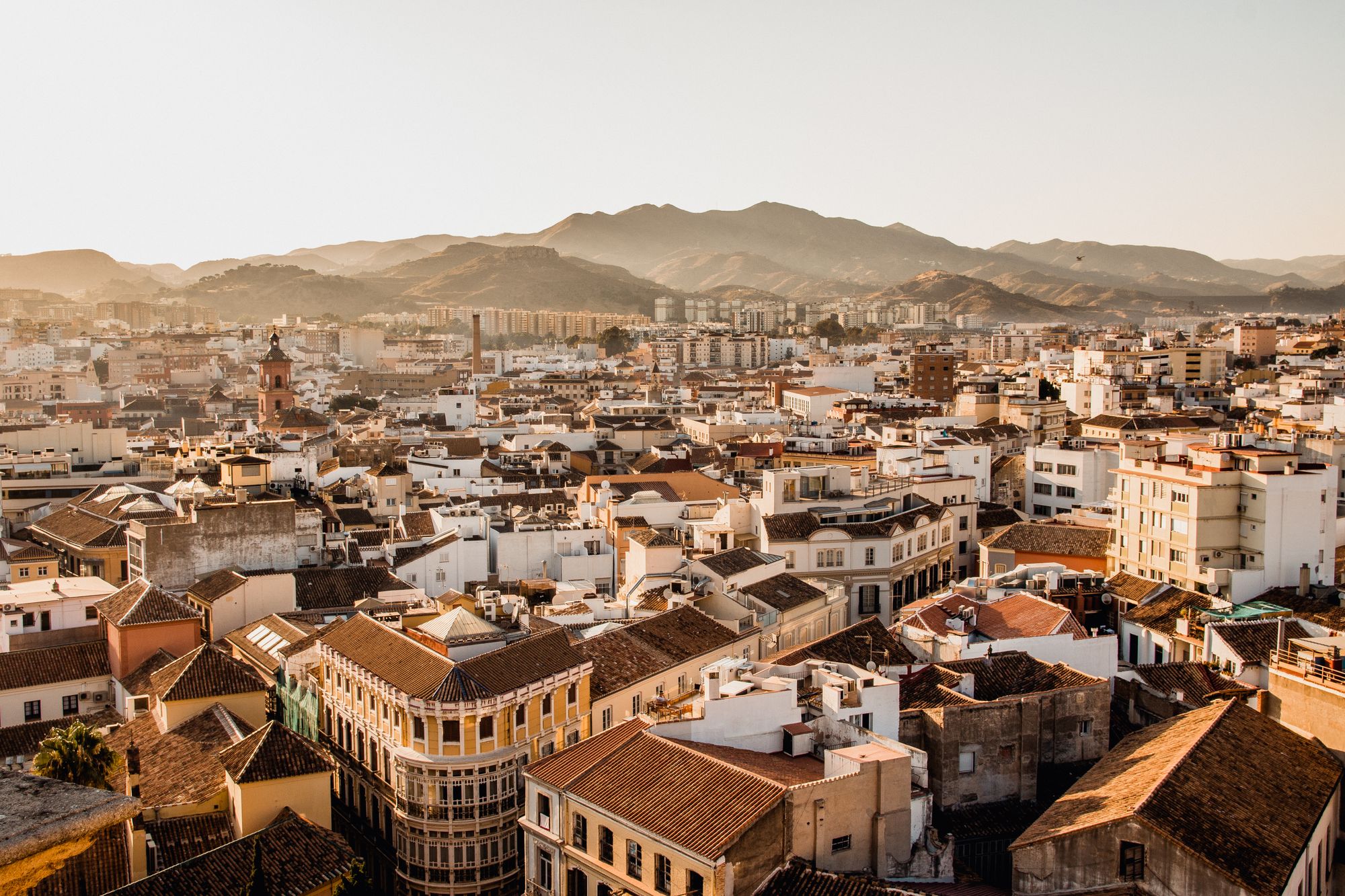
Malaga has undergone a remarkable renaissance — the Picasso Museum in his birthplace house, the Centre Pompidou Málaga's French collection, and the new MARO contemporary art venue have turned Andalucía's Mediterranean port into a serious cultural destination. The Alcazaba fortress and Gibralfaro castle above the city trace 1,000 years of Moorish and medieval history, while the Soho arts district below has filled former warehouses with murals, galleries and the city's best new restaurants. Malaga's tapas culture is its own: the fried anchovies (boquerones fritos), sweet Málaga wine from the Axarquía hills, and the pescaíto served in the Atarazanas market hall are as distinctive as anything in Seville. Sunshine here averages 320 days a year.
- Suggested duration: 3–4 days
- Best time to visit: March to June and September to November; winters are mild and the city is at its most local.
Malaga's reinvention as a cultural capital is one of Spain's great recent travel stories. The city that gave the world Picasso has built a museum network to match any regional capital in Europe, combined it with a historic centre of considerable beauty, and backed it with an Andalucían food culture that is fiercely local and genuinely distinguished. It is also, by some measures, the most reliably sunny city on the Spanish mainland.
The Museum Mile: Malaga's Cultural Transformation
The stretch between the Alcazaba and the waterfront has been transformed into one of Spain's most concentrated museum districts. In addition to the Picasso Museum and the Pompidou, the Museo Carmen Thyssen Málaga holds an outstanding collection of 19th-century Spanish painting in a beautiful Renaissance palace. The Museo de Arte Flamenco traces the history of this most Andalucían of art forms. The Museo Revello de Toro presents the hyperrealist portraits of this distinguished Malagueño painter in an elegant converted house. Together, they represent a critical mass of cultural experience that rivals cities several times Malaga's size.
The Alcazaba and Gibralfaro: A Thousand Years of History
The Alcazaba palace-fortress, begun in 1057 on the orders of the Moorish king Badis of Granada, is the finest example of 11th-century Nasrid architecture in Spain after the Alhambra itself. Its series of fortified gates, patios, and gardens culminates in the Palace of the Alcazaba — a composition of arched galleries around a central fountain that achieves a particular Moorish serenity. Connected to it by a long fortified wall, the Gibralfaro castle above was built in the 14th century to house the troops defending the Alcazaba; today its ramparts offer a 360-degree panorama over the city, the bull ring, the port, and the Mediterranean that is worth the steep walk or bus ride to reach it.
The White Villages of the Axarquía
The hills east of Malaga — the Axarquía comarca — are home to a chain of white villages that remain almost entirely untouched by coastal tourism. Frigiliana, consistently voted one of Spain's most beautiful villages, is a 40-minute drive from Malaga: a tightly packed hillside of whitewashed houses adorned with flower pots and decorated with ceramic panels narrating the history of the Moorish population's expulsion in 1570. The villages of Competa and Nerja (with its famous prehistoric caves) complete an inland itinerary of considerable depth and beauty. The Axarquía also produces distinctive sweet wines from ancient Muscat and Pedro Ximénez vines grown on steep terraced hillsides.