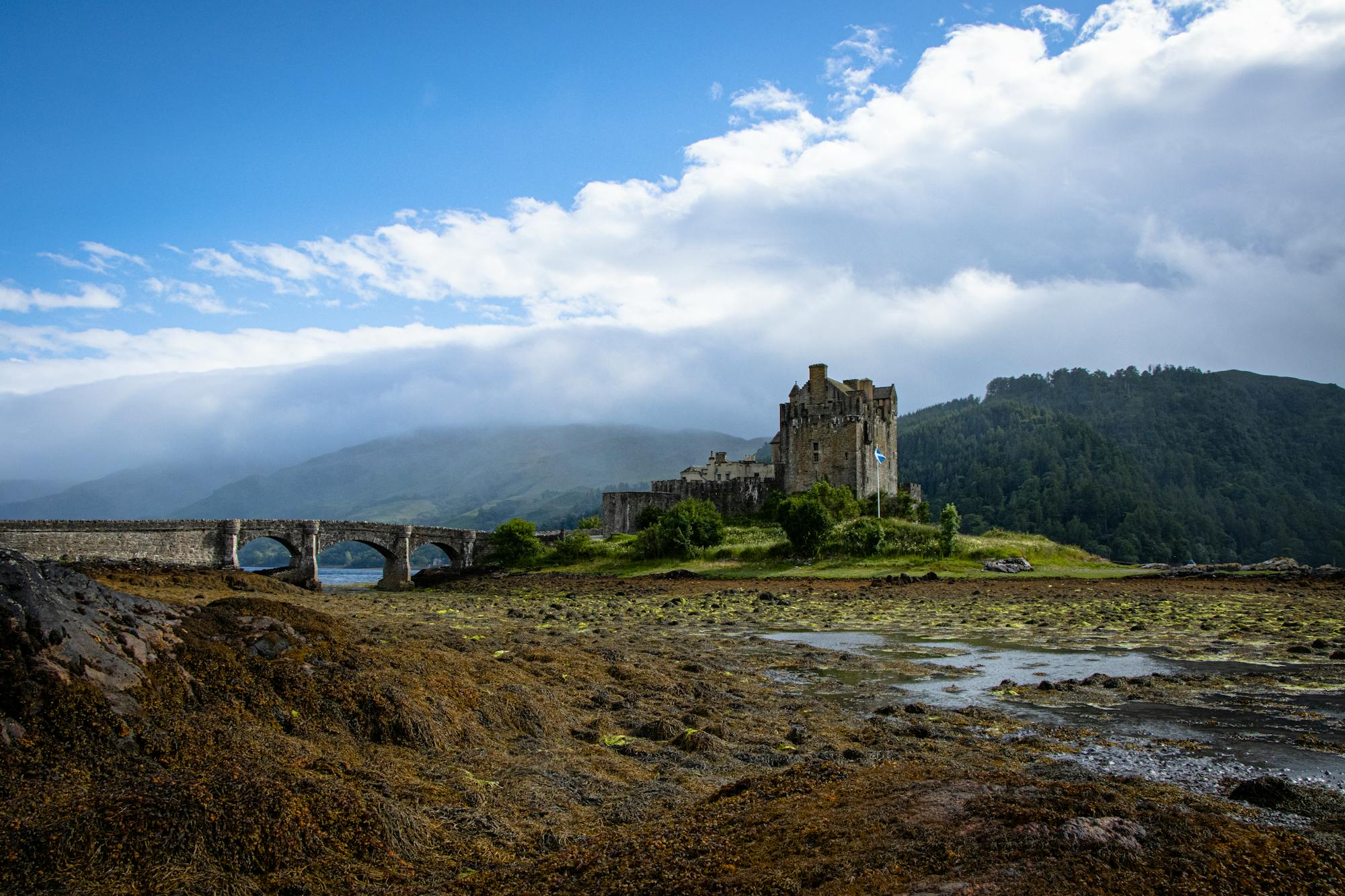
Scotland is a landscape that operates at a scale that makes other European countries feel domesticated — vast moorlands under enormous skies, sea lochs pushing deep into mountain glens, and a culture of remarkable tenacity that has produced whisky, tartans, poetry, and engineering feats of lasting consequence.
- Suggested duration: 7–10 days
- Best time to visit: May–Sep
- Budget: $$$
Scotland rewards slowness. The country's greatest pleasures — a single-malt poured in the distillery where it was made, a morning walk across empty moorland with no other person in sight, the view from a castle ruin across a loch at the end of the day — are not things that can be efficiently collected. They require time, and a willingness to let the landscape set the pace. From Edinburgh's magnificent capital city to the far north of Sutherland, where the roads narrow to single tracks and the sky seems to double in size, Scotland offers a range of experience that is impossible to exhaust in a single visit, or a dozen.
The Scottish Highlands
The Highlands constitute one of the last great wildernesses in Europe — a vast tract of mountain, glen, and moorland stretching north and west from Stirling. The A82 along the western shore of Loch Lomond is the gateway; beyond it, the landscape opens into Glencoe (site of the infamous 1692 massacre, and one of the most dramatic mountain settings in Britain), the Great Glen running northeast to Inverness, and the Cairngorms plateau, Britain's largest national park, where red squirrels, red kites, and ospreys can still be seen in numbers. The North Coast 500, Scotland's answer to the Wild Atlantic Way, circles the northern Highlands in a 500-mile loop of coastal road that is among the finest driving routes in the world.
- Glencoe: Walk the Lost Valley trail into the hidden corrie above the glen — one of the most affecting landscapes in Scotland
- Cairngorms: Aviemore as a base for skiing, mountain biking, and wildlife safaris
- Loch Ness: The myth is secondary to the beauty — the Great Glen Way runs the length of the loch on foot
Whisky Country
Scotland's whisky regions are as distinct as wine appellations, and a tour of the distilleries is one of the great connoisseur's journeys. Speyside, in the northeast, is the world's most concentrated whisky-producing area: Glenfiddich, Macallan, Glenlivet, and dozens of smaller operations occupy a valley of understated loveliness. Islay, the remote island off the Kintyre coast, produces the world's most intensely peated whiskies — Laphroaig, Ardbeg, Bowmore — in distilleries perched directly on the Atlantic shore. The Whisky Trail in Speyside is well-organised and walkable in several days; the Islay Festival in May sees the distilleries open their warehouses and the island fill with the world's most obsessive whisky enthusiasts.
Castles, Estates, and Country House Hotels
Scotland's castle hotels are among the most romantic places to stay in Britain. Inverlochy Castle, at the foot of Ben Nevis near Fort William, offers the full Victorian shooting-lodge experience with contemporary culinary ambitions. Skibo Castle in Sutherland — once Andrew Carnegie's private retreat — operates as a private membership club that accepts hotel guests and provides access to golf, falconry, salmon fishing, and a loch-shore spa. Gleneagles in Perthshire remains the definitive Scottish resort: 850 acres of Perthshire countryside, three championship golf courses, and a new luxury spa that opened to significant acclaim.
- Isle of Skye: The Old Man of Storr, the Cuillin ridge, Dunvegan Castle, and the Three Chimneys restaurant
- St Andrews: The home of golf — the Old Course, the cathedral ruins, and the Royal and Ancient clubhouse
- Stirling: The castle above the plain where Wallace and Bruce fought the battles that shaped Scottish history
When to Go
Scotland's weather is famously unreliable, which is part of its character. May and June offer the longest daylight hours and the best statistical chance of clear skies; July and August are warmest but the midges — small biting insects — reach their peak in the west Highlands. September offers golden light, emptier roads, and the beginning of the stag rut on the moorland. Edinburgh in August means the Fringe Festival: the world's largest arts event, which converts the city into a stage and fills every venue, close, and street corner with performance for three weeks. Book accommodation months in advance if the Festival is part of your plan.