Valencia is where paella was born, where Calatrava's City of Arts and Sciences rewrote the rules of civic architecture, and where the Mediterranean coast meets a city of genuine creative ambition and extraordinary food.
- Suggested duration: 3–4 days
- Best time to visit: Mar–Jun & Sep–Oct
- Budget: $$
Valencia sits in a peculiar and enviable position — large enough to be a proper European capital of culture and commerce, yet still operating at a human scale that Madrid and Barcelona have long since lost. Its old city is magnificently intact, its food scene is one of the most honest and satisfying in Spain, and its investment in contemporary architecture has produced, in the City of Arts and Sciences, one of the most photogenic urban complexes on earth. Add the beaches of La Malvarrosa and the world's most famous rice dish, and the case for Valencia becomes almost unanswerable.
The City of Arts and Sciences
Santiago Calatrava's masterwork occupies a vast landscaped channel where the Turia river once ran, before it was diverted following the catastrophic 1957 flood. The complex — comprising the Hemisfèric (an eye-shaped IMAX cinema), the Museu de les Ciències Príncep Felip (a science museum housed in a skeleton-like structure), the L'Umbracle (a landscaped promenade), the Palau de les Arts Reina Sofía (the opera house), and the vast L'Oceanogràfic (Europe's largest aquarium) — takes a full day to explore properly. Come at dusk, when the white structures reflect in the pools and the light turns everything amber and gold. Few modern architectural ensembles in the world are this complete, this coherent, or this spectacular.
The Old City and the Central Market
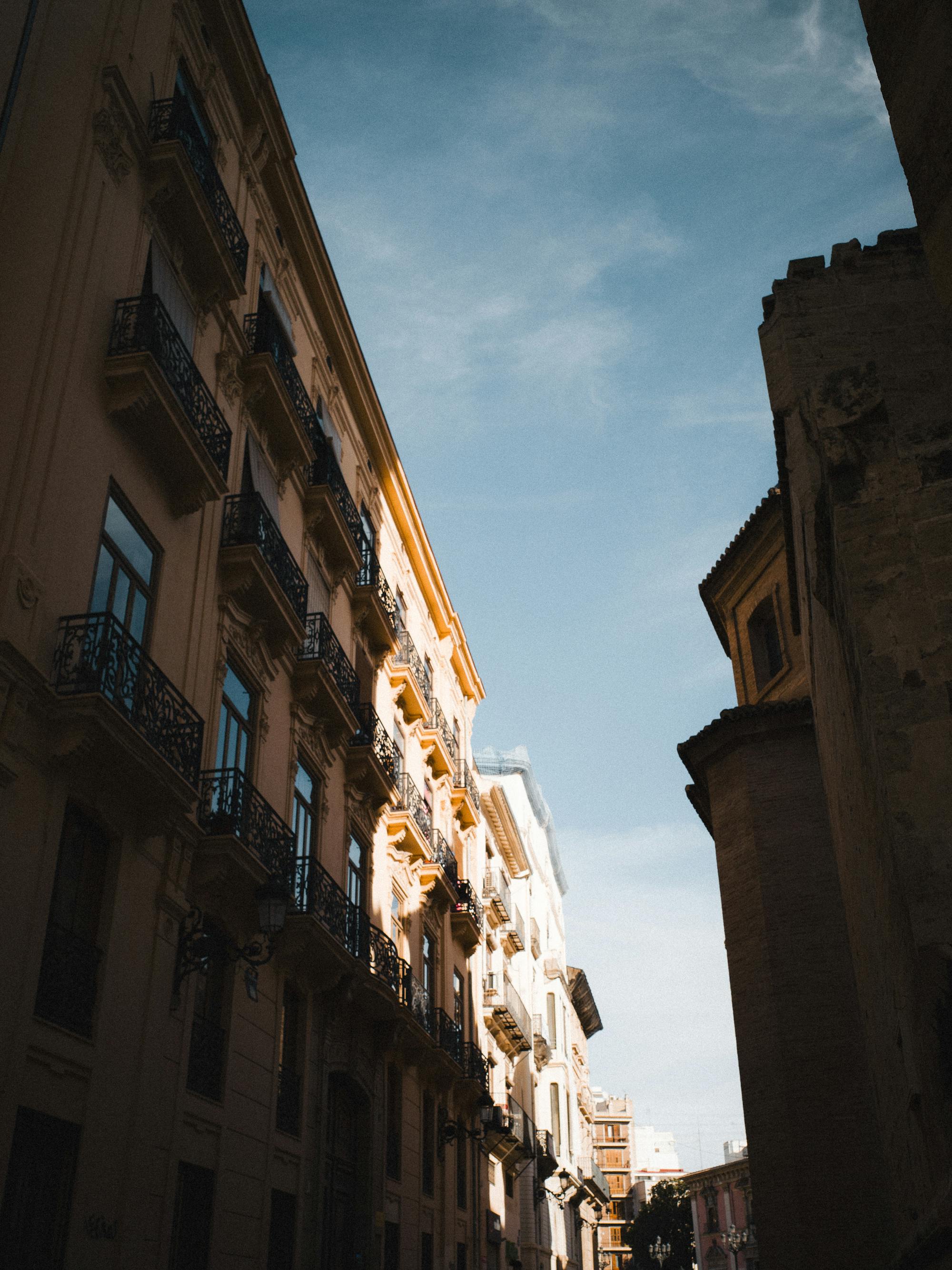
Valencia's historic centre rewards the same kind of aimless wandering that works so well in the older Spanish cities. The Mercado Central — a stunning modernist covered market completed in 1928, with a soaring iron and tile dome — is both a working food market and an architectural monument. Buy oranges, saffron, and fresh horchata from the stalls inside. The nearby Lonja de la Seda (Silk Exchange), a UNESCO World Heritage site, is one of Spain's finest Gothic buildings. The Cathedral, built over a Roman temple and then a mosque, contains what many in Valencia believe is the Holy Grail — a claim the Vatican has not entirely dismissed.
The Birthplace of Paella
Valencia's relationship with rice goes back to the Moors, who introduced paddy fields to the surrounding Albufera wetlands in the 8th century. The dish that became paella — rice cooked in a wide, flat pan over an open fire with rabbit, chicken, green beans, and butter beans — emerged from those wetlands as a farmworkers' meal. Authentic Valencian paella bears almost no resemblance to the seafood-heavy versions sold in tourist restaurants elsewhere; it is drier, more subtle, and finished with a layer of socarrat — the caramelised crust at the bottom of the pan that is the mark of the skilled cook. The best paella in Valencia is found at restaurants around the Albufera lake, particularly at weekends.
Las Fallas: The World's Most Extravagant Festival
Every March, Valencia stages Las Fallas — a week-long festival that consumes the entire city in an explosion of fireworks, brass bands, papier-mâché sculpture, and fire. Enormous satirical figures (the fallas) are constructed over months and then, on the final night of March 19th, burned to the ground in a choreographed conflagration that lights up the sky. The smell of gunpowder hangs over the city for a week; the noise is extraordinary; the energy is unlike anything else in Europe. Las Fallas is listed as UNESCO Intangible Cultural Heritage and represents Valencia at its most unreservedly itself.
Beaches, the Albufera, and Day Trips
- La Malvarrosa — Valencia's main urban beach, wide and well-serviced, within cycling distance of the city centre
- Albufera Natural Park — a freshwater lagoon south of the city, important for migratory birds and the origin of Valencian rice culture
- Xàtiva — a beautifully preserved hilltop town an hour south, with a remarkable castle and connections to the Borgia family
- Best months: May and June for beach-going without summer crowds; September and October for the harvest season
Valencia rewards visitors who come without a fixed agenda. Its pleasures are generous and accessible — extraordinary architecture, outstanding food, genuine warmth, and a Mediterranean pace of life that slows the traveller down in the best possible way.