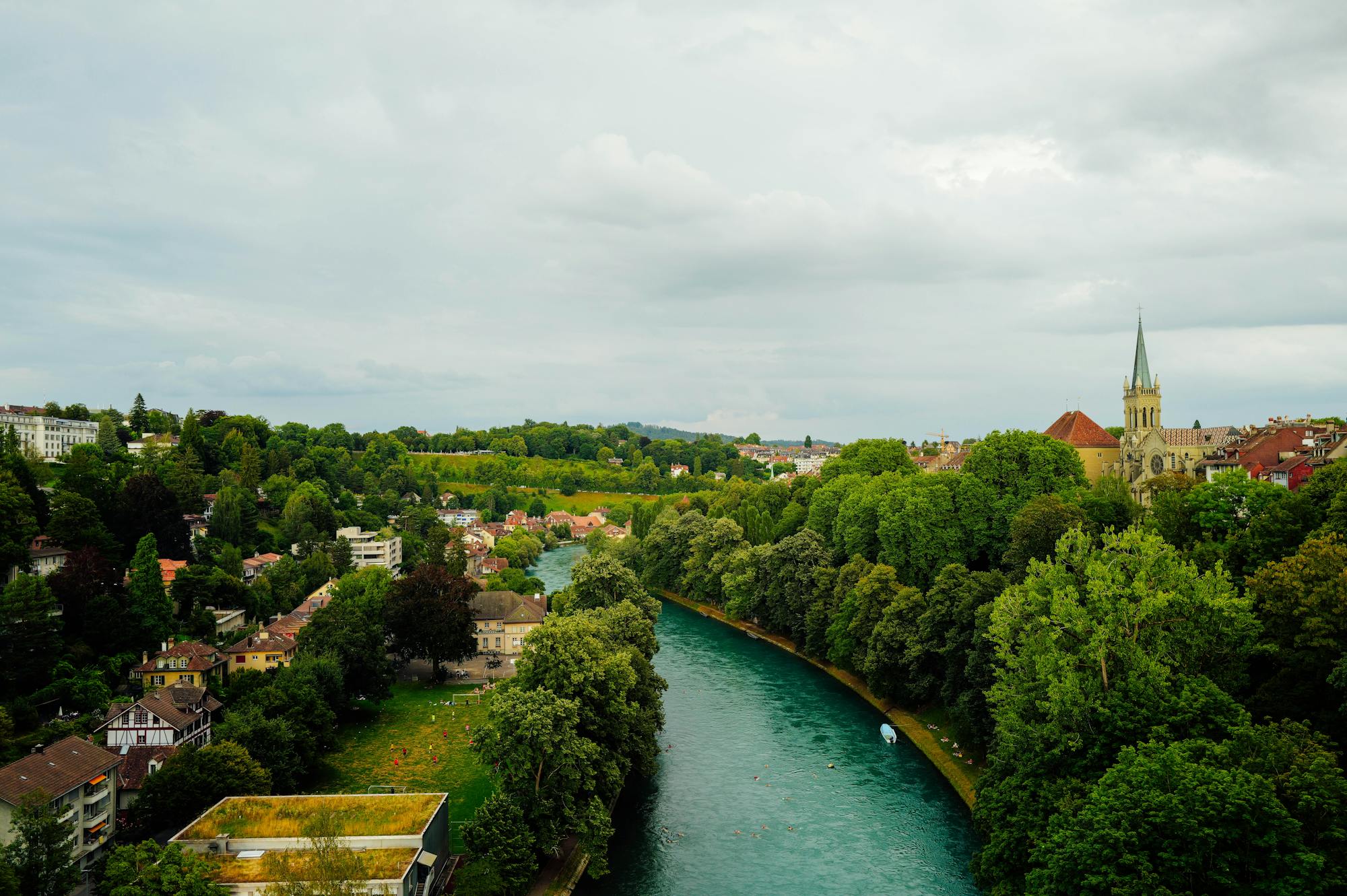
Bern is one of Switzerland's most rewarding year-round city destinations, with its UNESCO World Heritage old town, extensive arcaded streets, and riverside setting ensuring that sightseeing and cultural exploration are possible in all weathers. The best overall time to visit is late April through October, when the outdoor swimming on the Aare, café terraces, and mountain views from the Rose Garden are all at their finest.
- Best time to visit: late April through October — or December for the Christmas markets
Best Time to Visit Bern
The best time to visit Bern is generally May to October, depending on the season and the kind of trip you want. In this beautiful city, spring is the shoulder season from March to May, summer is the peak season from June to August, autumn is the shoulder season from September to November, and winter is the low season from December to February.
Bern weather varies through the year, with average temperature ranges of 2 to 18°C in spring, 14 to 24°C in the summer months, 4 to 20°C in autumn, and -1 to 5°C in winter; in peak summer, the weather can reach 30°C. Bern offers a compact city and historic town setting, with the Old Town a unesco world heritage site and major sights within walking distance. A trip to Bern also fits easily into a wider Switzerland itinerary.
In spring, average rainfall stays moderate with about 6 to 10 rainy days, and the Aare river area is quieter with fewer crowds. This is a good time for outdoor activities, and it helps to carry a water bottle to refill at fountains while exploring, when cherry blossoms bloom in the rose garden around April, a popular vantage point with sweeping views over the city, and locals enjoy the fresh air by the river. Spring also brings the BEA Spring Fair, Museum Night on March 22, the Bern International Jazz Festival, and the Bern Grand Prix in May. Easter celebrations also make spring appealing, and it is a good season to visit museums.
Summer runs from June to August, with June marking the start of the warmer months and August closing the busiest period. Summer is ideal for swimming in the River Aare and to spend time by the river with friends, and for enjoying festivals at night, including the Gurtenfestival every year. Summer also brings more tourists and can be the most fun time to visit. The average temperature is pleasant, and summer is often the liveliest time to visit.
Autumn lasts from September to November, and September is often recommended for good weather and fewer crowds. Autumn can bring mild rain or fog, but it is still a lovely time to see the city by walking the cobbled streets and covered arcades of the old town, and November hosts the Bern Onion Market, Zibelemärit.
Winter covers December to February, with snow or rain on around 7 to 9 days and a colder atmosphere across Bern. Christmas markets appear in various locations, while winter sports and ice skating are popular during this season, especially around Parliament Square. Museums are a good indoor option when you want to rest from outdoor sightseeing. February also brings the Bern Carnival, which continues into March.