Brazil's vast size means it straddles multiple climate zones and there is no single "best time" for the whole country. The Amazon is best explored in the dry season; Carnival in Rio peaks in February; the Pantanal offers its finest wildlife viewing as water levels drop; and Brazil's southern beach resorts follow a seasonal pattern opposite to the Northern Hemisphere.
Best Time to Visit Brazil: Peak Season (December–March)
For many travelers, the best time to visit Brazil is during the peak tourist season, which coincides with the Southern Hemisphere summer. Carnival (February or March depending on Easter) is the defining event — Rio Carnival leads the way with spectacular parades and street parties, Olinda's exuberant frevo celebrations, and Salvador's massive axé music street parties, with festivities sometimes extending into early March. December through February is high season for Rio's beaches, and the summer months from December to March are the main coastal travel window — Ipanema, Copacabana, and Búzios are at their liveliest with long days, warm seas, and a vibrant social scene. New Year's Eve on Copacabana Beach, with its famous white-clad crowd and fireworks, draws over 2 million people. Inland, the highland cities (Petrópolis, Campos do Jordão) are popular weekend escapes from the summer heat. Book well in advance for this period. It also brings high prices for hotels and flights.
Shoulder Season (April–June and September–November): Best Time to Visit
The shoulder seasons offer excellent conditions across multiple regions, making them a pleasant time to travel with lower prices than peak periods. April through June sees the Amazon beginning to flood, creating extraordinary várzea (flooded forest) boat journeys; Rio and the south coast have pleasant temperatures and fewer crowds; many popular destinations are quieter; and the Pantanal's water levels begin to drop revealing concentration of wildlife. September through November is one of the best overall periods to visit Brazil — dry season in most regions, comfortable temperatures, and the Pantanal at peak wildlife viewing when low water forces animals to concentrate around remaining water sources; October is a fantastic month with great weather, and for many travelers October or November works well as a shoulder month with the best weather. Jaguar sightings in the Pantanal are most likely September–November. Hotel rates are moderate and major attractions are less crowded than peak season.
Low Season (July–August, Rainy Season)
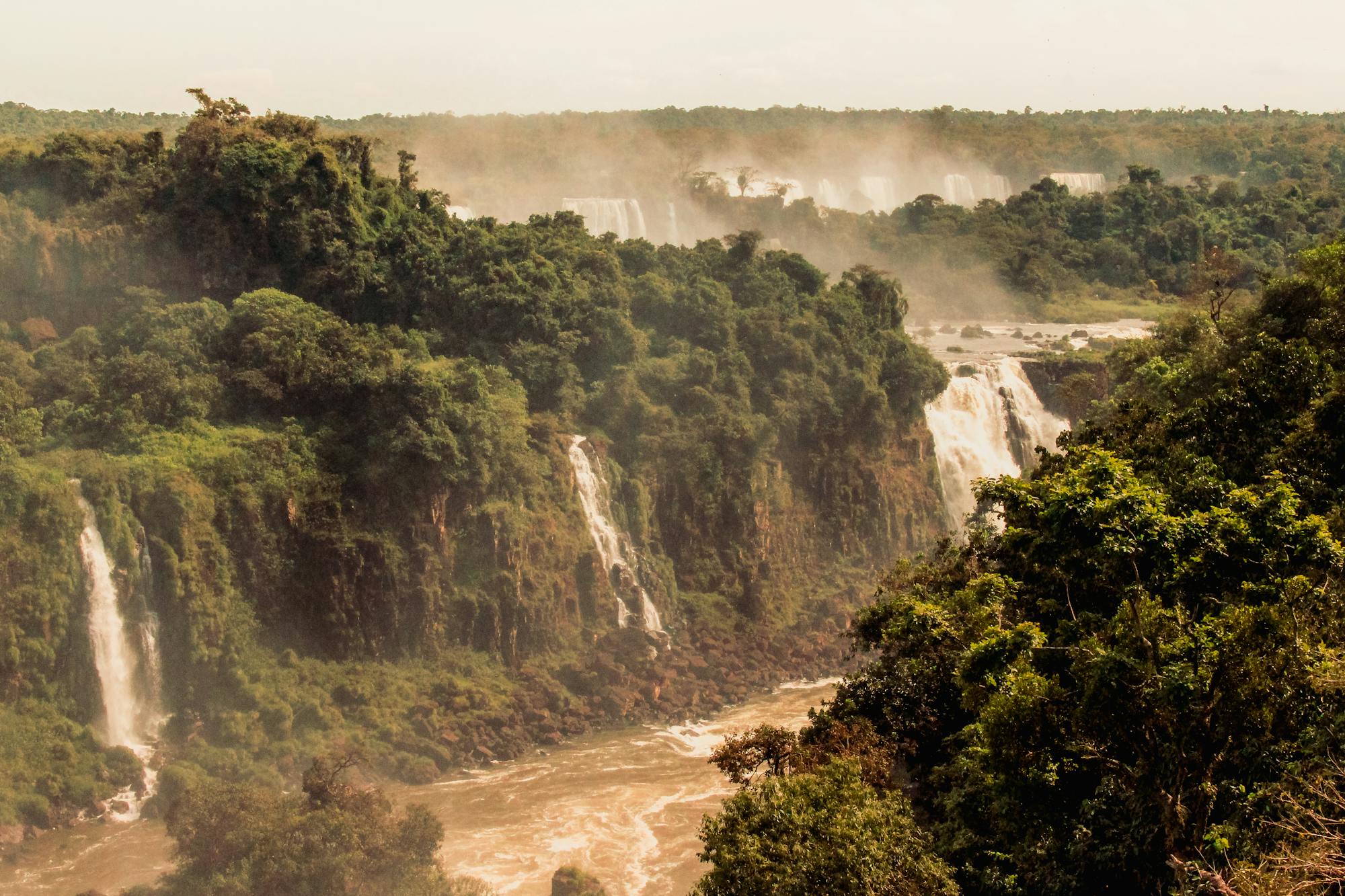
July and August are Brazil's winter months in the south, though many areas still enjoy mild temperatures even if temperatures rarely fall below 15°C (59°F) in the coldest regions. Amazon dry season (July–November) is actually ideal for visits to the Amazon Rainforest, and July is also favorable in the Pantanal for nature travel — lower water levels mean beaches appear along the river banks, wildlife is easier to spot in concentrated areas around water, and fewer insects make exploration more comfortable. Iguazu Falls is spectacular year-round but at its most dramatic June–August when rainfall peaks and water volume is at maximum. Northeast Brazil (Fortaleza, Jericoacoara, Natal) experiences its dry season June–January — excellent beach weather while the south is cooler. July is school holiday season in Brazil, so domestic tourism surges at popular beach destinations, though some travelers still choose this period for dry weather in northeastern beach areas.
Weather Overview by Region (including Rio de Janeiro)
Brazil is a large country with varied regional weather patterns, so it can be a year round destination depending on your priorities. Amazon — hot and humid year-round (25–35°C / 77–95°F), with distinct wet and dry seasons. Dry season July–November; the rainy season runs December–June, bringing more rain, and April is often the wettest month in parts of the Brazilian Amazon. Rio de Janeiro and Southeast — subtropical with a hot, humid summer (December–March), among the warmest months nationally, and a mild, drier winter (June–September); the Green Coast between Rio and São Paulo is especially appealing in the cooler months. Northeast (Ceará, Maranhão, Bahia coast) — semi-arid interior, tropical coast; dry season varies but generally June–January on the coast, and the northern regions are generally hotter than the south. South (São Paulo, Curitiba, Porto Alegre) — subtropical with four seasons; the southern regions see cooler weather in winter, along with hot summers and year-round rainfall. Pantanal — hot year-round, dry season May–October, wet season November–April when much of the wetland floods.
Key Events
January 1: Réveillon New Year celebrations on Copacabana Beach — 2+ million attendees, with many revelers jumping seven waves at midnight
February/March: Carnival — many travelers visit Rio de Janeiro for this event, while Rio, Salvador, Olinda, and Recife all host major festivities (dates vary with Easter)
June: Festa Junina — traditional June festivals celebrated nationwide with forró music, dancing, and food, alongside regional highlights rather than just the most famous celebrations
Late June: Paratins Folklore Festival — a major annual cultural event in the Amazon
July: Brazilian school holidays — domestic beach destinations surge in popularity
September–November: Pantanal dry season peak — best jaguar and wildlife viewing
October: Oktoberfest in Blumenau (German-heritage city in Santa Catarina) — Brazil's largest beer festival
November: Black Consciousness Day celebrations throughout Brazil; Day of the Dead is observed more quietly than the famous celebrations seen in Mexico
December: Summer begins, beaches fill, and visitors come to celebrate Christmas as well as New Year festivities nationwide