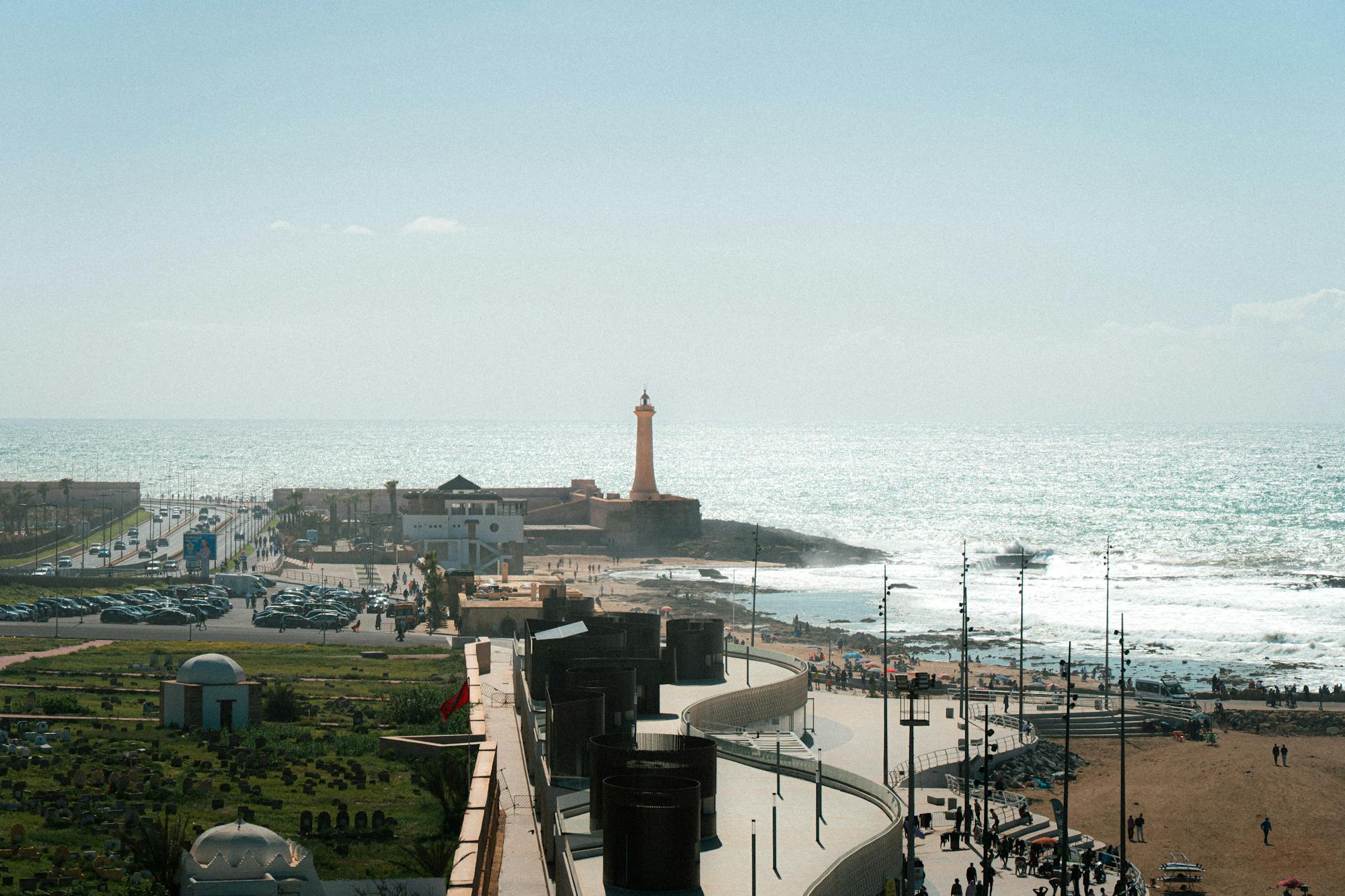
Casablanca's Atlantic coastal position gives it Morocco's most moderate and consistent climate. Unlike the inland imperial cities that bake in summer and freeze in winter, Casablanca benefits from Atlantic breezes that keep temperatures between 12°C (January nights) and 30°C (August days) year-round — making it one of Morocco's most comfortable cities to visit at any time of year.
Casablanca's Atlantic coastal position gives it Morocco's most moderate and consistent climate. Unlike the inland imperial cities that bake in summer and freeze in winter, Casablanca benefits from Atlantic breezes that keep temperatures between 12°C (January nights) and 30°C (August days) year-round — making it one of Morocco's most comfortable cities to visit at any time of year.
Best Time to Visit Casablanca: Spring (March–May) Best Overall
Spring is widely the best time to visit Casablanca thanks to mild weather conditions, with warm, clear days (20–26°C) and occasional Atlantic showers that keep the city fresh. The Corniche and Hassan II Mosque terraces are at their most comfortable for extended exploration, with pleasant temperatures that make lingering easy, and the city's café culture — outdoor terraces on Boulevard Mohammed V and the marina — is at its most vibrant. Spring also brings perfect weather for outdoor activities in the city. Casablanca is a working commercial city rather than a heritage tourism destination, so it lacks the festival calendar of Marrakech or Fes — the rhythm of spring is simply that of a pleasant, active city.
Autumn (September–November): Best Time to Visit
October and November are arguably the single best months to visit Casablanca, making autumn a prime time to visit after summer and with temperatures dropping; October in particular brings excellent weather and comfortable temperatures, while sea temperatures remain warm enough for Corniche swimming (22–24°C), and the city is busy with both business and leisure visitors. The Atlantic light in October and November is particularly beautiful for photography of the Hassan II Mosque at sunrise. Autumn also avoids the peak tourist season feel found in busier Moroccan destinations.
Summer (June–August): Good Time to Visit Casablanca
Unlike Marrakech or Fes, Casablanca is a good year round option, with a Mediterranean climate shaped by the Atlantic Ocean that keeps summer temperatures generally at 26–30°C and only rarely above 32°C, unlike hotter inland cities. Those ocean breezes make the season easier here than in inland and desert regions. Daytime temperatures on the coast are often more moderate, with temperatures hovering in a comfortably warm range because of the Atlantic influence. The Corniche beaches attract Moroccan domestic holidaymakers and Casablancans in large numbers, and summer is high season, especially during school holidays, when most visitors head to the coast. Casablanca is one of Morocco’s more comfortable coastal cities during the summer months, even when intense heat affects other parts of the country. Compared with Casablanca, the Sahara Desert can become extremely hot in summer and other regions can see extreme heat. Outdoor dining and beach clubs are in full swing. If you're combining Casablanca with inland Morocco in summer, visit the Atlantic coast first or last.
Winter (December–February): Mild Weather but Rainy
Casablanca's winter months bring mild weather, with 15–19°C days, but the Atlantic brings regular rainfall — typically 8–10 rainy days per month December through February, so pack layers because evenings feel cooler even when daytime sightseeing is comfortable. Winter travel may also coincide with Ramadan, a significant cultural event in Morocco, and dates vary according to the Islamic calendar. Religious periods such as Aïd el Kebir, a family-centered feast that includes sheep slaughtering, and Mouloud, which marks the birthday of the Prophet Muhammad, can also shape the feel of a trip. The Hassan II Mosque is still magnificent in grey Atlantic light and winter visiting means no queues. The city's indoor culture — the art deco brasseries, the old Médina cafés, the Morocco Mall — is particularly enjoyable in winter, while seasonal cultural festivals can add a lively atmosphere with music, dance, and local foods that deepen cultural immersion and offer a glimpse of daily life. January is Casablanca's quietest month for tourism, with fewer crowds and lower hotel rates that especially appeal to budget travelers.
Practical Note on Visiting: Fewer Crowds
Casablanca is a common starting point for a Morocco trip via Mohammed V International Airport, especially for travelers planning to visit Morocco beyond the city; it is often used to experience Morocco year round, with routes toward the Atlas Mountains, the High Atlas Mountains, and the coast, and in North Africa it also anchors one of the country's key coastal areas. This is understandable — Casablanca is a modern commercial city without the heritage depth of the imperial cities — but it rewards those who spend 1–2 nights to see the Hassan II Mosque properly, explore the Art Deco architecture, and experience Morocco's most cosmopolitan urban café culture, and each preferred season offers a different way to plan Morocco, from warm weather on the Atlantic coast with its more temperate climate to cooler mountain itineraries inland.
For budget conscious travelers, the shoulder months or winter season offers lower hotel prices and fewer tourists. For first time visitors deciding on the best time to visit Casablanca, the smartest trip choice is usually a 2-night stay timed around a morning visit to the Hassan II Mosque at opening time (9am) before the tour groups arrive. In late winter, temperatures begin to rise, bringing warmer temperatures and making spring travel onward to a coastal town, the High Atlas, or other regions easier.