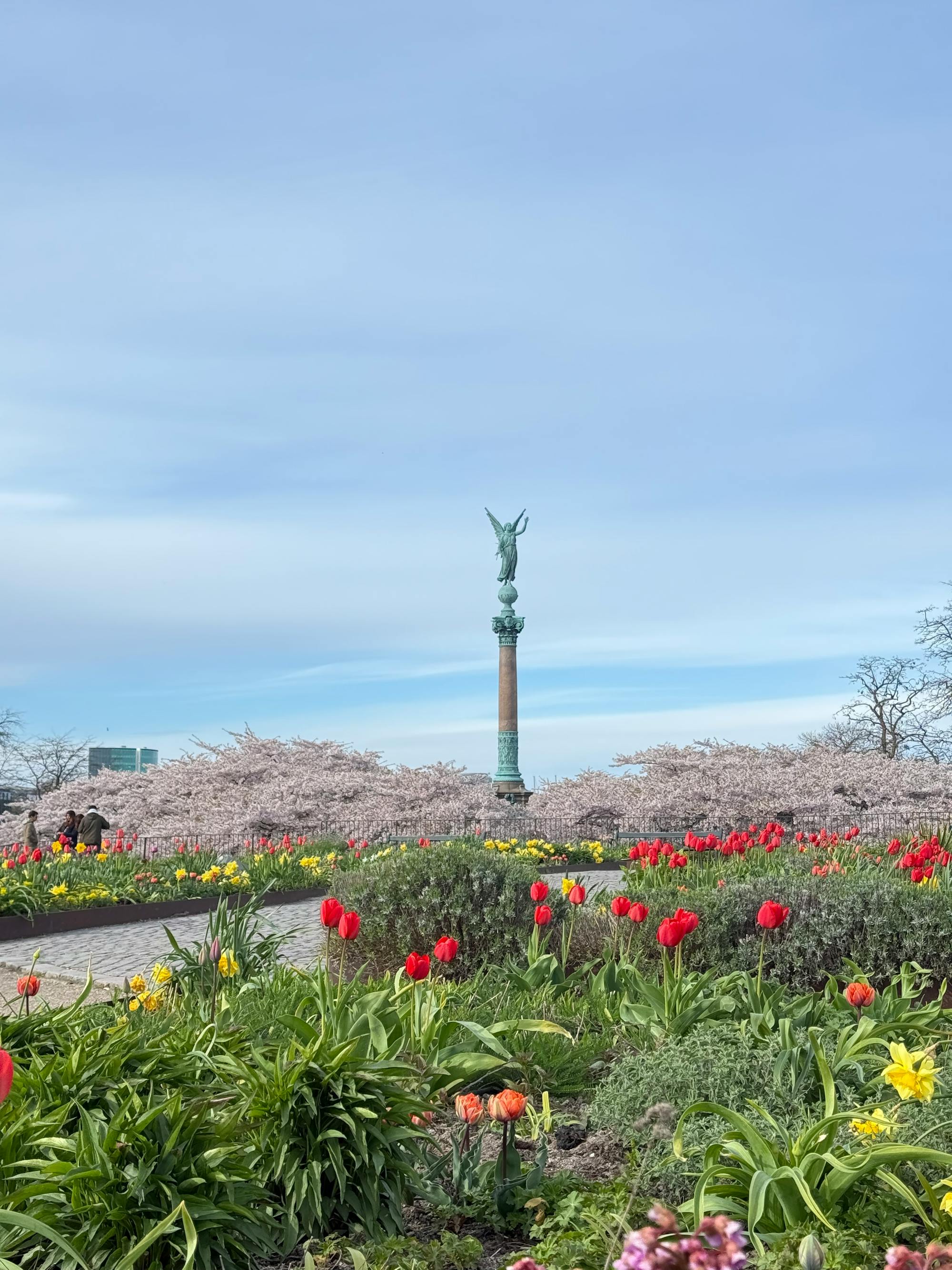
The best time to visit Copenhagen is May through August for long days, cycling weather, and outdoor Danish life at its most expressive — or late November through December for the city's magical Tivoli Christmas season and hygge atmosphere. Spring and early autumn offer a good compromise of reasonable weather and fewer crowds.
The best time to visit Copenhagen is May through August for long days, cycling weather, and outdoor Danish life at its most expressive — or late November through December for the city's magical Tivoli Christmas season and hygge atmosphere. Spring and early autumn offer a good compromise of reasonable weather and fewer crowds. Copenhagen rewards visits in any season, though November is the least inspiring month before December's festivities begin.
Best Time to Visit Copenhagen: Spring (March–May)
Spring comes relatively late to Copenhagen, but March to May is still a good window because the weather begins to improve — March is still cold (4–8°C) and grey, while April brings milder conditions, the first outdoor café terraces, and blossoming cherry trees, particularly around the Langelinie park where tulips and cherry blossoms frame the waterfront, and longer daylight hours start making outdoor plans easier. By May, temperatures reach 15–18°C and the city's cycling culture enters full flow. In late spring, average temperatures usually sit in the mid-teens, and locals return to outdoor cafés and parks. The Tivoli Gardens reopens for the spring season in late March or April, making its blooming gardens one of the key events of the season in the Danish capital. The Copenhagen Cooking & Food Festival in August is in the calendar planning horizon, and spring is ideal for the Louisiana Museum day trip — the garden sculpture park overlooking the Øresund is spectacular in May. The Distortion street festival in late May/early June signals the transition to summer.
Summer (June–August): Average Temperatures
Copenhagen summers are warm, light-filled, and energetic — summer brings warm temperatures of 20–24°C, and this is the peak tourist season. Daylight extends past 10pm in June, with long bright evenings as the sun sets very late in June and July. Nyhavn's canal bars draw summer crowds; the harbour baths at Islands Brygge and Nordhavn fill with swimmers; cycling feels effortless and joyful throughout the flat city. The Copenhagen Jazz Festival in July is the city's most beloved summer event — 10 days of free and ticketed jazz across hundreds of venues, from Tivoli stages to neighbourhood café terraces. The Roskilde Festival (late June/early July) — 30 minutes by train from Copenhagen — is Scandinavia's largest music festival and draws 130,000 visitors from across Europe. July is often the sunniest month, though summer sees cool breezes at times. Street food festivals, Midsommar celebrations, outdoor theatre, and Sankt Hans round out the season.
Autumn (September–November)
September and early October are often the best time to visit for mild weather and fewer crowds, as summer warmth lingers (16–19°C) and the city's cultural season launches in full force. The CPH:DOX documentary film festival in March and the Copenhagen International Film Festival in autumn bring international cinema to the city. October's golden light on Nørrebro's maple-lined streets and Frederiksberg's park is beautiful, and as temperatures begin to drop in fall, conditions are still good for sightseeing and days to explore on foot. The Tivoli Halloween season in October is beloved by families. November autumn is greyer and damp, with more frequent rain, but it can be a quieter time in the shoulder season as the city prepares for its Christmas season with a festive anticipation that builds from mid-month.
Winter (December–February): Christmas Markets
Copenhagen's Tivoli Christmas market (mid-November through December 31) is the city's most magical seasonal offering, and the wider Christmas markets across the city add even more festive atmosphere. February is also a good time to visit for the Copenhagen Light Festival. The city's hygge culture — centred on candlelit interiors, warm woollen blankets, and convivial conversation — is at its most authentic in winter. Temperatures hover around 2–5°C in December, with shorter daylight hours and the sun sets in mid-afternoon. January and February are quiet and cold, but that off season brings fewer crowds, lower hotel rates, and strong indoor options like the Royal Danish Opera, Ballet, Orchestra, and museums. Hotel rates drop considerably from January — the best deals of the year.
Events and Festivals Calendar: Copenhagen Light Festival
These are the key events to consider when choosing the best time to visit Copenhagen and planning a trip in Denmark, and they’re the kind of highlights often featured in Copenhagen travel guides. Distortion Festival (late May–early June): Copenhagen's wildest street party — five days of free outdoor parties across different city neighbourhoods, celebrating Danish electronic music culture. Sankt Hans (late June): A traditional midsummer celebration with bonfires and waterfront gatherings across the city. Copenhagen Jazz Festival (July): Ten days transforming the entire city into a jazz venue — over 1,000 concerts, most free, across streets, parks, cafes, and formal venues. Roskilde Festival (late June/early July): Scandinavia's largest music festival, 40 minutes from Copenhagen, featuring 175 acts across 8 stages over 8 days. Copenhagen Light Festival (February): A winter highlight that fills the city with outdoor light installations during the darkest part of the year. Christmas markets (mid-November–December 31): Tivoli and the rest of the city turn into a winter wonderland, making this a memorable time to visit for festive lights, seasonal food, and cozy holiday atmosphere.