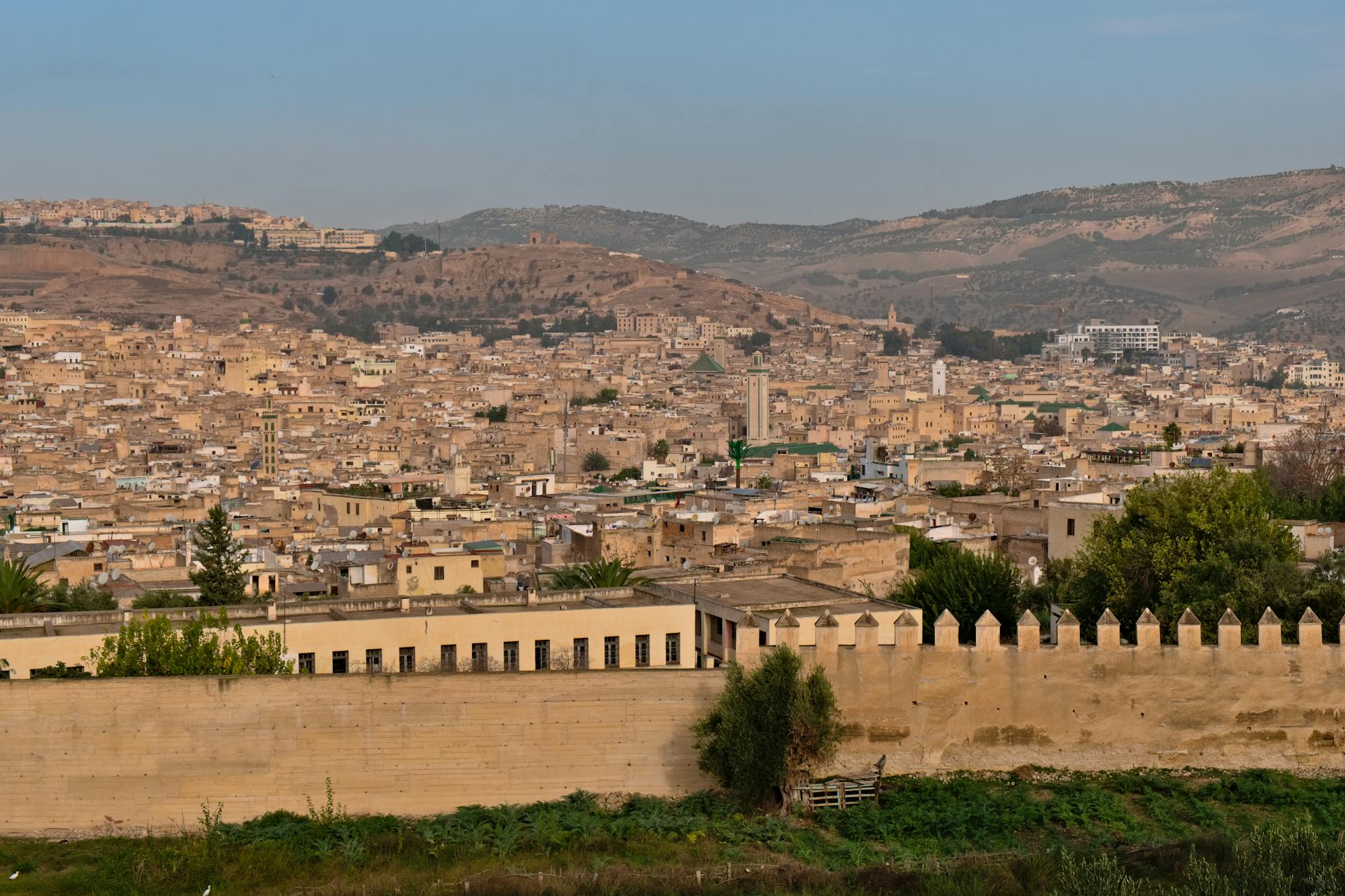
Fes has a more extreme climate than coastal Moroccan cities due to its inland position and elevation (around 400 metres). Summers are hot and winters are genuinely cold, making the spring (March–May) and autumn (September–November) the clear best times to visit.
Fes has a more extreme climate than coastal Moroccan cities due to its inland position and elevation (around 400 metres). Summers are hot and winters are genuinely cold, making the spring (March–May) and autumn (September–November) the clear best times to visit.
Best Time to Visit Fes: Spring (March–May) Optimal
Spring is universally regarded as the best time to visit Fez. Temperatures are comfortable (18–28°C); in April, days are warm and sunny, the medina is neither baking nor cold, and the surrounding hills are green from winter rain, with moderate humidity levels. Crowds are manageable — international tourism has recovered post-pandemic and Fes is busy in peak spring, but the medina is so vast that it never feels overwhelmed. It’s an ideal time and a great time for exploring the medina on foot. The Fes Festival of World Sacred Music takes place in June (sometimes late May), drawing world-class Sufi musicians, Gnawa masters, and devotional performers from across the Islamic world — one of the most distinctive music festivals anywhere, so book accommodation and guided tours in advance around festival dates.
Autumn (September–November): Second Best Time to Visit
October and November are excellent in Fes, and October is also a good time to visit if you want a great month for mild conditions — temperatures in the low-to-mid 20s, clear skies, stable weather, plenty of sun, and the city returning to full activity after the slower summer. The medina feels particularly vibrant in October with both domestic Moroccan visitors and European tourists present. It’s an easy season for first-time visitors planning a shorter trip or long weekend. November can begin to feel cool — wool djellabas and blankets appear in the souks as locals prepare for winter — and by late November evening temperatures require a proper jacket, especially around public holiday periods when evening activity and opening patterns can shift.
Summer (June–August): Challenging Humidity Levels
Summer in Fez is very hot inland compared with other parts of the country — regularly 38–42°C, occasionally touching 45°C during heat waves. The dense building fabric of the medina provides shade in the narrow lanes, which is a genuine advantage over open-plan cities, but the tanneries and some of the more confined souk areas become very malodorous in extreme heat. This is unlike a coastal town with a Mediterranean climate, which may feel more comfortable in midsummer. If you visit Fez in summer, confine heavy sightseeing to the early morning (7–10am) and late afternoon (5–7pm), as avoiding the middle of the day is essential. Riad prices drop substantially and the medina loses much of its tourist crowd, giving it a more authentically local character. Some travelers still come then because the city can be visited year-round despite the heat.
Winter (December–February): Cold but Rewarding
Fes winters are the coolest of any major Moroccan city — January is the clearest example, with daytime temperatures of 12–16°C, nights dropping to 3–6°C, and the possibility of light snow on the surrounding hills (rarely in the city itself). The medina is at its quietest and most photogenic in winter light. It is also the best season for visitors most interested in the city's history. Riads should be verified for heating — the finest ones have fireplaces and underfloor heating, but budget accommodation can be very cold, while well-regarded medina stays such as Dar Seffarine are worth booking early. Fes el Bali is the historic core and the UNESCO World Heritage Site most visitors come to see. The winter atmosphere in Fes is one of the most authentic in Morocco — artisans work steadily, fewer tourists are present, and the city's medieval rhythms, daily life, and shops are easier to observe before returning carefully at night.
Ramadan Considerations for First Time Visitors
Fes during Ramadan is one of Morocco's most spiritually significant experiences, but because the dates change each year, you should check them before planning — the Qarawiyyin Mosque district comes alive after iftar with Quranic recitation, the medina glows with lanterns, and families fill the streets for the evening celebration. However, daytime food access is very limited (some tourist restaurants operate with curtained windows), and most shops reduce hours or close during the day, especially around Friday and major religious observance. Monuments in the medina such as Bou Inania Madrasa and nearby gardens may also have altered access during this period. The experience also differs between the medina and Ville Nouvelle. Whether Ramadan enhances or complicates a Fes visit depends entirely on your priorities and flexibility, and it can shape the rhythm of your holiday planning.