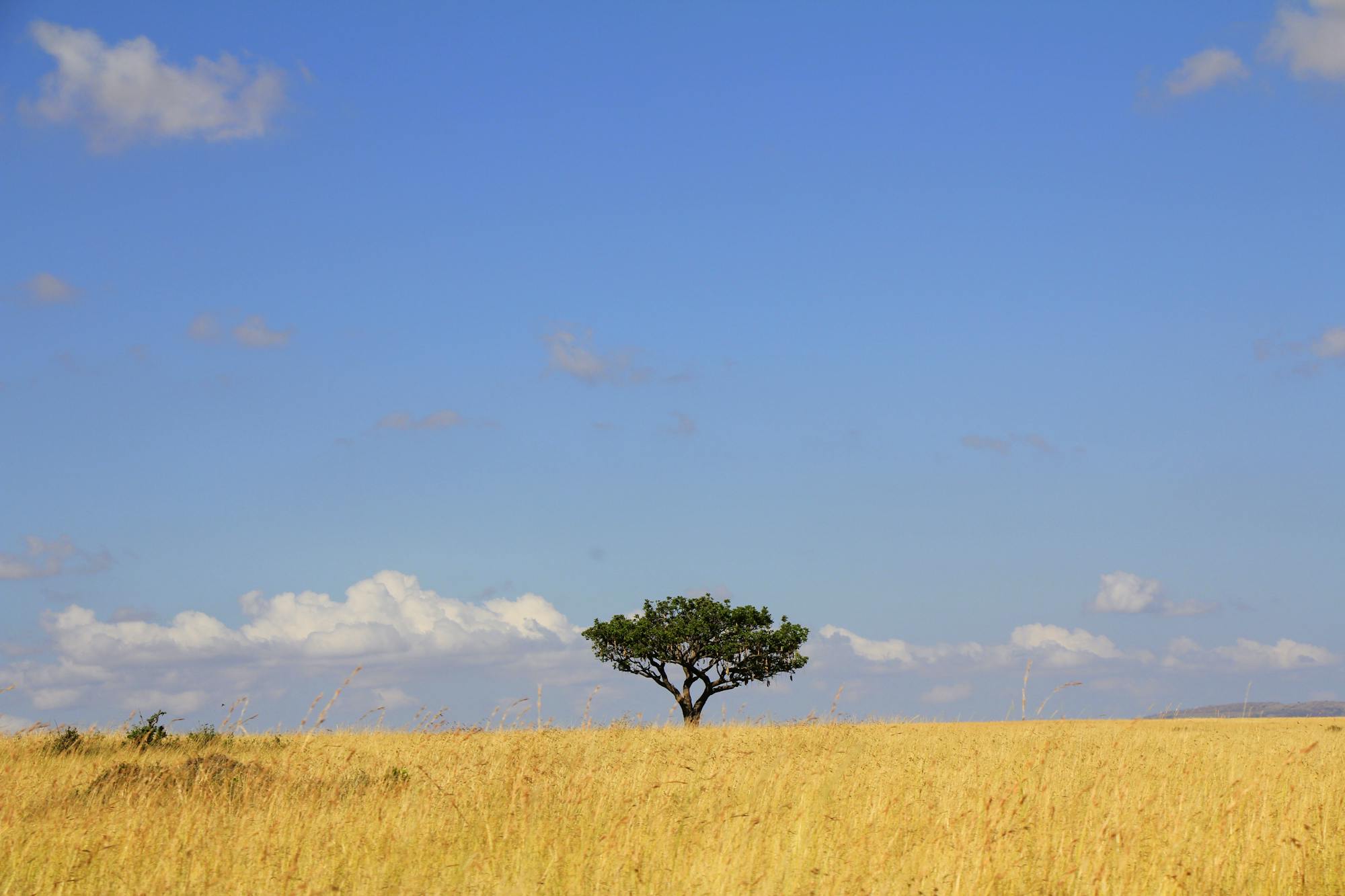
The best time to visit Kenya for safaris is during the dry seasons — either the long dry season from July to October (peak migration period) or the short dry season from January to February. During dry spells, vegetation thins out, animals concentrate around water sources, and game viewing is at its most productive.
The best time to visit Kenya for safaris is during the dry seasons — either the long dry season from July to October (peak migration period) or the short dry season from January to February. During dry spells, vegetation thins out, animals concentrate around water sources, and game viewing is at its most productive.
Best Time to Visit Kenya: July to October Peak Season (Great Migration)
July through October is Kenya's most celebrated safari window, coinciding with the Great Migration in the Masai Mara, formally the Masai Mara National Reserve. Between 1.5 and 2 million wildebeest, plus hundreds of thousands of zebra and gazelle, are part of the wildebeest migration, also known as the Great Wildebeest Migration, crossing from Tanzania's Serengeti into the Masai Mara from approximately July onwards, with the dramatic river crossings on the Mara and Talek Rivers — where crocodiles wait and the chaos of animals plunging into turbulent water is extraordinary — typically peaking in August and September. This is also the peak for big cat sightings in the Mara, making it one of the best times for wildlife viewing, with lions, leopards, and cheetahs all hunting at their most active. Book tented camps 6–12 months in advance for this period, as it is the high season and a Kenya safari can feel crowded.
January to February: Short Dry Season
The short dry season from January to February is an excellent and less expensive alternative to the July–October peak, and often the best time to visit Kenya for travelers seeking a quieter window. Game viewing across all parks is excellent — the Masai Mara remains one of Kenya’s premier safari destinations for wildlife spotting and retains strong resident predator populations year-round, Amboseli National Park's elephants are at their most photogenic against the snow-capped backdrop of Kilimanjaro (January–February often have the clearest mountain visibility), and Samburu National Reserve is active with desert-adapted wildlife, often with fewer crowds than July to October. For the migration, herds can start arriving in the Masai Mara as early as June in some years, with the dramatic river crossings usually peaking from July to September; by mid-October, most herds have returned to the Serengeti. This period also coincides with the calving season in the southern Serengeti (Tanzania), when newborn animals are a major draw if you cross the border for a combined itinerary, while excellent resident populations remain in Kenya and it can also bring low season prices after peak travel periods.
March to June: Long Rains
March through June brings Kenya's long rains, the main wet season and long rainy season — not the constant downpours of equatorial forests but afternoon showers and overnight rains that create lush, green landscapes; later in the year, the short rainy season, or short wet season, is usually lighter and briefer. Game viewing in the green season is more challenging because denser vegetation and muddier tracks make wildlife spotting harder, and animals are more dispersed, but it can still be rewarding, and rates drop 30–50% from peak season for a less crowded Kenya safari. In January and February, clearer conditions in Amboseli National Park also improve visibility around the plains and swamps. Even outside the migration, the Masai Mara still has excellent resident populations, so its safari value stays strong year-round. Birding is exceptional during the rains, as resident species are joined by vast numbers of Palaearctic migrants and other migratory birds, and January is also excellent for spotting migratory birds in Kenya. Lake Nakuru is another strong seasonal birding stop, with changing water levels and weather affecting flamingo numbers and general game viewing. April and May are the wettest months and some bush airstrips become unusable — check access for your chosen camps, as some camps close then.
Coast and Mountain Seasons
Kenya's Indian Ocean coast (Diani, Watamu, Lamu) has different seasonal rhythms from the safari parks. Kenya’s rainy seasons center on April, May, and November, with the long rains usually stretching from late March into May, so the Kenyan coast's best weather is December through March and July through September — clear skies, good snorkelling visibility, and manageable humidity, making this a great window for beach holidays and one of the best times to visit Kenya's beaches. These months also suit scuba diving, with better water clarity and occasional whale sharks along parts of the coast. The short rains occur from November to December, making parks lush and enhancing the landscape.
Lamu, the Swahili archipelago north of Malindi, is best November through April when the northeast monsoon brings sailing dhows into the harbour, and the Lamu Cultural Festival in Lamu Old Town, a UNESCO World Heritage Site, can feature donkey racing and traditional dancing. This is also the best time for birdwatching in Kenya, from September to April, when migratory birds are a major draw and Lake Nakuru is a strong example for seasonal birdlife and wildlife spotting. April is peak breeding time for intra-African migrant birds. November is especially good for seeing resident birds in breeding plumage.
Climbing Mount Kenya is best in the dry seasons (January–February and July–September), when routes through Mount Kenya National Park are clearest and ice formations on the peaks are at their most dramatic. The Mount Kenya Festival also appeals to hikers and climbers who want to enjoy the scenery around the peak. Events such as Rhino Charge help conserve mountain ecosystems and raise support for mountain ecosystems.
Nairobi: Year-Round
Nairobi, at 1,795m altitude, is comfortable year-round with a highland climate that avoids tropical heat, so there is no single best time to visit for a city stopover. The city's Nairobi National Park — the world's only urban national park — is equally good throughout the year, though in the dry seasons wildlife gathers more closely along the Athi River, improving wildlife sightings. Nairobi serves as the hub for all Kenyan safari departures and is typically visited for 1–2 nights at the start and end of any Kenya itinerary, making it a practical place to start planning onward travel logistics around school holidays. September often brings slightly fewer crowds than July and August, which can make onward safari timing easier.