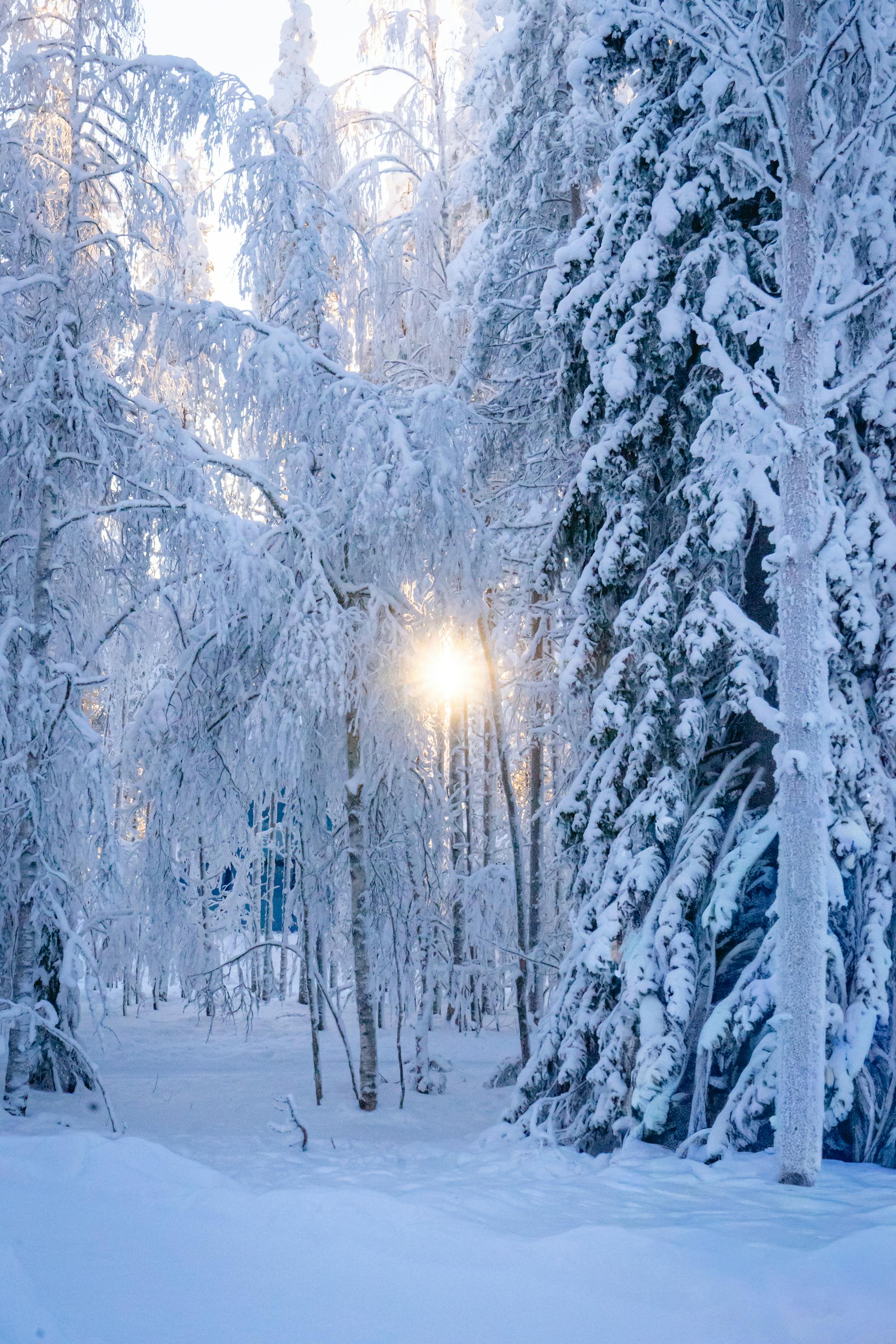
The best time to visit Lapland depends entirely on what you want to experience: for the Northern Lights and full Arctic winter, come between late November and late March, while for the extraordinary midnight sun and summer outdoor activities, June or July delivers 24-hour daylight. Each season in Lapland is genuinely distinct and genuinely spectacular.
The best time to visit Lapland depends entirely on what you want to experience. For the Northern Lights and the full Arctic winter experience — dog sledding, reindeer safaris, snowmobile tours, and snow-covered landscapes — visit between late November and late March, with December through February offering the most reliable snow and the darkest skies. For the extraordinary midnight sun, wildflower hikes, river rafting, and the sensation of light-flooded Arctic summer, come in June or July. Each season in Lapland is genuinely distinct and genuinely spectacular; the choice is yours rather than one of quality.
Best Time to Visit Lapland: Spring (March–May)
March is one of the finest months in all of Lapland and one of the best time to visit for late-winter conditions and aurora viewing. The Northern Lights are still active, the snow is deep and reliable for activities, and the days are lengthening rapidly — by late March there are 12+ hours of light and temperatures begin climbing from the deep winter cold toward a more manageable -5 to +5°C, with longer daylight hours improving daytime visibility even as nights grow shorter. The light on snow in late March and April is extraordinary, with golden-hour photography extending for hours. Late March, around the spring equinox, can offer the best chance to see the Aurora Borealis during the northern lights season. April brings the "Arctic spring" — frozen rivers begin breaking up, temperatures fluctuate wildly, and some outdoor activities become unavailable as the snow thins. May is the quietest month and sees rapid change: snow melts fast, river levels surge, and the landscape transitions from white to pale green within weeks, so it suits a quieter trip. The reindeer calving season (May) is a wonderful time to visit a farm.
Summer (June–August) and the Midnight Sun
In Finland, Lapland is a year-round destination, but the midnight sun phenomenon — where the sun never fully sets — runs from late May to late July above the Arctic Circle. This brings surreal 24-hour daylight and a complete transformation of the landscape: vast bogs turn pink with cloudberries, birch forests burst into brilliant green, and the temperature reaches a surprisingly warm 20–25°C on the best days. Summer activities include long-distance trekking on the Kungsleden and UKK Route, river rafting and canoeing, time by the lakes, wild berry and mushroom foraging, fly fishing for salmon and trout in the clear rivers, mountain biking on fell trails, and even some wildlife watching. Summer is also the peak season for mosquitoes — heavy repellent and a head net are essential through the summer months from June through August if you want to explore. Summer tourism is lighter than winter, making this a genuinely quieter and more affordable time to visit.
Autumn (September–November)
September marks the return of darkness after the midnight sun and the beginning of the aurora season, with northern lights season starting as the first aurora sightings of the new season become possible on darker nights. The ruska (autumn colours) in September transforms the Lapland fells into a blazing tapestry of red, orange, and gold that rivals anything in New England; for photographers, this is arguably the most beautiful month. Through October, weather cools quickly and temperatures generally drop sharply, with the first snows usually arriving in the north of Lapland by mid-October. Late November is a transitional, rather grey period when winter starts to feel closer before the deep snows arrive — roads can be icy, not all winter activities are yet running, and the landscape is at its least photogenic. Early aurora seekers willing to accept mud and patchy snow can visit in November at lower prices than peak December, making it a lower-key time to visit Lapland.
Winter (December–February) and Northern Lights
This is the most popular season for visitors and the one that defines Lapland as a classic winter wonderland for most international travelers. December brings polar night (kaamos) — total darkness around the winter solstice — and deep, reliable snow, creating a true winter wonderland. The Christmas period sees Lapland's Santa tourism reach a peak, particularly in Rovaniemi, where the Santa Claus Village and dozens of "meet Santa" experiences cater to families planning a festive holiday and hoping to visit Rovaniemi. January and February are the coldest months, with temperatures regularly falling to -25°C or below, but also the most reliable for aurora hunting, as the skies are clear and dark. All winter activities — including winter sports such as skiing, husky sledding, reindeer sleigh rides, snowmobile expeditions, ice fishing, and snowshoeing — are in full operation. Cross-country ski trails are groomed to perfection. The combination of deep cold, extraordinary landscapes, and the possibility of witnessing the Northern Lights makes winter the ideal time to visit Finnish Lapland for its most iconic experiences.
Best Time to Visit: What to Avoid and When to Go Off-Peak
Avoid Christmas week (20–27 December) if your priority is wilderness immersion rather than the Santa experience — it's the most popular season for family travel, so the resort towns are extremely busy, prices are at their highest, and the focus is heavily on families with young children. The "shoulder" winter period of late January to mid-February offers the same cold, snow, and aurora potential at lower prices and with more accommodation availability, though cloud cover can still affect visibility. Avoid May and November if you want either full winter or full summer conditions — both months sit between more defined seasons and are the least photogenic. Lapland is one of Europe's most expensive destinations in peak winter; booking well ahead and choosing self-catering accommodation is the most effective way to manage costs, and it's one of the most useful travel tips if you're deciding on the best time to visit Lapland. Consider Finnish Lapland, part of a wider Arctic region spanning multiple countries, over Tromsø (Norway) for better value without sacrificing aurora-viewing quality.