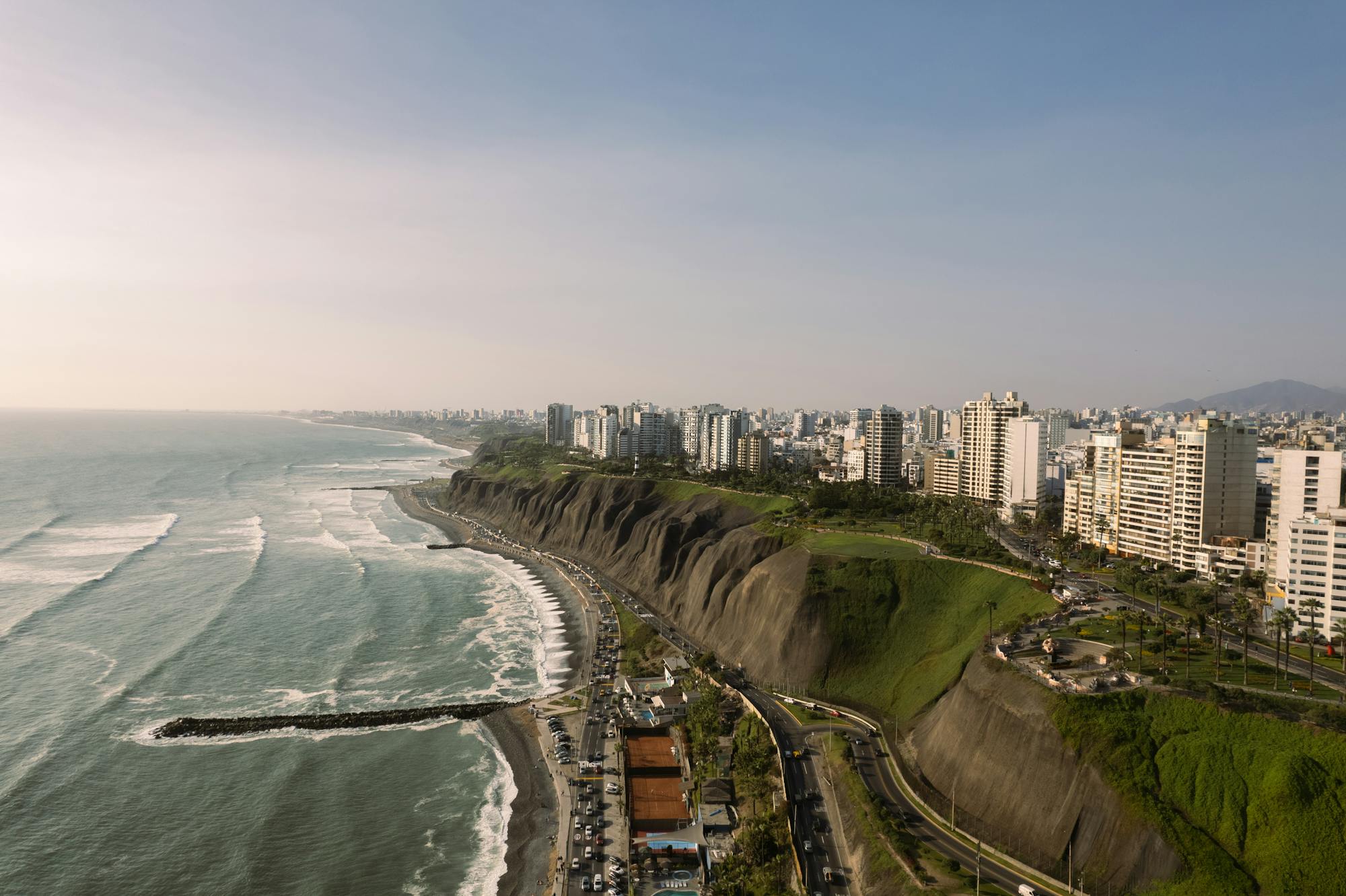
Lima's climate is one of the most unusual of any major city in the world — despite being located in a desert at a tropical latitude, its coast is kept permanently cool and frequently overcast by the cold Humboldt Current flowing up from Antarctica. Lima has two distinct seasons: a sunny summer (December–April) and a grey, misty winter known locally as the garúa season (May–November). For most visitors seeking sunshine and outdoor exploration, the summer months are the best time to visit.
- Best time to visit: December to April, Lima’s sunny summer season
Best Time to Visit Lima: Peak Season December to March (Summer)
Lima's summer runs from December to late March, aligning with the southern hemisphere summer and bringing the city's best weather, with sunny skies and clear skies on many days. Expect average temperatures in this period, with temperatures ranging from about 24–28°C, along with low humidity and long daylight hours. This is the ideal time to enjoy the Miraflores clifftop parks, outdoor dining, beach culture along Lima's Pacific Ocean coastline at Agua Dulce and La Herradura, and the full vibrancy of the city.
January and February are the hottest months, perfect for paragliding from the cliffs of Miraflores or exploring the open-air ruins of Pachacamac. The city feels especially alive during summer, with outdoor festivals, street markets, and late-night dining at its peak. This is also when Lima hosts some of its most celebrated culinary events.
The downside: this is Lima's most expensive and crowded period, especially around Christmas, New Year, and Peru's Independence Day on July 28–29. Book accommodation several weeks in advance if traveling in December or January.
Shoulder Season: April and November – Best Time to Visit
April and November mark Lima’s mild desert climate between summer and winter, with mild temperatures that offer a reasonable compromise of pleasant weather and lower prices. April still enjoys some sunshine and warm conditions before the garúa sets in, while November occasionally sees early summer sunshine breaking through. Both months are quieter than peak summer and often offer better hotel rates.
April is particularly pleasant — the summer crowds thin out, prices drop, and many travelers choose this period to visit Lima at a more unhurried pace. It's an excellent time for visiting Lima's museums, exploring the historic center around Plaza de Armas and nearby historic sites, with cultural stops such as the Larco Museum, and taking day trips to Paracas and Pachacamac.
Low Season vs. Peak Tourist Season: May to October (Winter/Garúa)
Lima's winter months from May through October are defined by La Garúa, overcast skies, and misty fog that blanket the coast without producing meaningful rainfall. Temperatures remain mild (14–18°C), but the grey skies, damp air, and high humidity can dampen spirits. The beaches are empty, outdoor dining is less appealing, and the city loses some of its luster.
However, the garúa season has real advantages: hotels are significantly cheaper (sometimes 30–50% less than summer rates), the city is less crowded, and Lima's indoor attractions — museums, restaurants, and local markets — are as excellent as ever, with rarely a bad time to enjoy the city's food scene. If your main goal is exploring Lima's culture and cuisine rather than sunshine and beach time, winter is a perfectly reasonable time to visit.
Importantly, Lima's garúa season coincides with the best weather in Cusco and the Inca heartland (May–October is the dry season there). If your Peru trip combines Lima with Machu Picchu, the trade-off in Lima's grey weather is more than compensated by perfect Andean conditions, a pattern typical of weather in Lima and much of coastal Peru.
Weather Overview: Weather Lima
December–March: 22–28°C, dry coastal conditions during the summer months, with sunnier weather and more sun. Best weather for beaches and outdoor activities.
April: 20–24°C, transitional, some sunny days. Pleasant and uncrowded.
May–June: 16–20°C, garúa begins, overcast and part of Lima’s winter months. Mild but grey.
July–September: 14–16°C, persistent garúa, cool and damp. Lowest hotel prices.
October–November: 16–20°C, garúa easing, occasional sunshine. Transitional.
Rainfall: Lima has a mild desert climate with high humidity and is technically a desert — annual rainfall averages just 8mm. The garúa is mist and drizzle, not proper rain.
The peak tourist season generally aligns with the clearest summer weather.
Key Events, Festivals, and Cultural Events
Mistura Food Festival (September): One of South America's largest food festivals, celebrating Peruvian cuisine in one of the culinary capitals of South America and Latin America, with signature dishes like lomo saltado. A must for food lovers.
Fiestas Patrias / National Holidays (July 28–29): Peru's independence celebrations bring parades, military displays, concerts, and other cultural events to Lima. In the week leading into the holidays, and with late June feeding into the start of winter and event season, locals fill the city for celebrations, so it is very busy but festive.
Lima Carnival (February): Colorful street celebrations with water fights, music, and dancing in the days leading up to Lent, with Pisco Sour Day and Labor Day serving as other useful calendar markers.
Semana Santa / Holy Week (March–April): Catholic processions and religious events throughout the city, especially around the historic center and Plaza de Armas, with colonial churches and the Saint Francis Monastery's underground catacombs adding to the experience.
Festival de la Vendimia (March, Ica): Peru's grape harvest festival, celebrated in Ica (nearby Paracas), offering a colorful day trip from Lima in early autumn.
Other seasonal Lima experiences include Señor de los Milagros in October and Santa Rosa in August.