Lyon has a semi-continental climate — warm summers, cold winters, and a genuinely beautiful spring and autumn. The best months to visit are May, June, September, and October, when the weather is pleasant, crowds are modest, and the city's cultural and culinary life is at its most vibrant.
Lyon has a semi-continental climate — warm summers, cold winters, and a genuinely beautiful spring and autumn. Unlike Mediterranean cities to the south, Lyon experiences all four seasons distinctly. The best months to visit are May, June, September, and October, when the weather is pleasant, crowds are modest, and the city's cultural and culinary life is at its most vibrant. The famous Fête des Lumières in December also makes early winter a compelling time to visit, despite the cold.
Best Time to Visit Lyon: Spring (March–May)
Spring is often the best time to visit Lyon, as the city comes back to life after the grey winter months. Temperatures ranging from 10°C in March to 20–22°C by late May, with mild weather and increasing sunshine, make it easy to enjoy the quayside markets filling with spring produce and to sample local specialties at Les Halles de Lyon Paul Bocuse, which features over 50 food stalls. Along the Saône and Rhône rivers, the riverbanks come alive with walkers and cyclists enjoying outdoor activities. Cyclists passing through can also pick up the ViaRhôna cycling trail, which runs from Geneva to the Mediterranean. The public gardens and botanical gardens are also in bloom. Lyonnais food culture enters a particularly fine moment: spring vegetables (asparagus, morilles mushrooms) appear on bouchon menus, and restaurant terraces open, with Lyon’s 95 Michelin Guide-listed restaurants adding to the appeal. Quenelles, a signature Lyon dish made from fish dumplings, are another seasonal staple to try alongside the fresh produce of spring. The city is far less crowded than Paris in spring, and hotel prices are moderate. You’ll also find fewer crowds than in peak summer. Easter brings some additional visitors but nothing overwhelming. May is a lovely time to go — warm enough for outdoor dining, cool enough for comfortable museum visits, and the countryside around Lyon (Beaujolais, Burgundy) is lushly green, with Gardens Weekend at the end of the month. Nuits Sonores takes place in mid-May each year and adds even more to the spring cultural calendar.
Summer in Lyon (June–August): Hot Summers
Lyon in summer is warm and lively, with hot summers; June marks early summer before the peak heat. Temperatures average 26–29°C in July–August, occasionally exceeding 35°C during the increasingly frequent heatwaves. The two rivers provide some relief, and the city's many parks and shaded squares, especially Parc de la Tête d'Or, a vast urban park and France's largest urban park, remain pleasant in the evenings. In August, many locals leave, and some businesses close or keep shorter hours. The summer months are also practical for mountain excursions, with Lyon's closest ski slope only 90 minutes away outside the snow season. Hiking trails in the Chartreuse Mountains are suitable for all levels, making them an easy summer day trip from Lyon.
The Les Nuits de Fourvière festival (June–August) arrives when the city’s summer scene is in full swing, bringing world-class theatre, music, and dance to the ancient Roman amphitheatre on Fourvière hill as one of the season’s major cultural events in France. Summer is the high season, especially from around mid-July through August. The city is busy but not overwhelmed in summer — Lyon attracts fewer international tourists than Paris and more French domestic visitors, giving it a more authentic summer feel. Hotel prices peak in July but remain lower than comparable French cities. For a cool break in the center, the hidden courtyards at Grand Hôtel-Dieu are a good place to escape the heat.
Autumn in Lyon (September–November): Fall Foliage
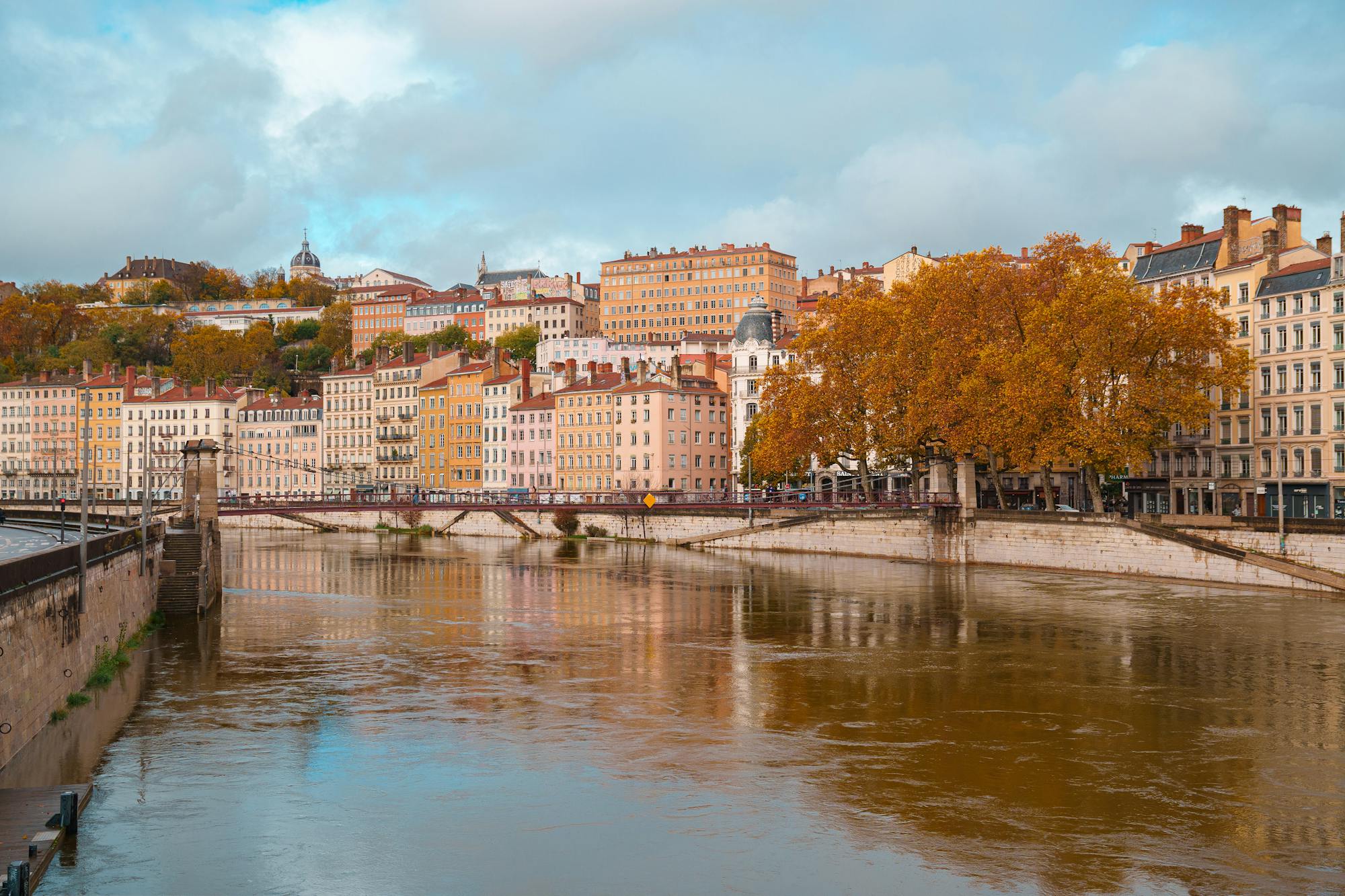
Autumn is arguably the best time to visit Lyon if you want mild weather, seasonal food, and a lively cultural calendar. September, especially from mid-September, is warm (22–25°C) with the start of the new cultural season and the return of the city's energy after August. October brings perfect walking temperatures (14–18°C), spectacular golden light along the Saône quays, and vivid fall colors and fall foliage around the city and nearby vineyards, along with seasonal produce — wild mushrooms, game, new Beaujolais Nouveau in November. The Beaujolais Nouveau festival on the third Thursday of November is celebrated with particular gusto in Lyon, the nearest major city to the Beaujolais vineyards — restaurants and bars put out barrels on the street and the city celebrates late into the night. The nearby Beaujolais region is also ideal for vineyard tours during the harvest season and grape harvest. November itself can be grey and rainy but offers excellent restaurant culture, a cosy, authentic atmosphere in the bouchons, and another good time to visit for exploring the Rhône Valley.
Winter in Lyon (December–February)
December is dominated by the Fête des Lumières — one of Europe's greatest annual events, held from December 5–8 each year, and the 2024 edition runs from December 5–8, 2024. The entire city becomes a light installation, with landmarks such as the Hôtel de Ville transformed by extraordinary projection art and light sculptures. Two to three million visitors attend, attracting millions and making this Lyon's most popular period by far — book accommodation months in advance. Late November also marks the start of the festive season, with Christmas markets adding to the atmosphere. Outside of that extraordinary event, January and February are cold (4–8°C), quiet, and excellent value. This softer, almost winter hibernation mood means fewer crowds and a cozier city rhythm. The Bocuse d'Or culinary competition occurs biennially in January. The next edition takes place on January 26–27, 2025, making winter even more appealing for food-focused travelers. Museums are uncrowded, bouchons are convivial and welcoming, and despite the cold winds, winter is a great season for food-focused travelers, whether you're settling in for coq au vin or picking up a pink praline tart.
Avoiding the Crowds: Best Time to Visit
Lyon's Vieux Lyon traboules in the old town are best explored on weekday mornings before the tour groups arrive (before 10am), when these hidden passageways, some dating back to around the 4th century and once used by silk workers, are easier to appreciate. Croix-Rousse is another historic area to explore for the city's silk heritage. The Musée des Beaux-Arts, in the city centre of central Lyon, is free on the first Sunday of each month and relatively uncrowded at most times — a significant advantage over Paris's perennially busy Louvre. The Ancient Theatre of Fourvière dates back to the 1st Century BC and is often quiet mid-week even in summer, with Roman ruins nearby and the Basilica of Notre-Dame de Fourvière, built from 1872 to 1884, overlooking the hill. Nearby, Jardin des Curiosités is a scenic viewpoint with panoramic views over Lyon, the Saône River, and on clear days Mont Blanc. For the Fête des Lumières, staying 2–3 nights rather than one allows you to visit the installations on less crowded evenings (the first night is typically the quietest). As a UNESCO World Heritage site and France's third largest city—the largest city in the region—Lyon is also a meeting point in central France at the confluence of the Rhône and Saône, so timing and neighborhood choice matter. For the best overall combination of weather, food, and culture, aim for the second half of September or first half of October if you want to visit Lyon with good weather and manageable crowds. Lyon also works well as a base for combining city time with trips toward the French Alps or the French Riviera.