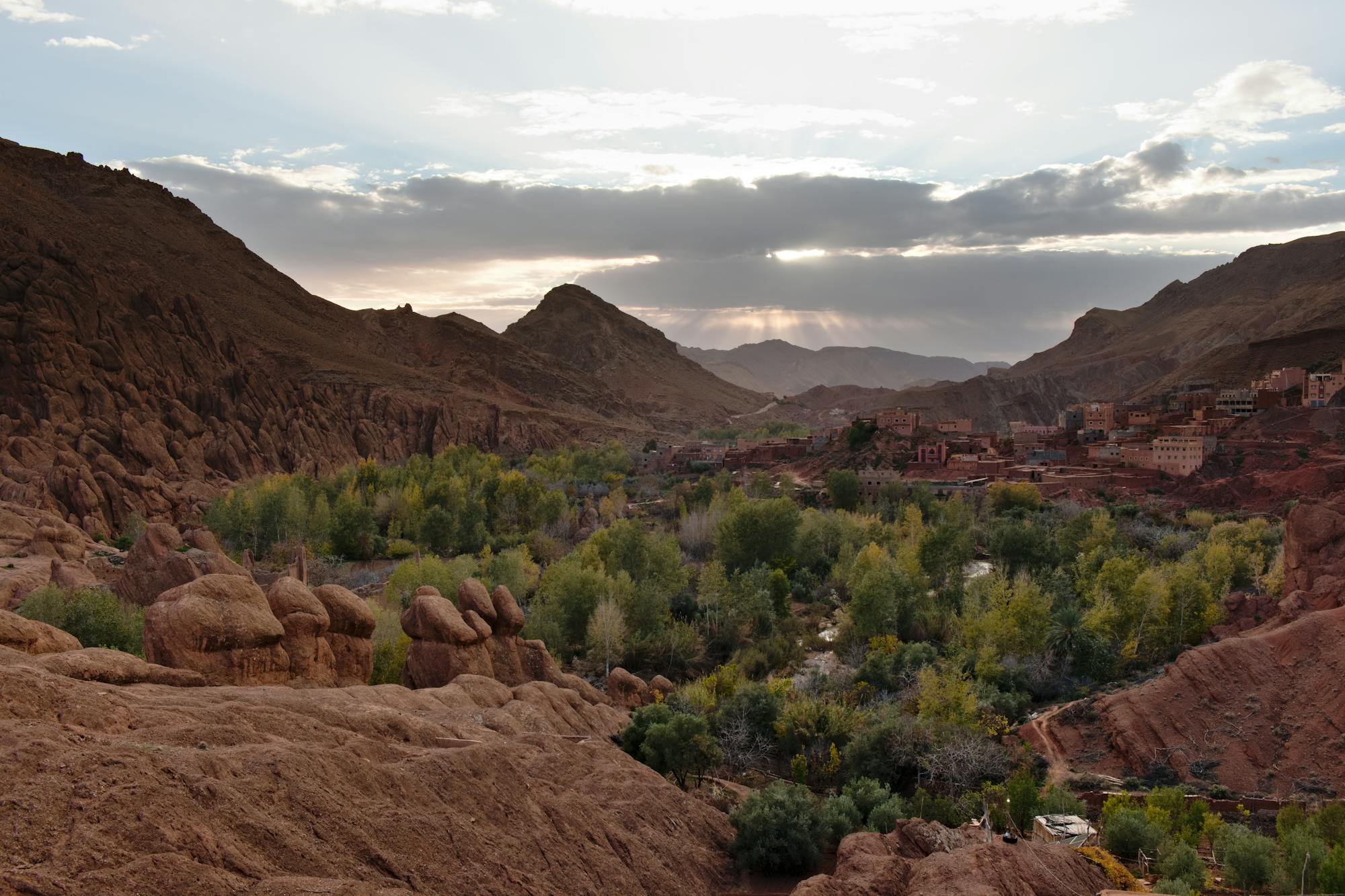
Morocco's climate varies dramatically by region — the Atlantic coast is mild year-round, the Sahara Desert bakes in summer and freezes at night in winter, and the High Atlas Mountains can be snow-capped from November to April. The best overall time to visit is March to May and September to November, when temperatures are comfortable across all regions, spring wildflowers cover the Atlas foothills, and the major cities are lively without being overwhelmed by summer crowds.
Morocco's climate varies dramatically by region — the Atlantic coast is mild year-round, the Sahara Desert bakes in summer and freezes at night in winter, and the High Atlas Mountains can be snow-capped from November to April. The best overall time to visit is March to May and September to November, when temperatures are comfortable across all regions, spring wildflowers cover the Atlas foothills, and the major cities are lively without being overwhelmed by summer crowds.
Spring (March–May): Best Time to Visit Morocco Overall
Spring is widely considered Morocco's finest travel season. Daytime temperatures across the country sit in the sweet spot of 18–28°C, bringing pleasant weather for spring sightseeing in the cities and medinas, while the High Atlas foothills are carpeted in wildflowers and the Sahara fringe is warm but not yet dangerous. Ramadan sometimes falls in spring — dates vary — so if you plan to visit Morocco, keep in mind that daytime restaurant options are limited, but the atmosphere after sunset is extraordinary, with streets coming alive for iftar and the evening celebrations. Fes and Marrakech in spring are particularly beautiful — the roses of the Dades Valley bloom in April, and the orange blossom scent of Marrakech's medina gardens is intoxicating, with outdoor activities and cultural tours especially rewarding in Moroccan cities at this time.
Autumn (September–November): Second Best Time to Visit
Autumn brings relief from the summer heat, with similar advantages to spring — fewer crowds after summer and a strong season for city sightseeing. Expect cooler temperatures, balmy evenings, and excellent weather, with 20–30°C in September dropping to 15–22°C by November; September often has perfect weather for sightseeing and outdoor activities, and early autumn stays pleasantly warm. It is also a busy tourist season, so popular stays or desert trips may need advance booking. The Sahara is cooling rapidly by October, with clear blue skies and clear skies making desert camp nights genuinely comfortable. Date harvest season (October), during date season, is a good time to visit the Draa Valley and Tafilalt palm oases. Moroccan school holidays end in September so the medinas lose some of their summer domestic visitors. Autumn also has a lively festival calendar, including the Imilchil Marriage Festival and the Sufi Festival. November can bring early winter rain on the Atlantic coast.
Summer (June–August): Mostly Avoid Inland and the Sahara Desert
The summer months are challenging for most of Morocco, with intense heat across inland Morocco. Marrakech, Fes, and Meknes are inland cities that regularly exceed 38–42°C in July and August, and early morning is often the only realistic time for some sightseeing. The Sahara Desert reaches 45°C+ with extreme heat, and camel rides are often suspended in the hottest months. Exceptions: coastal cities like Essaouira and Agadir, along with other coastal areas, are kept cool by trade winds and are actually at their best in summer, attracting domestic Moroccan holidaymakers and a European beach crowd. The Atlantic coast is the only part of Morocco where July–August works well for visitors, with northern Morocco the better summer option and a way to avoid the worst summer crowds inland.
Winter (December–February): Good for Coasts, Cold for Atlas Mountains
Morocco's imperial cities are at their least crowded in the winter months, and for sightseeing on a budget this is an excellent time to visit for winter sun — prices drop, queues disappear, and the riad owners are genuinely welcoming. Marrakech in January, often the coldest month in many areas, is still pleasantly warm during the day at around 18°C, though evenings require a jacket and warm layers. Yennayer celebrates the Amazigh New Year in January. The annual almond blossom festival takes place in Tafraout in mid-February, with delicious food, music, and blossoms drawing visitors. The High Atlas receives significant snowfall from December, and winter rains help create greener landscapes, making mountain driving hazardous in some weather conditions but creating spectacular scenery. The Sahara nights are cold in the desert regions, with temperatures dropping sharply after sunset to around 5°C, but stargazing is outstanding. The Atlantic coast gets winter rain in Tangier and Rabat, and rainfall is most likely between November and February, but Essaouira and Agadir in the coastal regions keep mild weather and often offer warmer temperatures than inland areas.
Regional Variations: Best Time to Visit Different Regions
Morocco's size (nearly the same as France) and position in North Africa mean regional weather patterns vary significantly, and a morocco trip often depends on whether you want beaches, mountains, desert travel, or festival timing. Marrakech has a semi-arid continental climate, with temperatures ranging from mild winters to extremely hot summers and almost no rain. Fes and Meknes are similar but slightly cooler in winter due to higher elevation, becoming more appealing after the winter rains thanks to spring’s warmer weather, with warmer temperatures building through spring. The Atlantic Coast (Casablanca, Rabat, Essaouira) benefits from maritime moderation, with some northern stretches showing a Mediterranean climate influence — cooler summers, milder winters, more rainfall — and parts of the coast working year round, while peak-season city streets and the city's bustling souks feel especially lively in the larger coastal and urban hubs. The High Atlas Mountains experience genuine alpine conditions — snow December to April, skiing at Oukaimeden possible January–March. The Sahara region (Zagora, Merzouga, Dades) has extreme temperature swings between day and night, and genuine heat from May to September, with desert regions seeing big shifts in daytime temperatures. Overall, coastal regions are more reliable for city sightseeing and other outdoor activities than the interior, but lower-season travel can make it easier to experience local life more closely, and Marrakesh is especially suited to a food tour focused on traditional cuisine and delicious food.