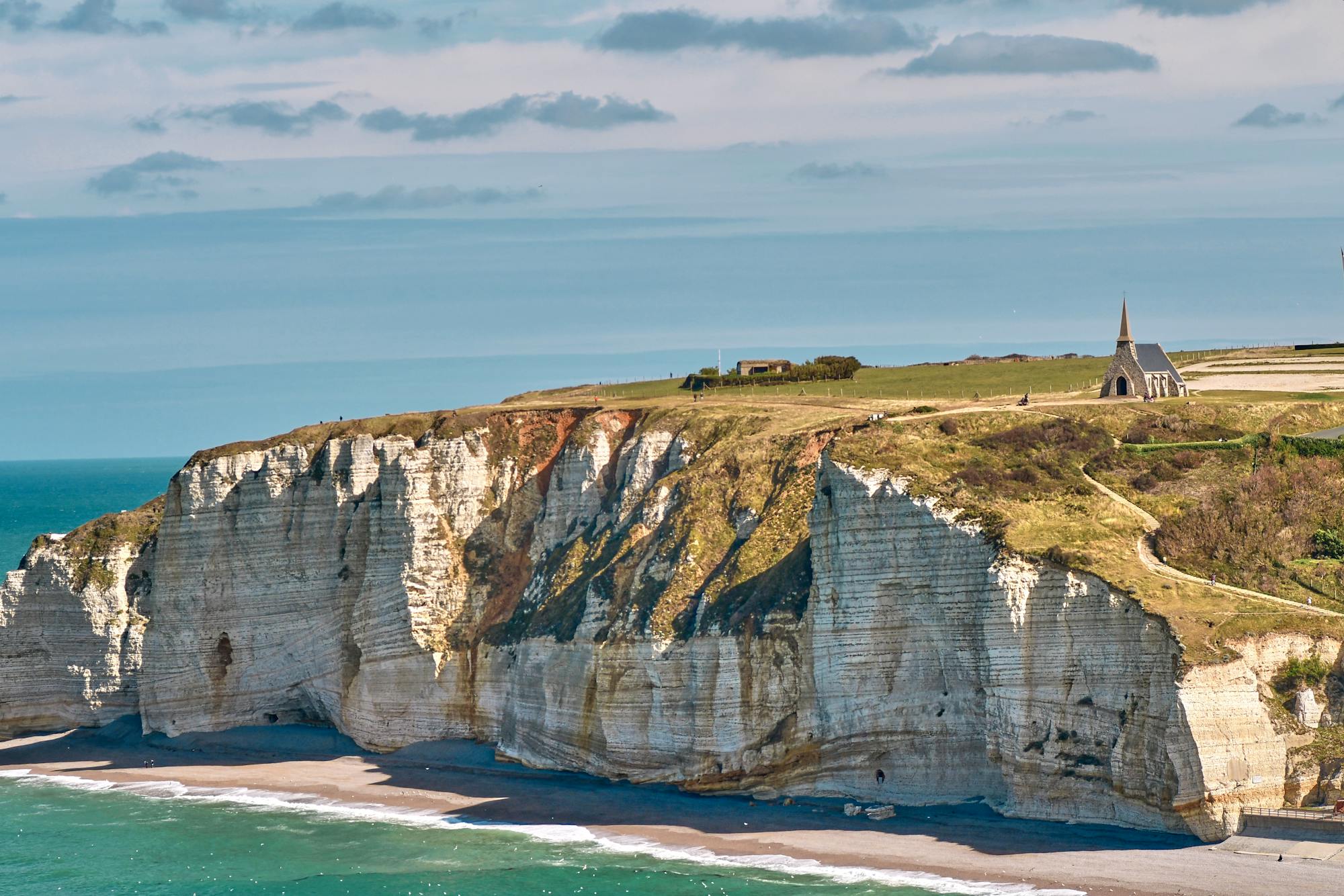
Normandy is best visited between May and September, when the weather is warm enough for coastal walks and outdoor sightseeing, the apple orchards are either in blossom or heavy with fruit, and the D-Day commemoration season brings the region to its most reflective and purposeful. June is particularly special — close enough to June 6th, 1944 for the emotional resonance of the memorials to be palpable.
Normandy is best visited between May and September, when the weather is warm enough for coastal walks and outdoor sightseeing, the apple orchards are either in blossom or heavy with fruit, and the D-Day commemoration season brings the region to its most reflective and purposeful. June is particularly special — close enough to June 6th, 1944 for the emotional resonance of the memorials to be palpable, with long summer days and countryside at its greenest. Autumn and winter visits reward those seeking solitude and atmospheric Norman landscapes, though the coast can be very wet from October onwards.
Best Time to Visit Normandy: Spring (March–May)
Spring transforms Normandy with spectacular apple blossom — the Pays d'Auge orchards turn white and pink in April and May, and the countryside is lush and vibrant before the summer heat. Temperatures rise from around 10°C in March to 17°C by May, bringing comfortable temperatures for sightseeing in spring. The D-Day sites are open but not yet crowded, making spring one of the best times to visit Normandy for quieter sightseeing and fewer crowds at the beaches and memorials. Monet's Gardens at Giverny open in late March and are at their most beautiful in April and May, especially in late spring, when the wisteria blooms over the Japanese bridge and inspired some of his famous works. This season also highlights the region's natural beauty, from flowering apple trees and apple orchards to scenic paths suited to outdoor activities. Easter weekend brings French visitors to the coast, so book accommodation ahead if visiting then.
Normandy Summer (June–August)
Summer is often the best time to visit Normandy, and this French region feels especially lively then, but early June can also be the busiest time because the D-Day anniversary commemorations on and around June 6th coincide with annual commemorative events across the region. These ceremonies at the beaches and cemeteries are among the most moving public events in France, drawing veterans (increasingly elderly), heads of state, and thousands of visitors. The Alabaster Coast’s beautiful beaches are popular with families throughout July and August, when this peak season also brings many French people on holiday, increasing tourist crowds and prices. Deauville hosts its famous American Film Festival in September. In the summer months, average highs reach 22–25°C, with generally mild temperatures that suit long sightseeing days. Mont-Saint-Michel, or Mont St for short, is at its most visited and most beautiful in summer, but queues are substantial — go very early or late in the day, or book a local guide to navigate the busiest periods. Bastille Day brings additional special events, so plan ahead if your trip falls in mid-July, and if you’re coming from the UK or Channel ports, it can also help to compare ferry routes early. The cider routes through the Pays d'Auge are delightful in summer, and coastal towns add another draw with fresh seafood at markets and harbors.
Autumn/Early Fall (September–November)
Autumn is apple and cider season in Normandy, with the apple harvest filling orchards, presses running in farm courtyards, and the first Calvados of the new vintage being sampled. September, in early fall, is often warm and sunny (18–22°C), making it a good time to visit for fewer crowds and comfortable sightseeing conditions. It’s especially worth visiting if you want to explore at your own pace. The Norman landscape takes on golden hues through October, and the coast has a dramatic, windswept quality, with crisp air and scenery that also brings out the region's culture in ways many photographers find irresistible. The Fécamp Herring Festival in November celebrates the local fishing tradition. Rainfall increases through October and November, but the countryside is beautifully atmospheric — arrive prepared with waterproof layers.
Winter (December–February)
Winter in Normandy is cold, grey, and often very rainy, with weather shaping daily plans; temperatures hover around 5–10°C, and December is the region's rainiest month. The D-Day beaches and memorials are open year-round and are deeply moving in winter's solitude, reflecting their pivotal role in D-Day history and strong appeal for history buffs, often with just a handful of other visitors. Rouen hosts one of France's best Christmas markets in November–December, creating a festive atmosphere that makes winter a magical time to visit. Honfleur and the coastal towns have a quiet, off-season charm, and lower hotel rates make the season appealing for travelers who want fewer crowds. In January, some museums close or reduce hours, though the Bayeux Tapestry can be a good indoor option when open. The apple brandy distilleries are actively working through winter and many offer atmospheric cellar visits. For those who don't mind wind and rain, winter Normandy offers an authenticity that summer cannot match.
Events Calendar and Mont Saint Michel
D-Day Commemoration (June 6th, annually): Ceremonies at all five landing beaches and the American, British, and Canadian cemeteries — annual commemorative events attended by veterans, dignitaries, and thousands of visitors, so plan well ahead if you want to visit Normandy at that time. Giverny Monet Garden (April–October): Monet's famous garden open daily and especially worth visiting in spring, when it inspired some of his famous works; most beautiful in late April–May for wisteria and early summer for water lilies. Deauville American Film Festival (September): Stars and cinema on the Norman coast for one week. Mont-Saint-Michel Tidal Spectacles (spring and autumn): The highest tides of the year create extraordinary viewing conditions around the bay on the English Channel, and at low tide you can appreciate more of the surrounding sands. Travelers combining Normandy with Paris or the Loire Valley may want to plan their dates around this calendar.