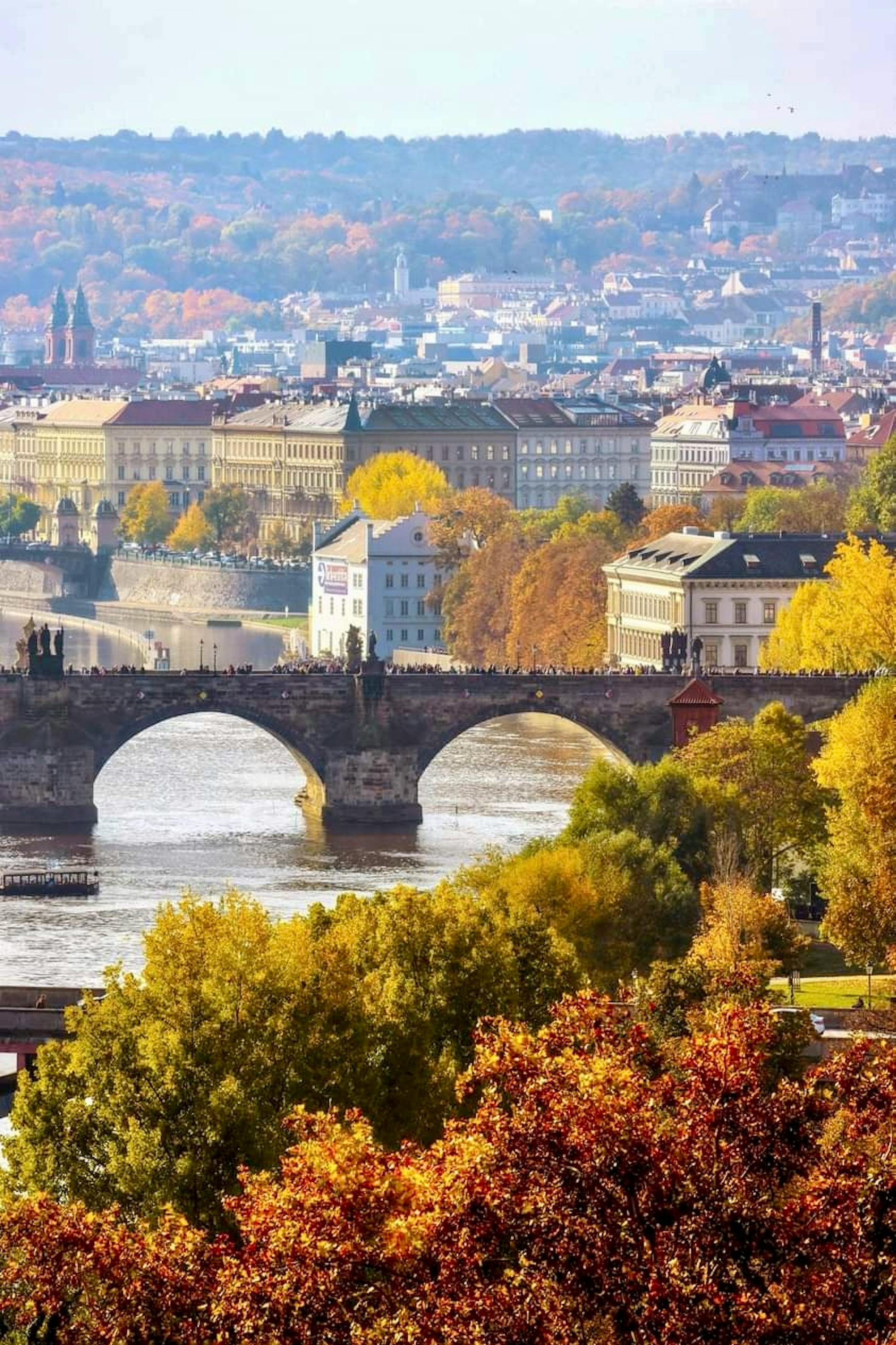
The best time to visit Prague is May through June for warm weather, long days, and the Prague Spring music festival, or September through October for cooler temperatures, autumn light on Charles Bridge, and significantly fewer tourists. Prague's Christmas markets in December are among Europe's finest.
Best Time to Visit Prague
The best time to visit Prague is May through June for warm weather, long days, and the Prague Spring music festival, or September through October for cooler temperatures, autumn light on Charles Bridge, and significantly fewer tourists. Prague's Christmas markets in December are among Europe's finest. Summer is beautiful but crowded; January and February are the quietest and most affordable months.
Spring (March–May)
Spring gradually reclaims Prague from March, and late spring is especially appealing, with April marking the start of the best spring window as temperatures rise from 7°C to a pleasant 18°C by May and the city's parks and gardens come alive. By mid april, the city is waking up, easter markets appear, and longer daylight hours make walking between many sights easier. Cherry trees blossom along the Vltava embankment and in the Petřín Hill gardens, creating one of Central Europe's most beautiful spring spectacles. The Prague Spring International Music Festival, held in May and June, is one of the world's most prestigious classical music events — the festival opens each year with a procession from Vyšehrad to the Municipal House, followed by a performance of Smetana's Má vlast. May is particularly rewarding: temperatures average about 21°C (70°F), it feels comfortably warm, and it suits first-time visitors especially well as tourist numbers remain manageable, weather is excellent, and the city's outdoor café culture fully reawakens. Travelers sensitive to crowds should plan for April, late September, or October because these periods bring fewer crowds than the peak months.
Summer (June–August)
June to August is the high season and main tourist season in Prague, and the summer months bring the biggest crowds. July can be hot, with daytime highs reaching the mid-30°C, though some days are milder. The Old Town fills to capacity with tourists, Charles Bridge is thronged from 9am onwards, and queues form at Prague Castle from opening time. That said, summer has genuine rewards: the Metronome Music Festival at Letná Park, outdoor cinema screenings, riverboat parties on the Vltava, longer days, and café outdoor seating all make it easy to enjoy full days of exploration. Swimming in the Divoká Šárka natural swimming area northwest of the city is a popular local escape. For backpackers, this is often the best period from June to August because hostels, festivals, and social travel are in full swing despite the crowds of the peak months. For a more peaceful experience, aim for early morning at Prague Castle and use the late afternoon for a slower walking pace through Vinohrady, Žižkov, and Holešovice rather than the Old Town.
Autumn (September–November)
Autumn, or fall, is Prague at its most magical for photography and atmosphere, especially with clear skies sharpening the light. September is often the best month for visitors who want comfortably warm weather (15–20°C), longer days, and fewer crowds after summer. The Vltava's morning mist combined with autumn foliage around Charles Bridge creates scenes of extraordinary beauty. The Prague Autumn International Music Festival in September–October brings world-class orchestras and soloists to the city's concert halls. By October, the city's cultural calendar is in full swing, with concert and theater season active across Prague. Letná Park and the Stromovka become carpets of amber and gold in October. Tourists tend to cluster in Old Town and around Charles Bridge, while nearby streets and parks feel calmer. November brings cooler, greyer weather (8–12°C) and the sense of a city preparing for winter — cosy wine bars and the first mulled wine stalls appear. March, April, October, and November are especially appealing for honeymooners seeking atmosphere and fewer visitors.
Winter (December–February)
Prague's Christmas markets on Old Town Square and Wenceslas Square are among the most atmospheric in Europe, and the Christmas season is the city's main winter holiday draw; early December is especially good for the market atmosphere, with medieval stalls, mulled wine (svařené víno), trdelník, and the backdrop of the Týn Church and astronomical clock creating a deeply festive scene. Outside the Christmas period, tourist crowds are lowest from November to March. Snow (a few times per season on average) transforms the city into a fairy-tale landscape. The cold weather (0–4°C in December–January) can feel chilly, but it is manageable with good clothing. January and February are Prague's quietest months, with fewer visitors because some travelers avoid winter in the Czech Republic — ideal for museum visits to the National Gallery, the Jewish Quarter, and Prague Castle without queues, and hotel rates drop 30–40%. On clear days, the city is excellent for walking, even if mornings and evenings are cold. New Year's Eve fireworks over the Vltava are spectacular.
Events and Festivals Calendar
Prague Spring International Music Festival (May–June): One of Europe's oldest and most prestigious classical music festivals, beginning as the spring cultural calendar is at its busiest and running three weeks with world-class performances across the city's finest concert halls and churches. Metronome Music Festival (June): A major outdoor music festival at Letná Park featuring international headliners across multiple stages. Prague Autumn (September–October): A classical music festival complementing the Prague Spring, with emphasis on Czech and Central European repertoire. Prague Christmas Markets (late November–January 6): The Old Town Square market and Wenceslas Square market are both world-class, at their strongest from early December through the holiday period; the season extends beyond Christmas into Epiphany.