The best time to visit Thailand is during the dry season from November to April, when skies are clear, temperatures are comfortable, and both beach and cultural tourism are at their finest.
The best time to visit Thailand is during the dry season, from November to April, when skies are clear, temperatures are comfortable, and both beach and cultural tourism are at their finest. Thailand has three distinct seasons — cool and dry (November–February), hot and dry (March–May), and wet/monsoon (June–October) — but the picture is complicated by the country's geography: the Andaman coast (Phuket, Krabi, Koh Lanta) and the Gulf coast (Koh Samui, Koh Phangan) have different monsoon seasons, meaning there is always some part of Thailand in good weather, even during the rainy months. For a first visit combining Bangkok, Chiang Mai, and beaches, November–February is optimal.
Best Time to Visit Thailand: Cool and Dry Season (November–February)
This is Thailand's high season and the most universally recommended best time to visit Thailand. Temperatures are warm but manageable — 25–32°C in Bangkok, 20–28°C in Chiang Mai, and 28–33°C on the beaches — with lower humidity levels, clear skies, and very little rain. November is particularly lovely, with sunny skies and dry weather: the Loy Krathong festival takes place in November, the rice harvest turns the north golden, and the sea on both coasts is calm and clear. December and January are winter months and peak season, with the highest tourist numbers and prices, especially on the islands. Chiang Mai in January and February can be surprisingly cool at night (15–18°C), with cooler temperatures in northern Thailand and the northern regions — bring a light layer. February is excellent: crowds begin to thin, prices ease, and weather remains superb.
Hot and Pre-Monsoon Season (March–May)
March through May is Thailand's hot season, the summer months when temperatures regularly exceed 38°C in Bangkok and the central plains. Chiang Mai in March and April can experience smoke haze from agricultural burning in the surrounding mountains, affecting air quality — check air quality indices if this concerns you. Songkran Festival, the Thai New Year (13–15 April), is celebrated with a massive nationwide water fight, and scented water is part of the traditional celebration — one of the world's great festivals and a brilliant (if thoroughly wet) time to visit. The Gulf coast (Koh Samui area) actually has relatively good weather from February to May, making outdoor activities and water sports viable there in this period. By late May, monsoon rains begin on the Andaman Sea side.
Monsoon and Rainy Season (May–October): Thailand Weather Overview
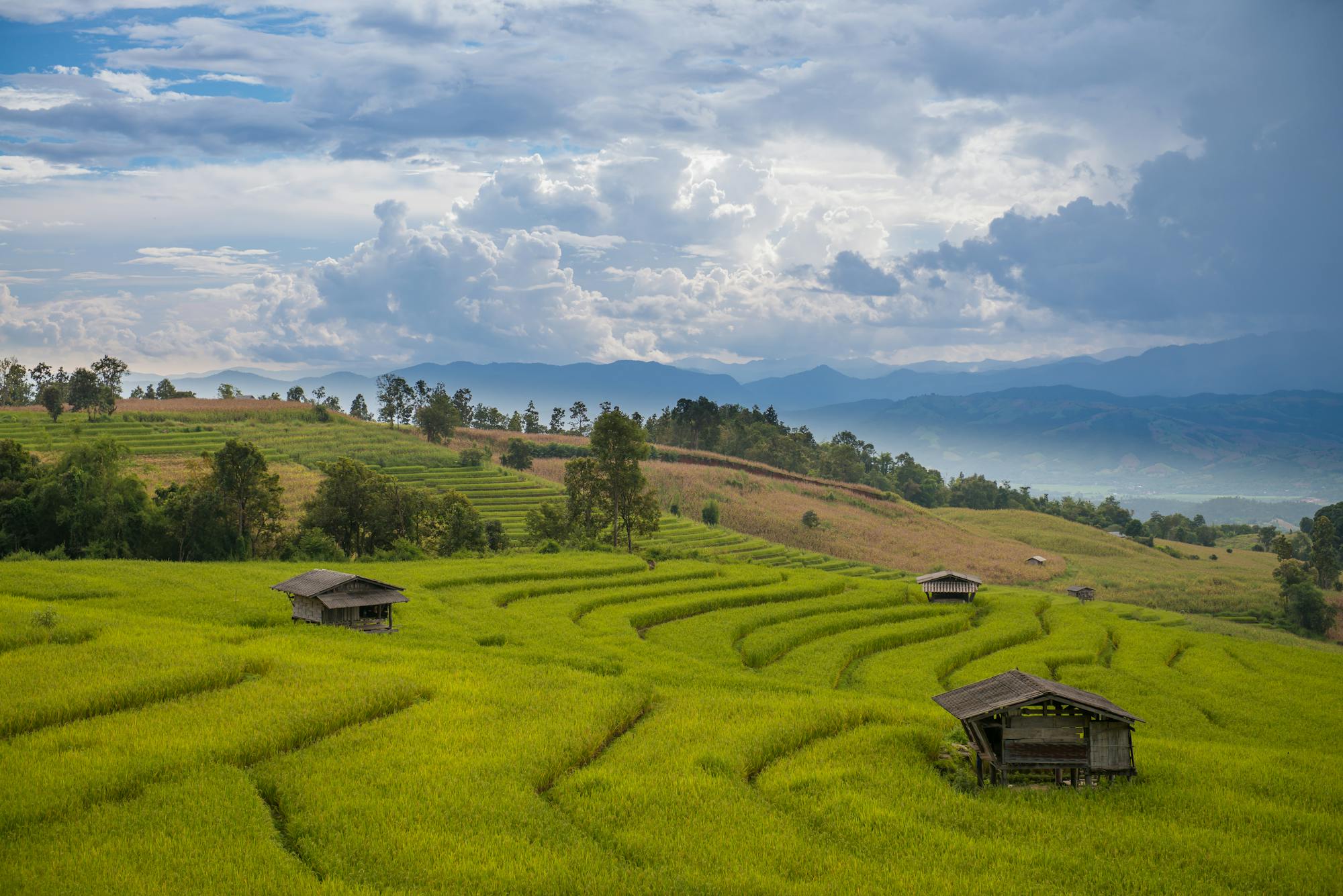
Thailand weather follows distinct regional weather patterns during the southwest monsoon and rainy season across the country, with the Andaman coast usually affected first (May–June) before conditions shift elsewhere. Bangkok gets significant rain in June–October, though often in sharp afternoon downpours rather than all-day grey, and humidity levels are typically high at this time. The north (Chiang Mai) receives steady rain from July–September, which keeps the region lush and green — actually a beautiful time to visit for landscapes, waterfalls, national parks, rural areas, and spotting wildlife, with far fewer tourists, but avoid traveling to Northern Thailand from February to late March because of smoke season and poor air quality. On the Andaman coast (Phuket, Krabi), June–October brings rougher seas, some beach closures, and heavy rainfall, while west coast beaches and other coastal areas can be hit hardest from August to October, often the wettest months with the most rainfall. In the south, khao sok national park is especially lush in the wet months, and September can still bring mild temperatures between showers. However, Koh Samui and the Gulf islands have their monsoon from October–December, making the Gulf coast viable during the Andaman wet season. thailand's east coast, including Koh Tao, often follows different timing from the Andaman side. Even so, some regions still offer beach options year round despite these regional shifts. Prices drop dramatically in low season.
Shoulder Season Sweet Spots: Best Time to Visit
For Phuket and the Andaman coast, May is the best shoulder month — some routes still see great weather even as conditions start changing elsewhere, the monsoon hasn't fully hit on the west coast and Andaman Sea, prices are 30–40% lower than April, and the sea is still swimmable on many days. October is the sweet spot for Bangkok and Chiang Mai — the rains ease, bringing lower humidity and more sunny days, the countryside is emerald green, and the Loy Krathong festival approaches. November combines ideal weather, manageable crowds (before the Christmas rush), and the Loy Krathong celebration — arguably the finest single month to visit Thailand. If you're planning beach time, east coast beaches often work better later in the year, while the Andaman side suits a different window. Hua Hin and Thailand’s eastern side can also be useful alternatives when coastal timing differs. For budget travellers, September and October on the Andaman coast offer the cheapest hotel rates of the year, though guaranteed sunshine is less likely then.
Festivals and Events: Phuket Vegetarian Festival
Songkran Festival (13–15 April) is Thailand's most exuberant festival — the Buddhist New Year celebrated with the world's largest water fight. Every street becomes fair game; no one leaves dry, though traditionally scented water is also used in cleansing rituals and to bathe images of the Buddha. Loy Krathong (full moon in November) is Thailand's most beautiful festival: people release lotus-shaped floats carrying candles, flowers, and incense onto rivers and lakes; in Chiang Mai the sky simultaneously fills with thousands of illuminated paper lanterns (Yi Peng) — one of the most extraordinary sights in Southeast Asia. Phuket Vegetarian Festival (Phuket, around October) features dramatic street processions. Full Moon Party (Koh Phangan, monthly) is the world's most famous beach party, drawing up to 30,000 people to Hat Rin beach each month, while the Phuket Vegetarian Festival is another seasonal cultural highlight.