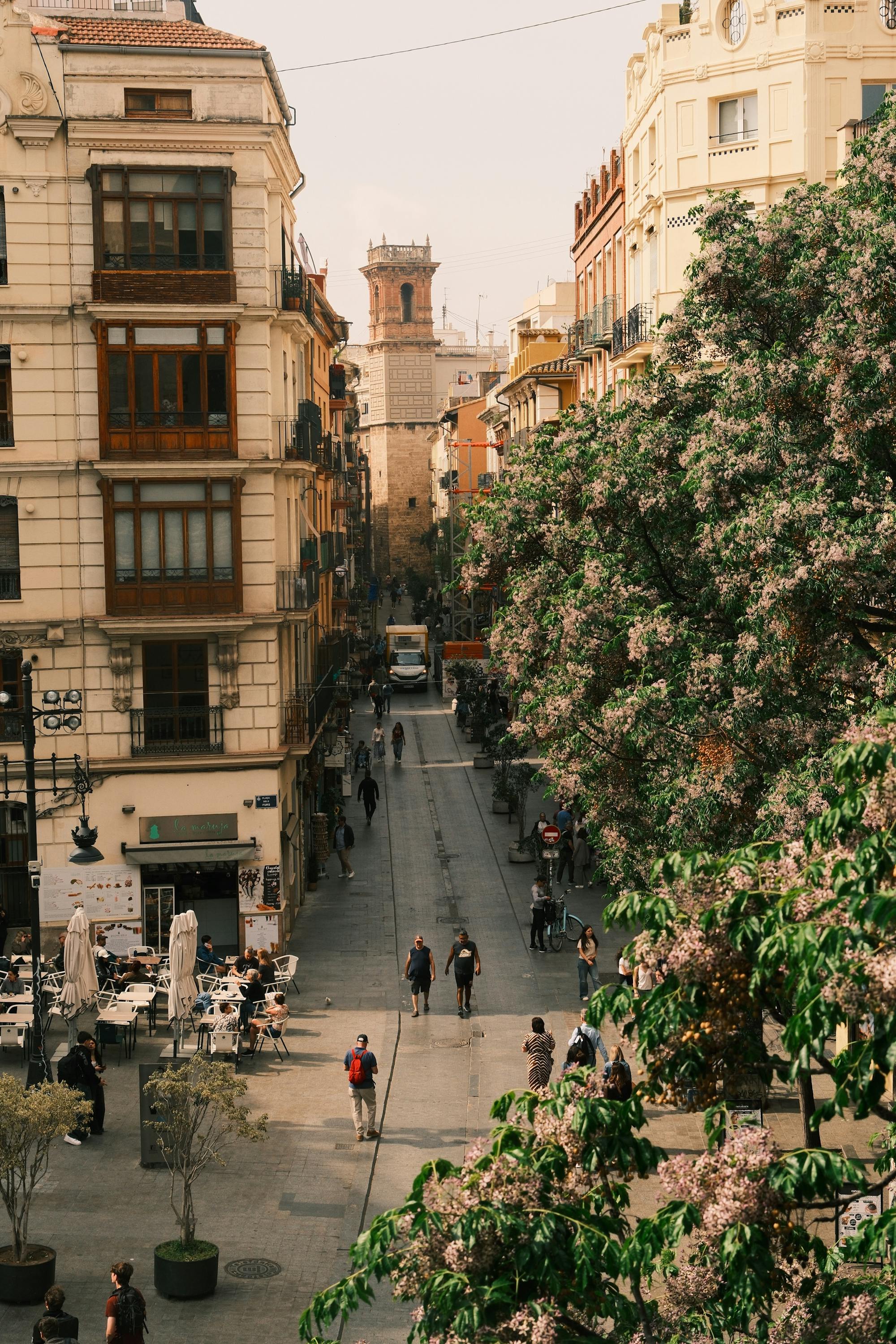
Valencia enjoys one of Spain's finest climates — genuinely Mediterranean, with over 300 days of sunshine per year, warm but not excessively hot summers, and mild winters that keep the outdoor terraces open year-round. The best months to visit are March to June and September to November — warm, sunny, and outside the extreme heat of July–August.
Valencia enjoys one of Spain's finest climates — genuinely Mediterranean, with over 300 days of sunshine per year, warm but not excessively hot summers, and mild winters that keep the outdoor terraces open year-round. The best months to visit are March to June and September to November — warm, sunny, and outside the extreme heat of July–August. March is particularly special: it's Las Fallas season, the world's greatest fire festival. For beach holidays, June and September are ideal — warm sea, fewer crowds than July–August.
Best Time to Visit Valencia: Spring (March–May)
Spring is often the best time to visit Valencia in Spain. The city erupts in March with Las Fallas (15–19 March) — one of Spain's most spectacular fiery festivals, involving monumental papier-mâché sculptures, daily explosive fireworks displays (mascletàs) at 2pm in the Plaza del Ayuntamiento, and the final night's burning of all the fallas. The entire city transforms with street parties and is a truly unmissable spectacle — but book accommodation at least 6 months ahead. After Las Fallas, April and May are among the ideal months for travel, with the scent of orange blossoms filling the streets, mild weather, and temperatures of 18–24°C. Late spring also brings pleasant weather with fewer tourists than the peak summer period. The beaches begin warming up, the terraces fill, and Valencia's outdoor culture comes alive. The Semana Santa (Easter week) processions are solemn and impressive in the old town, where walking through the historic center is part of the experience.
Summer in Valencia (June–August): Key Events
Valencia's summers are warm but generally more bearable than Madrid's extremes, thanks to its mediterranean climate, and on the Spanish coast coastal breezes moderate the heat while average temperatures in July reach 27°C (81°F). The beaches at Malvarrosa and Las Arenas are the main draw, with long sunny days and strong summer sun ideal for classic beach days — large, sandy, clean, and well-serviced with beach bars and restaurants. The sea reaches 25°C — perfect for swimming. The city hosts the Nit de Sant Joan (midsummer eve, 23 June) with beach bonfires along the entire coastline — one of Spain's most magical seasonal celebrations. June also includes LGBTIQ+ Pride month. The city's nightlife is at its most energetic, with clubs, beach bars, and outdoor terrace restaurants operating late, helped by long days filled with summer sunshine. July and August are busy and hotel prices peak; many locals head to smaller nearby beaches to escape the city crowds. August is also when many travelers pair a Valencia trip with La Tomatina.
Autumn in Valencia (September–November): Best Time to Visit
Autumn is arguably Valencia's finest season, and a great time if you want mild days and a more relaxed local rhythm. September is warm (25–28°C) with the sea still at 23–24°C — perfect beach weather without the August crush, and September and October are among the ideal months and the best time to visit for many travelers. The city regains its local energy after summer as students and residents return. October (20–24°C) brings the outdoor café culture to its most relaxed — the Turia Gardens fill with joggers, cyclists, and families, and the weather suits walking in the golden afternoon light. The Día de la Comunitat Valenciana (9 October) celebrates Valencia's autonomy with parades and a fireworks display. October is also a perfect time for grape harvest parties. November cools to 16–19°C but remains excellent for city exploring, with excellent seasonal produce (persimmons, artichokes, rice dishes) appearing in the Mercado Central. Hotel prices drop significantly from mid-September, and early autumn also brings warm weather with fewer tourists than peak season. Another of the city's key events for wine lovers is the Mostra Proava wine fair, held from April 4 to 8.
Winter in Valencia (December–February): Mild Weather
Valencia's winters are among the mildest of any major Spanish city, with consistently pleasant weather year-round thanks to its setting on Spain's sunny coast; the winter months usually sit in the mid-40s to mid-60s °F, making outdoor dining and sightseeing perfectly comfortable. December brings Christmas lights along the main avenues and a traditional nativity scene (belén) in the Plaza del Ayuntamiento. Plaza de la Reina is another festive stop in December. January and February are the quietest and cheapest months, with hotel rates 40–50% below summer; they also bring fewer tourists, though certain attractions may run shorter hours. The Mercado Central, the City of Arts and Sciences (far less crowded), and the old town's bars and restaurants are all wonderful in winter quiet. The approach of Las Fallas in late February sees the city begin preparing — crema workshops open to visitors, and the first small-scale fireworks begin in early March. Late autumn and winter can also overlap with the rainy season, so it's smart to plan accordingly.
Avoiding the Crowds and Finding Fewer Tourists
To experience Las Fallas without the worst of the accommodation squeeze, consider arriving on 15–16 March rather than the final night of 19 March, as mid-March is peak season and 19 March brings crazy crowds. The Mercado Central is at its most navigable on weekday mornings (Tuesday–Thursday) before 11am. The City of Arts and Sciences is best visited on weekday afternoons when school groups have left; the Hemisfèric and L'Oceanogràfic are busiest on weekends and public holidays, when modern art museums can be a better alternative. For the beach, the stretch north of Malvarrosa (Playa de la Patacona in Alboraya) is consistently quieter than Valencia's main beaches even in high summer. The best time to visit Valencia is late September or early October — beach weather, local atmosphere, cultural season, and great value. Plan your visit around those months for perfect weather and better value.