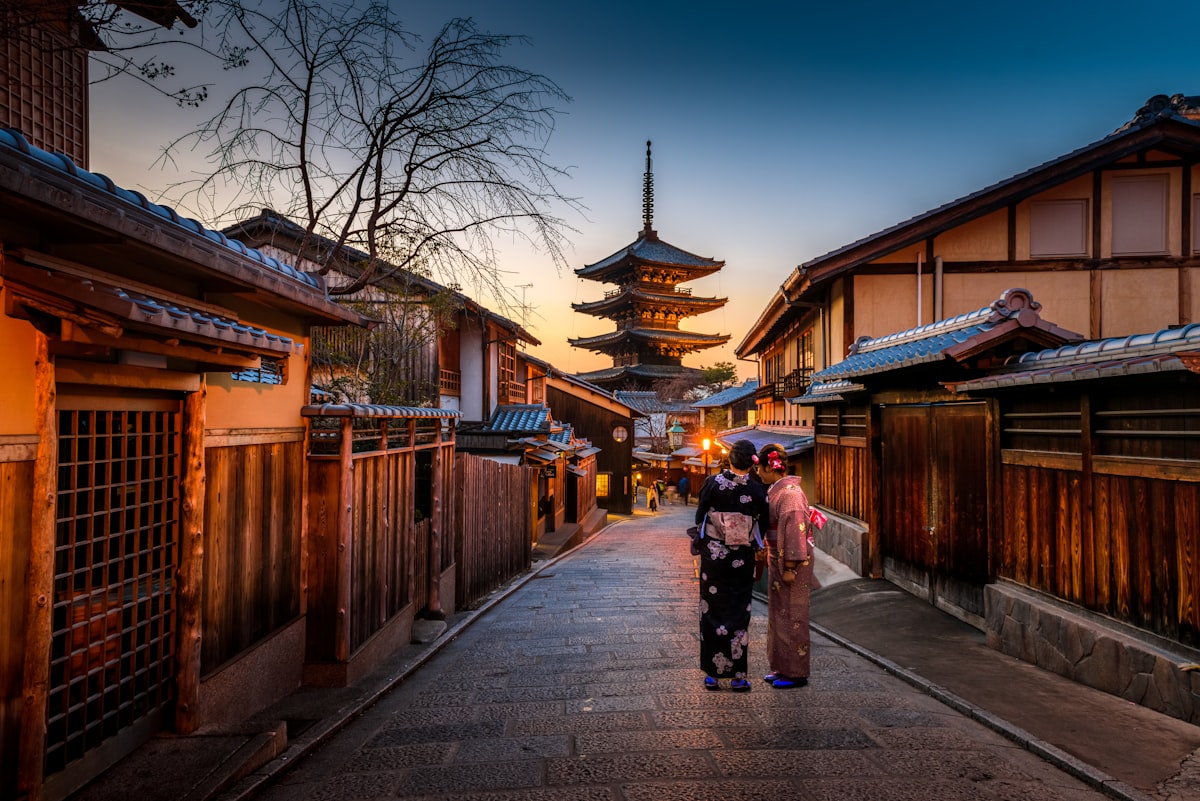
Japan is a land of extraordinary contrasts — where ancient Shinto shrines sit alongside neon-lit skyscrapers, and centuries-old tea ceremonies coexist with cutting-edge robotics. Whether you're drawn by cherry blossoms in spring, the vibrant food scene, or the serene beauty of rural onsen towns, Japan offers experiences unlike anywhere else on Earth.
- Suggested duration: 14–21 days
- Best time to visit: March–May (cherry blossoms) and October–November (autumn foliage)
- Budget: $$$
Top Destinations in Japan
Japan rewards travelers who want more than a checklist of sights: it’s an island nation in East Asia where ultra-modern cities, imperial history, meticulous food culture, and mountain-and-sea landscapes sit within easy reach of one another. This guide is for travelers planning a high-end, deeply personal trip to Japan and wanting clear, practical direction on where to go, what to eat, how to get around, and how to move through the country with more confidence and cultural awareness.
Inside, you’ll find the standout destinations—from Tokyo, Kyoto, Osaka, Hiroshima, Hakone, and Hokkaido to a smart 14-day route—along with the details that shape a better trip: Japanese cuisine, rail travel and the Japan Rail Pass, bullet trains, local etiquette, and when to slow down for ryokans, onsen, and neighborhood-level experiences. Whether you’re drawn to Tokyo’s pace, Kyoto’s temple-lined history, or the contrast between Japan’s traditional culture and polished modern luxury, this is built to help you plan a trip that feels seamless, informed, and worth the long flight.
Japanese Cuisine — What to Eat Near Mount Fuji
Japan takes food more seriously than almost anywhere on Earth, with rice as a staple of Japanese cuisine. The country has more Michelin stars than France, and even convenience store food is genuinely excellent.
Sushi & Sashimi: Skip the conveyor belts and book an omakase (chef's choice) counter. Even mid-range omakase in Tokyo surpasses most high-end sushi restaurants elsewhere.
Ramen: Every region has its style — Tokyo's soy-based, Kyushu's creamy tonkotsu, Sapporo's miso. Lines at top shops are normal; join them.
Kaiseki: Multi-course haute cuisine that's as visual as it is delicious. A Kyoto kaiseki dinner is a once-in-a-lifetime culinary experience.
Izakaya: Japanese pub dining. Order multiple small plates, draft beer, and highballs. The best ones are under train tracks or in basement alleys.
Street food: Takoyaki in Osaka, taiyaki (fish-shaped cake) in Tokyo, yakitori in smoky Yokocho alleyways, matcha soft serve everywhere.
Convenience stores: 7-Eleven, Lawson, and FamilyMart serve surprisingly good onigiri, egg sandwiches, and seasonal treats. A legitimate dining option.
Getting Around Japan and the Japanese Alps
Japan Rail Pass (JR Pass) — Essential if traveling between major city hubs and smaller towns across the archipelago. A 14-day pass (¥70,000 / ~$470) covers all JR trains including most Shinkansen (bullet trains). Buy before arrival and activate at any JR station. Tokyo, the capital, to Kyoto alone is ¥13,000 one-way, so it pays for itself fast.
Shinkansen (bullet trains) — On the four main islands, the network links Tokyo to Kyoto (2h15m), Osaka (2h30m), and Hiroshima (4h). Punctual to the second. Reserve seats in advance during peak seasons.
IC Cards (Suica/Pasmo) — Rechargeable transit cards for metro, buses, and convenience store payments. Get one at any station — it simplifies everything in this nation.
Domestic flights — Useful for reaching Hokkaido or Okinawa across the many islands that stretch from the northeast to the southwest. ANA and JAL offer tourist discount fares from ~$80.
Rental cars — Only necessary for rural areas (Hokkaido, Shikoku, Kyushu countryside), where mountainous terrain, mountains, and even active volcanoes can make routes slower than expected. Japan drives on the left.
Etiquette & Japanese Culture Tips
Japan is an East Asian archipelago along the Pacific coast that comprises 14,125 islands, with the five main islands being Hokkaido, Honshu, Shikoku, Kyushu, and Okinawa. Much of the country is mountainous and forested, Mount Fuji is the highest peak at 3,776 meters, and it also has 111 active volcanoes and over 1,000 earthquakes each year; its territory covers 377,975.24 km² and its coastline stretches 29,751 km.
Bowing: As part of broader Japanese culture and society, a slight nod is fine for tourists. The deeper the bow, the more formal the occasion.
Shoes off: Remove shoes when entering homes, ryokans, some restaurants, and temple interiors. Slippers are usually provided.
Onsen etiquette: Wash thoroughly before entering the bath. No swimsuits. Tattoos may be restricted — ask ahead or look for tattoo-friendly onsen.
Tipping: Do not tip in Japan. It can be considered rude. Service is already impeccable.
Quiet on trains: Phone calls are not made on trains. Keep conversations low.
Cash: Japan is still heavily cash-based despite modernization and advanced technology. Carry yen — many restaurants and small shops still prefer cash. 7-Eleven ATMs accept foreign cards.
Domestic flights: Useful for longer routes, especially because the country’s island geography and long coastline make air links practical across a sea-dependent nation and major fishing nation.
Many Japanese people appreciate visitors who follow everyday etiquette, and ideas of the self, children, business, and religion all help shape daily norms.
Sample 14-Day Modern Japan Itinerary
Days 1–4: Tokyo — Shibuya, Shinjuku, Meiji Shrine, Tsukiji Market, Akihabara, Harajuku. Day trip to Kamakura (Great Buddha). Religion and daily life reflect Shinto and Buddhism, with Buddhism introduced in 552 AD. Japan’s long history also includes periods shaped by military rulers before the country reopened to the outside world and expanded contact with Western ideas.
Day 5: Hakone — Hakone Loop, onsen ryokan stay, Mt. Fuji views. Christianity remains a minority religion even though some Western customs are familiar in Japan.
Days 6–9: Kyoto — Fushimi Inari, Kinkaku-ji, Arashiyama bamboo, Gion, Nishiki Market. Day trip to Nara (friendly deer, Great Buddha). Traditional arts such as tea ceremonies and calligraphy remain part of cultural life, alongside music played on instruments like the koto.
Day 10: Hiroshima + Miyajima — Peace Museum, floating torii gate, Hiroshima okonomiyaki. This stop adds essential context on World War II and the wider world war, showing how the devastation of war reshaped modern society.
Days 11–12: Osaka — Dōtonbori, Osaka Castle, Shinsekai, street food marathon. In spring, cherry blossoms symbolize the arrival of the season and influence local customs and gatherings.
Days 13–14: Mt. Koya — Overnight in a Buddhist monastery (shukubo), morning prayer ceremony, ancient cemetery walk. Following local etiquette matters throughout the trip, especially because Japanese culture values meticulous attention to detail in aesthetics and nature.