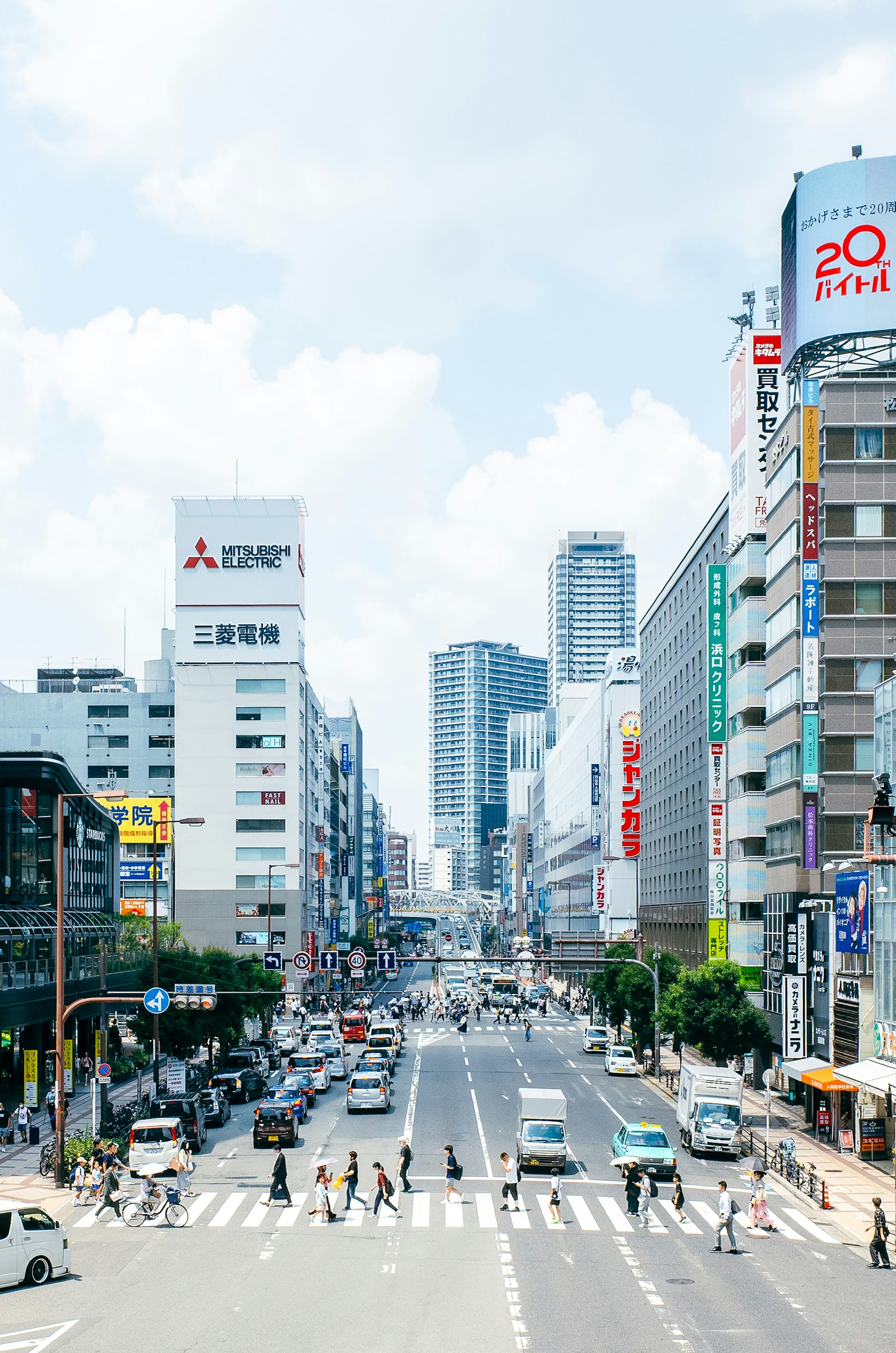
Japan is one of the most rewarding — and most misunderstood — travel destinations in the world. First-time visitors often worry that it will be expensive, hard to navigate, or culturally impenetrable. In reality, Japan is exceptionally safe, surprisingly affordable compared to other developed countries, and remarkably easy to get around once you understand the basics. This Japan travel guide covers the essential travel tips, a realistic trip cost breakdown, and honest advice on how long to spend in Japan to make the most of your visit.
Japan Travel Tips: The Essentials
Getting There
Main international airports: Tokyo Narita (NRT) and Haneda (HND) are the primary entry points. Kansai International Airport (KIX) in Osaka is more convenient if your itinerary starts in Kyoto, Osaka, or Hiroshima.
Airport to city: From Narita: Narita Express train to Shinjuku (~90 min, ¥3,070) or Shinjuku Bus Terminal (~80 min, ¥1,300). From Haneda: Tokyo Monorail or Keikyu Line to central Tokyo (~30–40 min, ¥600).
Visa: Citizens of 68 countries (including USA, UK, EU, Australia, Canada) can enter Japan visa-free for 90 days. Check the Ministry of Foreign Affairs website for the current list.
Getting Around Japan: Bullet Train and Other Transportation
Japan Rail Pass (JR Pass): Buy before arriving in Japan at an authorized retailer or online. A 7-day pass (~¥50,000), 14-day (~¥70,000), or 21-day (~¥90,000) covers all JR trains including most Shinkansen bullet trains, so research whether it actually fits your route before buying. Essential for multi-city itineraries. Activate it at any JR station on arrival.
Shinkansen (Bullet Train): Japan's high-speed rail network connects all major cities. Tokyo–Kyoto (2h15m), Tokyo–Osaka (2h30m), Tokyo–Hiroshima (4h). Reserve seats in advance during peak seasons, and note that large suitcases are awkward on trains, so reserve luggage space or pack lighter.
Suica/Pasmo IC card: Get one at any major station. A rechargeable card for metros, local trains, buses, and convenience store payments. Load ¥5,000–¥10,000 on arrival.
Taxis: Clean, reliable, but expensive. Use for short trips at night or when carrying large suitcases. All taxis accept IC cards; many now accept credit cards.
Rental cars: Only necessary for rural areas — Hokkaido, Shikoku countryside, Kyushu. Avoid driving in Tokyo, Kyoto, and Osaka.
Japan Travel Tips: Money & Payments
Currency: Japanese Yen (¥). As of 2026, roughly ¥150 = $1 USD (check current rates before traveling).
Cash is king: Japan remains significantly more cash-dependent than other developed countries. Many restaurants, small shops, and places in rural Japan don't accept cards. Always carry ¥10,000–¥20,000 in cash. For example, family-run eateries or smaller establishments may still be cash-only. 7-Eleven ATMs reliably accept foreign debit and credit cards. At the register, look for the small tray where cash or cards are usually placed instead of handed directly to the cashier.
Tipping: Do not tip. It is not expected and can occasionally be considered rude. The price on the menu is the price you pay.
Consumption tax: 10% is added to most goods and services. Many shops offer tax-free purchasing for tourists on purchases over ¥5,000 — bring your passport.
Japan Travel Tips: Communication, Connectivity & Language Barrier
SIM card: Buy a tourist data SIM at the airport on arrival (IIJmio, Sakura Mobile, or NTT Docomo travel SIMs). 15–30 days of unlimited data for ¥3,000–¥5,000. Strongly recommended.
Pocket WiFi: An alternative to SIM cards — rent at the airport, return at the airport. Good for groups sharing one connection.
Google Translate: The camera translation function is extraordinarily useful in Japan — point it at a menu, sign, or label for instant translation, and it’s especially helpful for dealing with a language barrier. Download Japanese offline language packs before arriving.
Language: English signage is excellent at stations, airports, and tourist sites. In restaurants and smaller shops, the language barrier can still come up, but Google Translate handles most situations. Learning 10 Japanese words (thank you, excuse me, one please, delicious) goes a long way.
Japan Trip Cost: What to Expect
Japan is often perceived as expensive. The reality: it's comparable to Western Europe for mid-range travel, and can be surprisingly affordable at the budget end. Here's a realistic breakdown: Think of this as practical advice for planning a trip to Japan.
Budget Travel in Japan (~$80–120/day per person)
Accommodation: Hostels and budget guesthouses ¥2,500–¥5,000/night (~$17–33)
Food: Convenience store meals, ramen shops, gyudon (beef bowl) chains — ¥1,000–¥2,000/day (~$7–13)
Transport: JR Pass + IC card for local travel
Activities: Many Buddhist temples and shrines are free or under ¥1,000
Mid-Range Travel in Japan (~$200–350/day per person)
Accommodation: Business hotels, boutique guesthouses ¥10,000–¥20,000/night (~$67–133); expect compact hotel rooms, especially in cities, compared with many Western countries
Food: Sit-down restaurant lunches, izakaya dinners — ¥3,000–¥6,000/day (~$20–40)
Transport: JR Pass + IC card
Activities: Entry fees, one or two paid experiences (tea ceremony, teamLab etc.)
Luxury Travel in Japan (~$500–1,500+/day per person)
Accommodation: Ryokan with kaiseki dinner, onsen, tatami rooms, and futon beds for a traditional stay, or 5-star city hotels ¥30,000–¥100,000+/night (~$200–667+)
Food: Omakase sushi dinners, kaiseki restaurants — ¥15,000–¥50,000+/meal
Transport: Green Car (first class) Shinkansen, private transfers
Activities: Private tea ceremony, sake masterclasses, Gion ozashiki performance
Key Fixed Costs
14-day JR Pass: ~¥70,000 (~$467)
International flight (from USA/Europe): $600–$1,400 return depending on season and booking lead time
Travel insurance: $60–$120 for 2–3 weeks (strongly recommended)
Pocket WiFi/SIM: ¥3,000–¥6,000 (~$20–40)
How Long to Spend in Japan
The most common question first-time visitors ask is: how long to spend in Japan? The honest answer depends on what you want to see and your destination priorities, but don’t overpack your schedule, because travel days and station transfers often take longer than many expect. Here are the realistic minimums:
7 days: Enough for Tokyo and Kyoto with day trips. You'll see the highlights but feel you've barely scratched the surface. Fine for a taster trip.
10 days: The practical minimum for a satisfying first trip — Tokyo, Hakone or Nikko day trip, with Hakone also a classic area for views of Mount Fuji, Kyoto, Nara, Osaka, and optionally Hiroshima, with enough time for walking since stations, neighborhoods, and temple areas are often bigger than expected. Most visitors find 10 days ideal.
14 days (2 weeks): The recommended length for first-time visitors who want to do Japan properly — everything in the 10-day plan plus Hiroshima & Miyajima, Kanazawa or Takayama, and time to slow down and explore neighborhoods at your own pace.
21 days (3 weeks): Allows the full Golden Route plus a genuine off-the-beaten-path addition, making it easier to reach a more remote destination — Hokkaido in summer, Kyushu's hot spring circuit, the Shikoku pilgrimage, or Okinawa for the beach.
Return visits: Almost every traveler who visits Japan once returns for deeper Japanese culture and local culture. Second trips typically explore a specific theme — Japan in winter, the rural countryside, the food culture of a single region, or the lesser-visited north. Seasonal timing also matters: cherry blossom season runs from late March to April, the Sapporo Snow Festival is held in early February, Gion Matsuri takes place in Kyoto every July, and Kishiwada Danjiri Matsuri falls in mid-September. Japan's rainy season starts in late June and lasts for weeks, which can affect pacing and destination choice.
Japan Travel Tips: Etiquette & Japanese Culture
Remove shoes: At homes, ryokans, many traditional restaurants, and temple interiors. These norms are part of Japanese history and daily social customs. If you see a row of shoes at the entrance, take yours off; pairs that easily slip on and off are more convenient for temple visits, ryokans, and traditional restaurants. Many modern Japanese toilets also have sound-masking features intended to provide privacy.
Quiet on trains: Phone calls are not made on trains. Eat quietly if at all. Bags go on the overhead rack or your lap, not on the seat beside you. It’s also generally considered poor manners to eat while moving through public spaces. You’ll still notice vending machines in many public areas selling drinks, including soft drinks.
**Trash:**public garbage cans are relatively scarce, so carry your trash until you find a proper place to dispose of it. Convenience stores are handy for quick snacks or small essentials when you’re out, but don’t assume they will have a public bin.
Onsen etiquette: Wash thoroughly before entering the communal bath. No swimwear. Tattoos may be restricted at some onsen — ask in advance or look for tattoo-friendly facilities. Note: rinse well and tie up long hair so it does not touch the bath water. Some larger museums or attractions can span multiple floors, so allow more time than expected when planning stops.
Chopstick rules: Never stick chopsticks upright in rice (funeral rite) or pass food directly chopstick-to-chopstick (another funeral association). When in doubt, rest them across your bowl.
Bow: A small nod of the head when thanking someone is universally appreciated and requires no practice.
Queue: Japanese queuing culture is impeccable — find the marked queue line and join it. In public spaces, including platforms, elevators, and shop counters, people are expected to form neat lines. Jumping a queue is extraordinarily rude.
Tipping: Tipping is generally not customary in Japan, and service charges are usually built in where relevant. Tour guides generally do not expect tips either, which surprises many visitors from around the world.