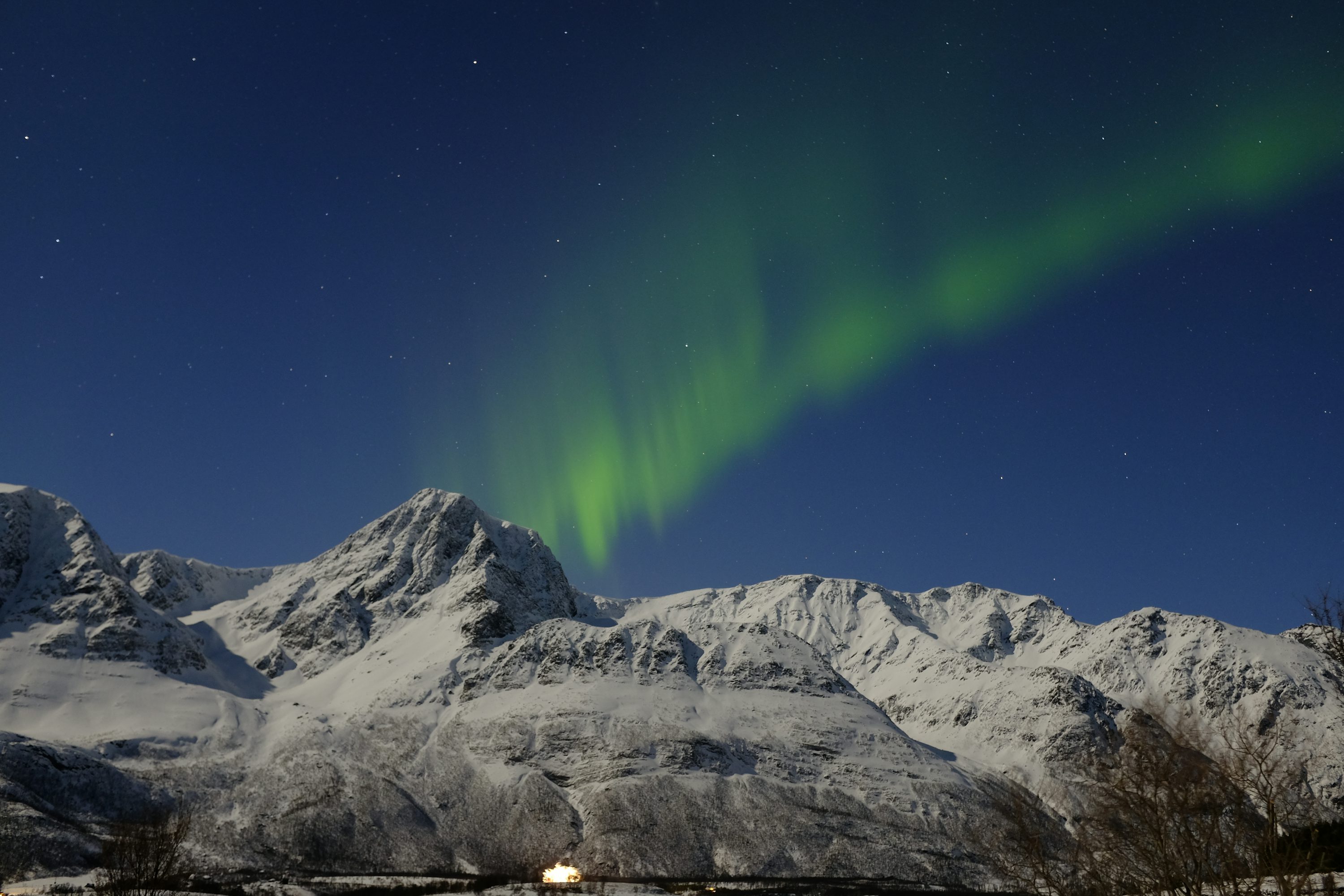
Norway is one of the world's premier destinations for witnessing the northern lights — the aurora borealis that dances across the Arctic sky in curtains of green, purple, and white. From the iconic Lofoten Islands and the city of Tromsø to the deep fjords of northern Norway, the country offers extraordinary conditions for aurora hunting.
Best Places to See the Northern Lights in Norway
Tromsø
Tromsø, the largest city in northern Norway and one of the world's most accessible aurora-viewing destinations, sits well above the Arctic Circle and offers excellent aurora infrastructure — guided tours, glass-roofed cabins, and dog-sled excursions into the wilderness. The city itself provides a memorable backdrop for the lights, with snow-covered mountains and the Tromsøysund fjord reflecting the aurora's colors. Tromsø is served by direct flights from Oslo, London, and several other European cities.
Lofoten Islands
The Lofoten Islands offer the most dramatic northern lights scenery in Norway — jagged mountain peaks, frozen lakes, and red-painted fishermen's cabins (rorbuer) provide a postcard-perfect setting for aurora displays. The remote location and minimal light pollution maximize viewing opportunities, and staying in a traditional rorbu on a fjord with the lights reflected in the water is one of the great travel experiences. Lofoten is best reached by flight to Leknes or Svolvær, or by the stunning E10 drive from the mainland.
Alta
Alta, in Finnmark county, is one of the world's best-known aurora cities — its latitude and climate make it statistically among the best places on earth for clear-sky aurora viewing. The Aurora Sky Station on the Finnmarksvidda plateau, reached by cable car, offers elevated viewing above the cloud layer. Alta is also home to the UNESCO-listed Alta Rock Carvings and the innovative Sorrisniva Igloo Hotel, rebuilt entirely from ice and snow each winter.
Svalbard
Svalbard, Norway's Arctic archipelago far north of the mainland, sits within the auroral oval — the ring around the magnetic pole where aurora activity is most intense. The dark period (polar night) from late October to mid-February offers near-24-hour aurora viewing opportunities. Longyearbyen, the main settlement, has a small but excellent tourism infrastructure. Polar bear country: guided excursions are required outside the settlement.
Senja and Vesterålen
These quieter archipelagos north of the Lofoten Islands offer increasingly popular aurora viewing with fewer tourists. Senja's dramatic coastline and mountains provide spectacular backdrops, and the lack of light pollution is superb. Several small guesthouses offer Northern Lights wake-up calls and guided tours.
When to See the Northern Lights in Norway
The aurora borealis is visible in northern Norway from September to March, with the best chances in the darkest winter months of November, December, and January. The equinoxes (September and March) are statistically among the most active periods for geomagnetic activity, which drives aurora intensity. You need clear, dark skies and sufficient solar activity — the KP index (0–9 scale) predicts activity, with KP3+ visible from Tromsø and KP5+ visible from southern Norway. Apps like Space Weather Live and My Aurora Forecast help track conditions in real time.
Tips for Aurora Hunting
Get away from city lights — even in Tromsø, a 20-minute drive into the countryside makes a significant difference. Be patient and flexible: aurora hunting requires clear skies (no clouds) and sufficient solar wind activity, both of which are unpredictable. Dress for extreme cold — temperatures in Arctic Norway regularly drop below -20°C (-4°F). Hand warmers, insulated boots, and layered technical clothing are essential. Consider a guided tour for your first night; local guides have local knowledge and vehicles to chase clear skies across the region.
Northern Lights Photography Tips
Aurora photography requires a camera with manual settings, a wide-angle lens (f/2.8 or wider), and a sturdy tripod. Start with ISO 1600–3200, aperture f/2.8, and a shutter speed of 5–15 seconds — adjust based on aurora intensity and desired motion blur. A remote shutter release prevents camera shake. Keep spare batteries warm in your inner pockets, as cold drains batteries rapidly. The best foreground subjects include frozen lakes, mountain reflections, fishing villages, and snow-covered trees.