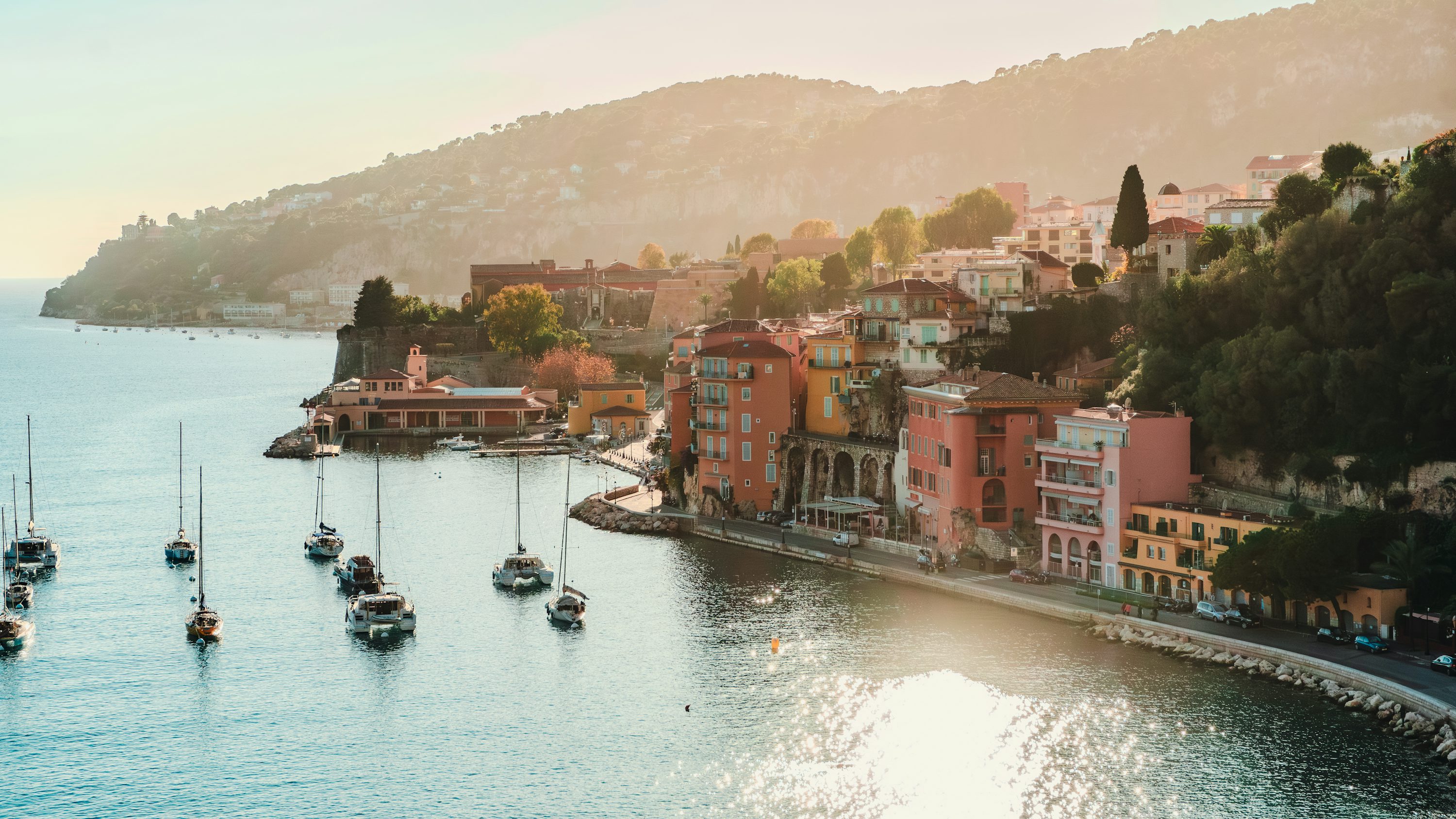
The South of France — the sun-drenched Midi — is one of the world's great travel destinations: a place where vineyards tumble down to warm Mediterranean coves, medieval hilltop villages glow gold in the afternoon light, and lavender fields fill entire horizons in July. From the glamorous Côte d'Azur to the wild Camargue wetlands and the ancient Roman cities of Provence, a South of France vacation offers extraordinary variety. Here's everything you need to plan the perfect trip.
South of France Vacation: Where Is the South of France?
A South of France vacation means exploring Mediterranean France south of Lyon and east of Toulouse — especially Provence-Alpes-Côte d’Azur and Occitanie — where idyllic villages, lavender fields, historic sites, vibrant cities, and dramatic coastline come together in one trip. It’s also one of Europe’s premier vacation regions, with more than 300 sunny days a year, which is exactly why affluent leisure travelers and busy, digital-savvy planners use guides like this to shape a smoother, more tailored escape.
The main areas for visitors are:
Provence: Avignon, the Luberon, Camargue, Arles, and the Var
French Riviera (Côte d'Azur): Nice, Cannes, Monaco, Antibes, Saint-Tropez
Languedoc-Roussillon: Montpellier, Nîmes, Carcassonne, Collioure
Occitanie & Pyrenees: Toulouse, the Canal du Midi, the Pyrenean foothills
From choosing between Nice, Avignon, and Montpellier to timing lavender season, wine tasting, and national park stops, this guide helps you compare destinations, sketch an itinerary, sort out transport, and avoid the usual crowd-and-logistics mistakes so you can spend more time on the South of France experience you actually want.
Top Destinations in the South of France
Provence
Provence is the France of postcards — fields of lavender and sunflowers, ancient Roman monuments, medieval villages clinging to limestone ridges, and outdoor markets overflowing with local produce. Avignon, with its magnificent Palais des Papes and intact medieval walls, makes an excellent base, while aix en provence adds a lively city stop known for its fountains, vibrant atmosphere, and Provençal markets filled with local delicacies. The Luberon Regional Natural Park — containing the hilltop villages of Gordes, Bonnieux, Ménerbes, and Lacoste, along with Roussillon, famous for its red ochre cliffs and colorful buildings, in the luberon valley — is one of the most beautiful rural landscapes in France, with beautiful scenery at every turn and Provence also famed for bouillabaisse.
The Alpilles range offers spectacular cycling and hiking, and the extraordinary Roman arena and theater in Arles — which inspired Van Gogh's most productive period — are among the finest ancient monuments in France. The Camargue delta, where the Rhône meets the sea, is a wild landscape of flamingos, white horses, and black bulls.
French Riviera (Côte d'Azur)
The Côte d'Azur is synonymous with glamour — the iconic French Riviera region of turquoise water, supercar-lined harbors, and the most star-studded film festival on earth, all set along the Mediterranean Sea. This stretch of coast is known for sandy beaches, glamorous resorts, and sea views. But beyond the glitz of Cannes and Saint-Tropez, the Riviera has enormous appeal for all travelers:
Nice: A proper Mediterranean city with excellent museums, a colorful old town, great food, and Parc Phoenix for a family-friendly stop
Antibes: A charming walled town with the largest marina in the Mediterranean, beautiful Garoupe beach, and Château Grimaldi, Picasso's former studio
Villefranche-sur-Mer: A picturesque small town with pastel-colored houses, waterfront dining, and an easygoing base on the coast; Welcome Hotel is a notable stay with stunning sea views
Èze: The most dramatic hilltop village in France, with views that defy description; the exotic garden has an entry fee and a wonderful view over the coast
Saint-Paul-de-Vence: A celebrated medieval village known for cobblestone streets and art galleries
Monaco: The world's second smallest state — casino, palace, Formula 1 circuit, and Oceanographic Museum
Cap Ferrat: A pine-forested peninsula with the Belle Époque Villa Ephrussi de Rothschild and crystal-clear snorkeling coves
Saint-Tropez: A glamorous Mediterranean town often written as St Tropez, known for beaches, yachts, and nightlife
Languedoc & Carcassonne
Often overlooked in favor of Provence and the Riviera, the Languedoc region offers spectacular value — similar landscapes and climate, with fewer tourists and lower prices. In Southern France, Menton is a lovely place for day trips, sitting on the italian border and working well as a small seaside town for a relaxed stop, with beauty, a lemon festival, and citrus cuisine that earned it the nickname "Pearl of France." Carcassonne's medieval citadel, with its 52 towers and double ring of walls rising above the plains, is one of France's most dramatic sights. Nîmes has better-preserved Roman monuments than Rome itself. Nearby, Pont du Gard is a major Roman aqueduct and UNESCO World Heritage site. The Canal du Midi — a 240 km 17th-century engineering masterpiece — can be explored by hire boat or bicycle along its towpath.
Best South of France Experiences
Lavender Fields Season in the Luberon
From late June to early July, the plateau of Valensole and the Luberon hills turn purple with blooming lavender — one of Europe's most spectacular seasonal events. The village of Sault (1,000m elevation) is surrounded by some of the highest and longest-blooming lavender fields. Combine a lavender drive with visits to the Cistercian Abbaye de Sénanque, the hilltop village of Gordes, and the weekly Sunday market in Coustellet. In the Luberon Valley, Roussillon is one village worth adding for its ochre streets, its place among Provence's most beautiful villages, and a stop at Nougat des Lices. Lourmarin is another worthwhile village stop, with Café Gaby offering a charming lunch option and delicious meals.
Wine Tasting in the Rhône Valley
The Southern Rhône Valley produces some of France's most celebrated wines — Châteauneuf-du-Pape, Gigondas, Vacqueyras, and Tavel rosé. The wine estates around Orange and Avignon offer tastings in stunning settings. Châteauneuf-du-Pape village makes an excellent half-day trip from Avignon, with its ruined papal castle and views over the vineyard plain.
The Camargue
The Camargue is unlike anywhere else in France — a vast delta of wetlands, salt marshes, and sand dunes at the mouth of the Rhône, protected as a Regional Natural Park. It’s an ideal stop for travelers who love the great outdoors. Flamingos wade in pink flocks in the lagoons, Camargue horses (white, semi-wild) roam the marshes, and black bulls graze on the plains. Jeep tours, horse riding, and birdwatching are the main activities.
Swimming in the Calanques
Between Marseille and Cassis, the Calanques National Park protects 20 km of dramatic limestone cliffs with hidden inlets of turquoise water. The water is extraordinarily clear and the setting is magical. Arrive early in summer; the most popular trails close midday in high season.
South of France Itinerary Suggestions
1 week: Fly into Nice (3 nights) — Nice, Èze, Monaco; for travelers with a rental car, this works well as a South of France road trip, while staying here can save time for Riviera day trips because it is well connected by public transportation. Drive to Provence (4 nights) — Avignon, Gordes, Roussillon, Arles.
10 days: Add Marseille and the Calanques (2 nights) between Provence and Nice.
2 weeks: Start in Montpellier, add Carcassonne and the Canal du Midi, continue to Avignon and Provence, finish on the Riviera, with Nice as a practical final day stop before flying home.
Nice Airport is the most convenient gateway for many Riviera-focused trips.
Along the French Riviera, buses and trains run along the coast, with a single train line linking major towns, and buses run frequently through the surrounding area. Parking can be challenging in popular towns like Nice and Èze, so public transportation is often easier. For easy stops from Nice, nearby towns like Villefranche-sur-Mer are simple to add, and once you arrive, the waterfront and train area are a short walk away; it’s about 20 minutes away by car.
South of France Travel Tips
A rental car is almost essential for exploring Provence's villages and the Luberon — public transport between villages is limited
If you're continuing by car from a rail hub, the train station is often the easiest place to pick up a rental in cities such as Aix-en-Provence or Avignon
If you plan to rely on public transport, choose a base with easy access to a station or town center
Book accommodation early for July and August — the South of France fills up completely in peak season, temperatures can reach around 90°F, and the best hotels on the Riviera and in Provence are often reserved far in advance
The best months are May–June and September–October for sightseeing: warm and sunny, fewer crowds, lower prices; June usually sits in the 70s°F, while late June to mid-September is the best window for swimming
The TGV connects Paris to Nice in 5h30, Avignon in 2h40, and Marseille in 3h15
Nice Airport, officially Nice Côte d'Azur Airport, has excellent direct connections to London, Amsterdam, Brussels, and many other European cities
The South of France also works especially well for a family holiday, since it's easy to combine beach time, villages, and day trips
The mistral wind blows strongly (and cold) in Provence from autumn through spring — pack a layer even in seemingly warm weather