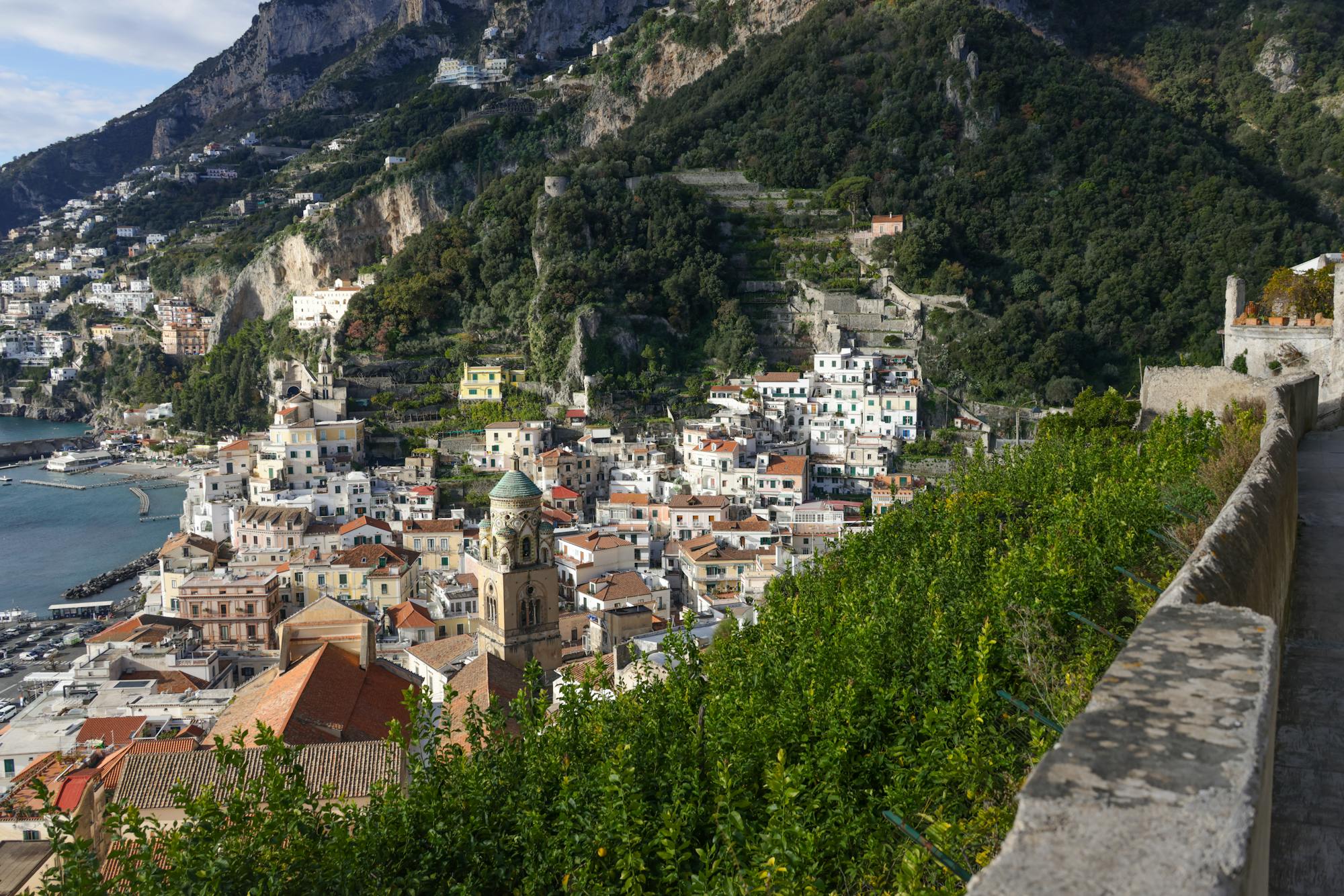
The Amalfi Coast is one of Europe's most dramatic coastlines, where vertiginous cliffs plunge into the cobalt-blue Tyrrhenian Sea, pastel-coloured villages cling to the rock face, and the scent of lemon groves fills the warm Mediterranean air. This UNESCO World Heritage Site rewards travellers who go beyond the postcard images to discover ancient footpaths, hidden coves, artisan workshops, and some of Italy's finest seafood.
The Amalfi Coast is one of Europe's most dramatic coastlines, where vertiginous cliffs plunge into the cobalt-blue Tyrrhenian Sea, pastel-coloured villages cling to the rock face, and the scent of lemon groves fills the warm Mediterranean air. Stretching 50 kilometres along the southern edge of the Sorrentine Peninsula in Campania, this UNESCO World Heritage Site rewards travellers who go beyond the postcard images to discover ancient footpaths, hidden coves, artisan workshops, and some of Italy's finest seafood. Whether you arrive by ferry, hire a scooter along the winding SS163 coastal road, or join a private boat tour, every vantage point delivers a view more breathtaking than the last.
Things to Do in Amalfi Coast: Top Experiences and Attractions
Things to do in the Amalfi Coast range from shopping and beach time in Positano to boat trips to the Grotta dello Smeraldo, visits to Amalfi Cathedral, historic villas in Ravello, and tastings of local lemon specialties—ideal if you want a more polished, personalized trip than a generic checklist. Begin in Positano, one of the most popular towns on the Amalfi Coast, where steep alleyways and colorful houses lead past bougainvillea-draped boutiques down to the main beach at Spiaggia Grande. Many of these small coastal towns cling to the cliffs with wide-open views over the Mediterranean Sea.
Take a morning boat trip along the coast to visit the Grotta dello Smeraldo—an emerald sea cave accessible only by boat or lift—whose submerged stalactites and eerie green light make it genuinely otherworldly. In the town of Amalfi itself, climb to Amalfi Cathedral, then pause in the main square to watch local life unfold around nearby souvenir shops. Head up to Ravello for villa cimbrone in ravello and other historic villas, including the famous Terrace of Infinity, where stunning views open across the Tyrrhenian Sea. This guide focuses on the Amalfi Coast's standout towns, cultural landmarks, scenic experiences, local food and drink, and practical trip-planning ideas for travelers who care about comfort, character, and making the most of their time. Don't miss a visit to a local limoncello producer—the Amalfi Coast's sfusato amalfitano lemons are larger, sweeter, and more fragrant than any variety grown elsewhere, and the liqueur made from them is a revelation. The surrounding lemon groves and lemon trees are part of the region's natural beauty within its UNESCO World Heritage Site setting. Stop by a pastry shop for Lemon Delight or lemon sorbet, often served in a hollowed-out lemon; Delizia al Limone has just the right amount of sweetness and citrus.
Outdoor Adventures on the Amalfi Coast
The Valle delle Ferriere hike is one of the coast's best-kept secrets: a 6-kilometre trail from Amalfi town through ancient paper mills, waterfalls, and lush subtropical vegetation including rare Woodwardia radicans ferns. The Lemon Path is another gentle walk through lemon groves, and you can continue walking between villages if you want to extend it. The Sentiero degli Dei (Path of the Gods) is the famous hike on the Sorrento Peninsula, a gods hiking experience that is absolutely worth the effort. Along the route, charming villages, rugged cliffs, dramatic cliffs, and panoramic views make the scenery unforgettable. Sea kayaking around the sea stacks near Praiano and Conca dei Marini gives access to sea caves unreachable on foot. For water enthusiasts, the waters off Positano and Praiano are excellent for snorkelling and scuba diving, with visibility often exceeding 20 metres. A boat tour from Amalfi or Salerno offers amazing views of the entire coast from the water, with time to anchor in secluded bays for swimming and lunch on board. If you want more context on hikes or coastal outings, book a guided tour.
Cultural and Historical Highlights: Amalfi Cathedral and UNESCO World Heritage Site
Amalfi was once a powerful maritime republic that rivalled Venice, Genoa, and Pisa — its merchants introduced Arabic numerals to Europe and the Tavole Amalfitane, the oldest maritime code in the world, was drafted here. The Amalfi Coast is also a UNESCO World Heritage Site celebrated for its cultural heritage and natural beauty in southern Italy, and that mix is a big part of the Amalfi Coast experience. The Museo della Carta, dedicated to Amalfi Paper in a 13th-century paper mill, charts the town's history as a centre of handmade paper production, a craft still practised today. In Ravello, the Villa Rufolo gardens stage the famous Ravello Festival each summer, with classical concerts performed on a stage suspended dramatically above the sea. The narrow lanes of Atrani, the smallest municipality in Italy, feel entirely untouched by tourism; this picturesque town sits a short distance from Amalfi and is one of the coast’s hidden gems, as well as one of many visitors’ favorite towns when they want a quieter sense of local life beyond the places most people visit. Vietri sul Mare is a good stop for handmade ceramics and ceramics shopping. For history lovers, a day trip to an archaeological site such as the Pompeii archaeological site, Herculaneum, or Paestum adds another layer to the coast, while Procida is a wonderful place if you want a colorful island detour.
Local food culture is anchored in simple, exceptional ingredients: buffalo mozzarella from nearby Paestum, anchovies from Cetara, colatura di alici (fermented anchovy sauce), and pasta dishes like scialatielli ai frutti di mare. More broadly, local cuisine also includes traditional dishes best enjoyed with local wine or through a wine tasting at a nearby vineyard. A cooking class is also a practical way to get closer to the region’s flavours, and local stops such as bar Santa Rosa are known for sfogliatella, while lemon granita is a classic refreshment. Restaurants and terraces around the coast are also ideal for beautiful photos.
Practical Visitor Tips for a Day Trip
Getting to the Amalfi Coast in southern Italy is easiest via Naples (1.5 hours by car or bus) or Salerno (45 minutes), and while many people visit on a day trip, a longer Amalfi Coast itinerary is better. The coastal road is extremely narrow, with winding roads that become even slower in peak season, and traffic is worst in the summer months, so consider arriving by ferry from Salerno or Naples to avoid jams that can last hours. Ferries and hydrofoils connect Positano, Amalfi, and Salerno regularly from April to October. Once on the coast, the public bus is the key budget option for moving between amalfi coast towns along the SS163 route but fills quickly — book early or stand at stops before 8am. A private transfer is a more comfortable alternative for the entire coast. Travelers with their own car get more flexibility, but parking and driving conditions are challenging. Walking between villages is possible via the ancient mule tracks and is highly recommended: the path from Positano to Praiano takes about 90 minutes. Pack comfortable walking shoes, sun protection, and cash for smaller restaurants and shops. Accommodation books out many months ahead for summer visits; aim to reserve by February for July or August stays. For fewer crowds and easier logistics, consider the shoulder season when visiting Amalfi. Check beach club reservations and any attraction entrance fee requirements in advance. Sorrento, the largest city near the coast after Salerno, also works well as a base if you want easier rail connections.