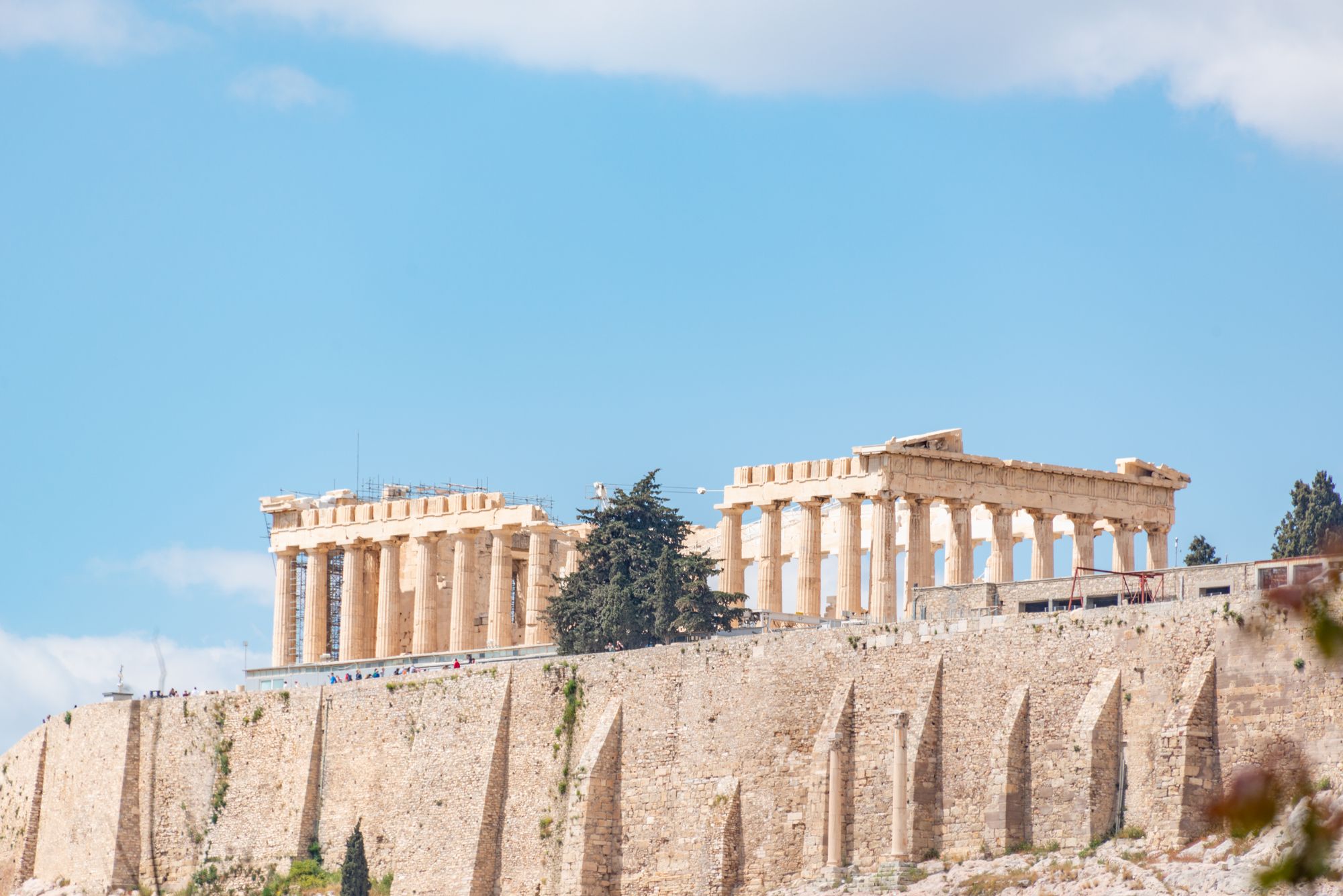
Athens is the cradle of Western civilisation — a sprawling, chaotic, magnificent city where 5,000 years of history press in on every side. Nowhere else on Earth can you walk from a 5th-century BC temple dedicated to Athena to a neo-classical parliament building to a cutting-edge contemporary museum in under an hour. Athens rewards those who look beyond the Acropolis with one of Europe's most vivid, affordable, and genuinely hospitable urban experiences.
Athens is the cradle of Western civilisation — a sprawling, chaotic, magnificent city where 5,000 years of history press in on every side. Nowhere else on Earth can you walk from a 5th-century BC temple dedicated to Athena to a neo-classical parliament building to a cutting-edge contemporary museum in under an hour. But Athens is far more than its ancient monuments. It is a city of extraordinary neighbourhoods — from the bougainvillea-draped lanes of Plaka to the street-art-covered walls of Psyrri — of seafood tavernas and ouzo bars, of warm evenings and an outdoor culture that runs year-round in its Mediterranean climate. Athens rewards those who look beyond the Acropolis with one of Europe's most vivid, affordable, and genuinely hospitable urban experiences.
Things to Do in Athens: Must-See Attractions
The Acropolis of Athens is the defining monument of Western civilisation in one of the oldest cities in the world, where layers of history rise above the modern streets — a UNESCO World Heritage Site crowned by the Parthenon, the Erechtheion, the Temple of Athena Nike, and the Propylaea gateway. Visit at opening time (8am) to beat the crowds and the worst heat; from the top, the views stretch across the entire city and the Saronic Gulf. The Parthenon was built in 447 BC in honor of Athena. The Erechtheion’s Porch of the Caryatids features six caryatids as columns. At the base of the Acropolis, the magnificent Acropolis Museum houses the finest collection of ancient Greek sculpture in the world, including the Parthenon frieze fragments displayed in brilliant daylight — one of the world's great museum experiences — and visitors often pair it with nearby archaeological sites and historical sites on the same outing, including ancient ruins that are among the city’s most important sites. At the foot of the Acropolis, the odeon of herodes atticus still hosts performances today. The Ancient Agora, the civic heart of ancient Athens, includes the remarkably preserved Temple of Hephaestus (2,500 years old and still standing) and the reconstructed Stoa of Attalos. Nearby, the Roman Agora and Hadrian's Library are other archaeological sites in the same central area. Syntagma Square and the adjacent Changing of the Guard ceremony at the Hellenic Parliament, beside the Tomb of the Unknown Soldier — performed every hour by the Evzones in their traditional costume — is an unmissable spectacle, and the square remains central to the city’s political life. The panathenaic stadium was originally built for ancient games, is the only stadium in the world built entirely of white marble, hosted the first modern olympic games in 1896, remains tied to the modern olympic games and the wider olympic games legacy, and the athens marathon finishes here. Nearby, the Temple of olympian zeus was once the largest temple in Greece and one of the largest temples in the ancient world, while Hadrian’s Arch recalls the influence of roman emperor hadrian in this part of the city. Lycabettus Hill, rising 277m above the city, offers the finest panoramic views of Athens, the Acropolis, and on clear days the islands of the Saronic Gulf; take the funicular or hike up through the pine forests. Areopagus Hill is a good alternative viewpoint in central Athens.
Cultural Experiences: Acropolis Museum
The neighbourhood of Plaka, the old quarter at the foot of the Acropolis, is the most atmospheric part of Athens — narrow streets, charming streets, neoclassical houses, Byzantine churches, and outdoor tavernas where cats sleep in the afternoon sun. Tripodon Street in Plaka is one of the oldest streets in Europe. Just above it, Anafiotika is known for its white houses and was built by workers from their home island while they were working on the Royal Palace. Monastiraki, adjacent to Plaka, is Athens' most vibrant market neighbourhood: the famous Monastiraki Flea Market (at its best on Sunday mornings) spills out around the central square, while the surrounding streets are lined with antique dealers, record shops, and street food vendors. Visiting Athens often means exploring these walkable central neighbourhoods on foot. It's easy to see why routes like this make visitors love Athens. Psyrri, between Monastiraki and the Central Market, has transformed from a rundown artisan quarter into Athens' most creative neighbourhood, where street art and live music add to its mix of galleries, alternative bars, and excellent restaurants, while Exarchia is known for its trendy cafes. The Athens Central Market (Varvakios Agora) on Athinas Street is a full-sensory experience: a traditional covered market of butchers, fishmongers, cheese merchants, and spice sellers, with fresh fish among its standouts, built in 1884 and still a local institution. Kerameikos is the ancient cemetery of Athens and one of the important sites for understanding the city's past. The National Archaeological Museum — the largest in Greece — houses the gold death mask of Agamemnon, Minoan frescoes from Akrotiri, and thousands of extraordinary ancient Greek artefacts. For visitors who prefer hands-on displays, the Museum of Ancient Greek Technology has around 300 interactive exhibits. Athens also has several museums that cover art from prehistoric to modern times, including the Benaki Museum, the Acropolis Museum, which opened in 2009 and houses original Parthenon sculptures, and the Museum of Cycladic Art, known for works from the Cycladic islands and collections that extend into contemporary art.
Day Trips and Excursions to Archaeological Sites
Delphi, the ancient sanctuary of Apollo and site of the famous Oracle, is 180km northwest of Athens and makes the finest day trip from Athens, Greece — a UNESCO World Heritage Site of extraordinary beauty set on the slopes of Mount Parnassus above the olive groves of the Pleistos valley. Cape Sounion, 70km south of Athens at the tip of the Attica peninsula, is where the Temple of Poseidon stands dramatically on a cliff above the Aegean Sea — sunset here is one of Greece's most memorable sights, and Lord Byron carved his name into one of the columns. The island of Hydra, a car-free island 90 minutes by hydrofoil, is one of the most beautiful in Greece — mule transport only, elegant neoclassical mansions, crystal-clear swimming, and excellent fish restaurants. Cruises from Athens to the Greek islands are another scenic way to experience the coast. Mycenae and Epidaurus (2.5 hours by car) can be combined in a day: Mycenae's Cyclopean walls and Lion Gate mark the capital of Agamemnon's Bronze Age kingdom; Epidaurus contains the best-preserved ancient Greek theatre in the world, with perfect acoustics that allow a whisper to be heard from the top row.
Local Food and Drink Scene and Food Tours
Athens has one of the most vibrant food scenes in Europe, and Greek food is a major part of the city’s appeal, anchored by exceptional produce from across Greece. Start with mezedes — small dishes shared across the table: taramosalata (cured roe), tzatziki, dolmades (stuffed vine leaves), grilled octopus, Greek salad, and feta with honey and sesame. The souvlaki — grilled meat on a skewer with pita, tomatoes, onions, and tzatziki — is Athens' supreme street food; Monastiraki Square has several excellent souvlaki joints operating until 3am. If you want to sample more widely, book a food tour. The Varvakios market neighbourhood around Evripidou Street has excellent lunch restaurants, great food, and market streets known for traditional Greek home cooking. For upscale dining, the Kolonaki district north of Syntagma is Athens' most chic restaurant neighbourhood, and rooftop restaurants near the center are also popular for Acropolis views. A rooftop bar is another classic sunset option if you want drinks with the same backdrop. Greek wine has undergone a remarkable revival — seek out wines from Santorini (Assyrtiko), Naoussa (Xinomavro), and Nemea (Agiorgitiko). Ouzo (anise spirit, served with ice and water) and tsipouro (grape marc spirit) are the traditional drinks of the mezedes table.
Tips for Getting Around Syntagma Square
Athens has an efficient and inexpensive public transport network. The metro (three lines) is clean, air-conditioned, and connects Athens International Airport to the city center in about 40 minutes — many stations double as free archaeological museums, with ancient remains displayed where they were excavated. A 24-hour tourist ticket (€4.10) covers all public transport including the airport express. The tram runs along the coast to the beach suburbs of Glyfada and Voula. Most of the major sights — Acropolis, Plaka, Monastiraki, Syntagma, National Garden, a beautiful park covering about 15.5 hectares — are walkable from each other, making downtown Athens and central Athens the main sightseeing zone. Many first-time visitors love how easy the central neighborhoods are to explore on foot. Walking these central areas is just that easy and enjoyable. If you want more historical context at the major sites, guided tours are a practical option. For stunning sunset views of the Acropolis and a quieter alternative to Lycabettus Hill, head to Philopappou Hill. The heat in July and August is intense (35–40°C); plan sightseeing for early morning or late afternoon, carry water, and wear sun protection. Download the OASA Telematics app for real-time public transport information. Taxis are metered and affordable; Beat (formerly TaxiBeat) is the local ride-hailing app.