Bali is one of the world's most seductive islands — a place where Hindu spirituality suffuses daily life, where offerings of frangipani and incense appear each morning on every doorstep, where terraced rice paddies cascade down volcanic hillsides, and where the Indian Ocean rolls in on world-class surf breaks. This single Indonesian island has drawn artists, seekers, surfers, honeymooners, and digital nomads for decades, and continues to reinvent itself while preserving the deep spiritual culture that makes it unlike anywhere else on earth.
Bali is one of the world's most seductive islands — a place where Hindu spirituality suffuses daily life, where offerings of frangipani and incense appear each morning on every doorstep, where terraced rice paddies cascade down volcanic hillsides, and where the Indian Ocean rolls in on world-class surf breaks. This single Indonesian island packs an astonishing diversity into its 5,780 square kilometres: the spiritual artisan town of Ubud, the beach club hedonism of Seminyak, the surf culture of Canggu, the clifftop drama of Uluwatu, and the resort luxury of Nusa Dua all occupy the same small landmass. Bali is as much a state of mind as a destination — one that has drawn artists, seekers, surfers, honeymooners, and digital nomads for decades, and continues to reinvent itself while somehow preserving the deep spiritual culture that makes it unlike anywhere else on earth.
Things to Do in Bali: Top Attractions
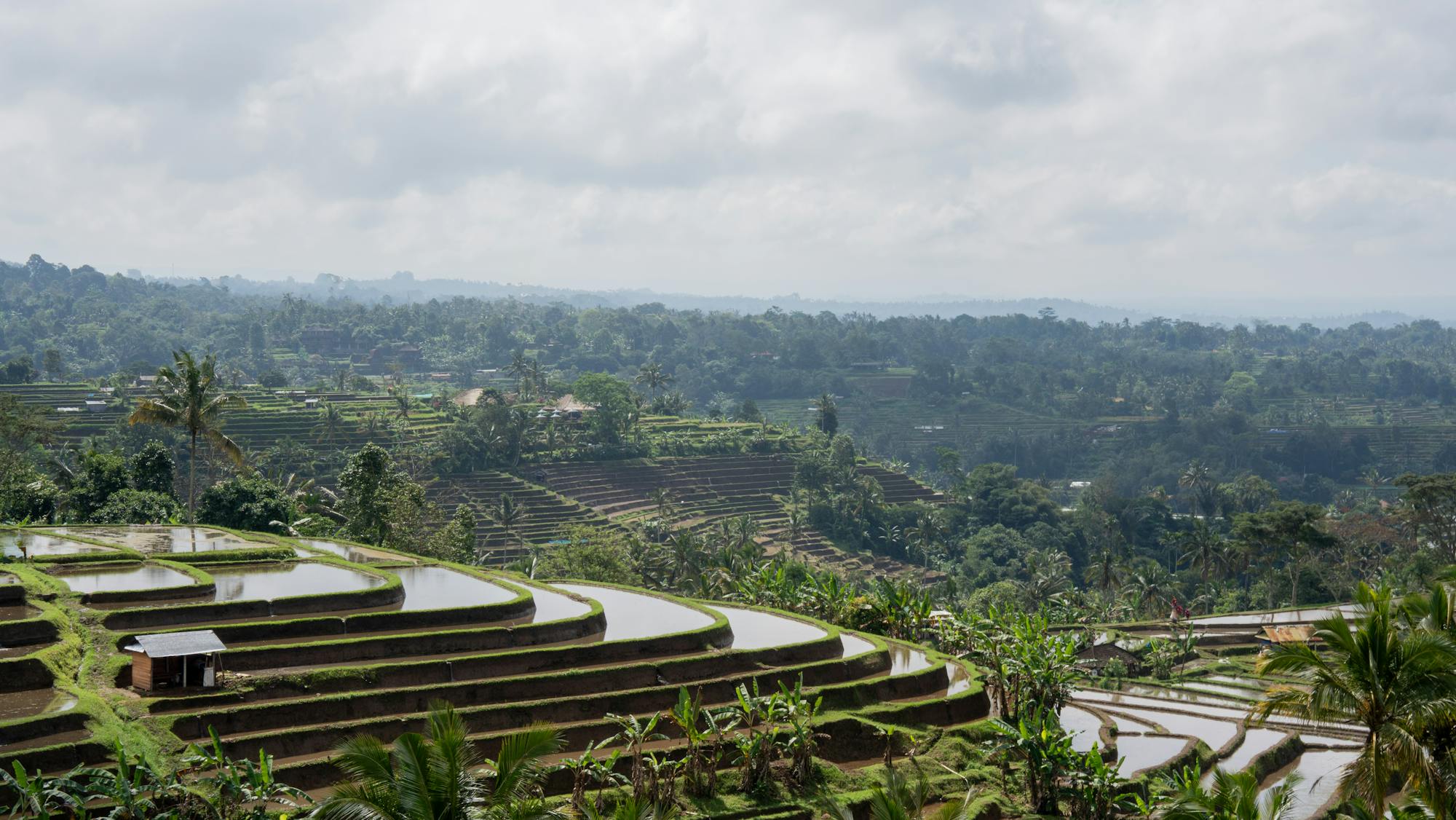
Tanah Lot Temple, perched on a dramatic offshore rock formation that becomes an island at high tide, is Bali's most iconic image and one of the island's most sacred sea temples — arrive for sunset when the silhouette of the temple against an orange sky is transcendent. The Sacred Monkey Forest Sanctuary in Ubud is a genuine Hindu temple complex (Pura Dalem Agung Padangtegal) inhabited by over 700 long-tailed macaques; walking its forest pathways past moss-covered stone carvings is genuinely atmospheric, though keep bags and glasses secured. Tegallalang Rice Terraces north of Ubud showcase the ancient Balinese subak irrigation system — a UNESCO World Heritage-listed water management cooperative that has maintained these stepped paddies for a thousand years. The Tegalalang Rice Terrace is especially beautiful in the early morning before the selfie crowds arrive, with beautiful rice terraces and sweeping rice fields and rice paddies views. Uluwatu Temple (Pura Luhur Uluwatu) sits at the tip of a limestone cliff 70 metres above the Indian Ocean on the Bukit Peninsula — a powerful expression of balinese culture with breathtaking views — and its daily Kecak fire dance performance at sunset, with the ocean as backdrop, is among the most spectacular cultural performances in Asia. Besakih Temple on the slopes of Mount Agung is Bali's holiest and largest Hindu temple complex, comprising over 80 individual temples ascending the sacred mountain, and one of the island's beautiful temples worth visiting.
Cultural Immersion in Balinese Culture
Ubud is Bali's cultural heartland and the best base for deep cultural immersion, with chances to meet Balinese people through everyday customs and temple ceremonies. Take a Balinese cooking class — most begin with a dawn visit to Ubud Market to select spices, lemongrass, galangal, and palm sugar before returning to a garden kitchen to prepare lawar (minced meat and coconut salad), nasi goreng, and sate lilit (minced fish satay on lemongrass skewers). The Ubud Palace (Puri Saren Agung) hosts nightly Legong, Barong, and Kecak dance performances in the royal courtyard — one of the most popular places to experience local dance traditions — and tickets cost around 100,000 IDR. Visit a silver workshop in Celuk village or a woodcarving studio in Mas village to watch Balinese artisans at work using techniques passed down through generations. These hands-on stops are among the fun things to do when you visit Bali for culture. For spiritual experiences, a water purification ceremony (melukat) at Tirta Empul Temple near Tampaksiring — where holy spring water flows through carved stone spouts into sacred bathing pools — is a profoundly moving experience that visitors are welcome to join respectfully.
Day Trips to Tegalalang Rice Terrace
The most rewarding day trip from Ubud or southern Bali is to the Jatiluwih Rice Terraces in Tabanan Regency — a UNESCO-listed landscape of sweeping terraced paddies that dwarfs Tegallalang in scale, while Tegalalang Rice is another scenic stop near Ubud, and feels far less commercialised. Rent a scooter or hire a driver and explore the back roads between Jatiluwih and Pura Ulun Danu Bratan, also known as Danu Beratan Temple, the water temple floating on the mist-shrouded shores of Lake Beratan. This is an ideal area to relax and take in the scenery. If you're staying in Ubud before or after this day trip, the Campuhan Ridge Walk is a scenic two-kilometer hike that's easy to add.
The northern coast offers a completely different Bali: Lovina Beach is known for dolphin-watching trips at dawn, while the region around Singaraja has Dutch colonial architecture and black-sand beaches with a fraction of the south's tourist traffic, and nearby Banjar Hot Spring offers a relaxing bathing experience. The Nusa Islands — Nusa Penida, Nusa Lembongan, and Nusa Ceningan — are accessible by fast boat from Sanur (30–45 minutes) and are known for pristine beaches, spectacular diving, dramatic clifftop scenery at Kelingking Beach, and the famous manta ray cleaning station at Manta Point. From the Bali mainland, a short boat ride reaches Lembongan Island for a quieter Bali holiday and a laid-back atmosphere. Nearby Nusa Ceningan is a small island known for Blue Lagoon. Snorkelling trips here can include manta rays and nearby sights such as Broken Beach, as well as encounters with sea turtles. For travellers with more time, the Gili Islands — especially Gili Air and Gili Trawangan — are easy island add-ons, with Gili Trawangan known for clear waters and vibrant nightlife. Tulamben's shipwreck on Bali's east coast is another excellent dive or snorkel stop, lying only 10–15 meters from the beach. White water rafting on the Telaga Waja River is another strong day-trip option for active travellers.
Food Culture and Best Places to Eat
Balinese cuisine is distinct from the rest of Indonesia — richer in spice, more reliant on coconut oil and shrimp paste, and shaped by the island's Hindu culture (pork, unusual elsewhere in Muslim-majority Indonesia, is central to Balinese cooking). Babi guling — spit-roasted suckling pig seasoned with turmeric, lemongrass, ginger, and galangal — is the island's most celebrated dish; the legendary Ibu Oka in Ubud has been serving it since the 1980s. Bebek betutu (slow-cooked duck wrapped in banana leaf and buried in hot coals for hours) is another ceremonial dish now available at restaurants across the island. For street food, the night market at Gianyar (30 minutes from Ubud) is one of Bali's most authentic, with dozens of stalls serving babi guling, roast chicken, sate, and Balinese black rice pudding by torchlight. The Canggu café scene has exploded in recent years — smoothie bowls, avocado toast, and excellent specialty coffee sit alongside warung (local eateries) serving nasi campur (mixed rice) for under US$2, and the area is especially popular with digital nomads; Canggu is also popular for its beaches and hip cafes. In Ubud and Canggu, you'll also find plenty of favourite places for a healthy brunch or good coffee.
In Sanur, Warung Mak Beng has been serving its famous fish soup and fried fish since 1941.
For sunset drinks, Sundara is a standout beach club in Jimbaran, and it offers free finger food every 15 minutes.
For a candlelight dinner, Bambu Indah provides rice field views that make it an unforgettable experience.
For a lively night out in Seminyak, La Favela stands out for its unique interior design made with recycled materials.
A romantic dinner cruise is also a popular evening activity in Bali.
If you want a non-dining option near the restaurant zones, Waterbom Bali in Kuta is a fun alternative.
Practical Tips for First Timers
Most nationalities receive a free 30-day visa on arrival at Ngurah Rai International Airport, extendable once for another 30 days, which helps explain why Bali is such a popular destination, especially for a first bali holiday. The Indonesian Rupiah (IDR) is the only accepted currency at local warung and markets; ATMs are plentiful in tourist areas. Grab operates in southern Bali and Ubud but is not always permitted at official taxi ranks; use it for intercity transfers booked in advance. Renting a scooter (around US$5/day) is the most efficient way to explore, and it is especially useful for reaching beaches on Bali's east coast and the wider east coast, though the roads can be chaotic and an international driving permit is technically required. Mount Batur, also known as mt batur, is an active volcano that rises 1,717 meters and is ideal for sunrise hikes thanks to its early-morning views and cooler trekking conditions. For many first-time visitors, it is a true bucket list activity. Nusa Dua is a polished resort area in southern Bali, while beachgoers looking for surfing and other water sports often head to spots like Balangan Beach. Bali is also known for its beautiful beaches, and some worthwhile excursions sit beyond the beaten path, including Menjangan Island. At temples, a sarong and sash must be worn — most temples rent them at the entrance for a small fee. Bali's Nyepi (Day of Silence) is a unique Hindu New Year celebration (usually March) when the entire island shuts down for 24 hours — no lights, no movement, no noise, no flights. It is one of the most extraordinary cultural experiences in the world but requires planning, as the airport closes and travellers must remain in their accommodation.