Bangkok is one of the world's great cities — a chaotic, thrilling, and endlessly rewarding metropolis that balances ancient temple culture with futuristic skyscrapers, some of the planet's finest street food with Michelin-starred restaurants, and backpacker hostels with world-class luxury hotels.
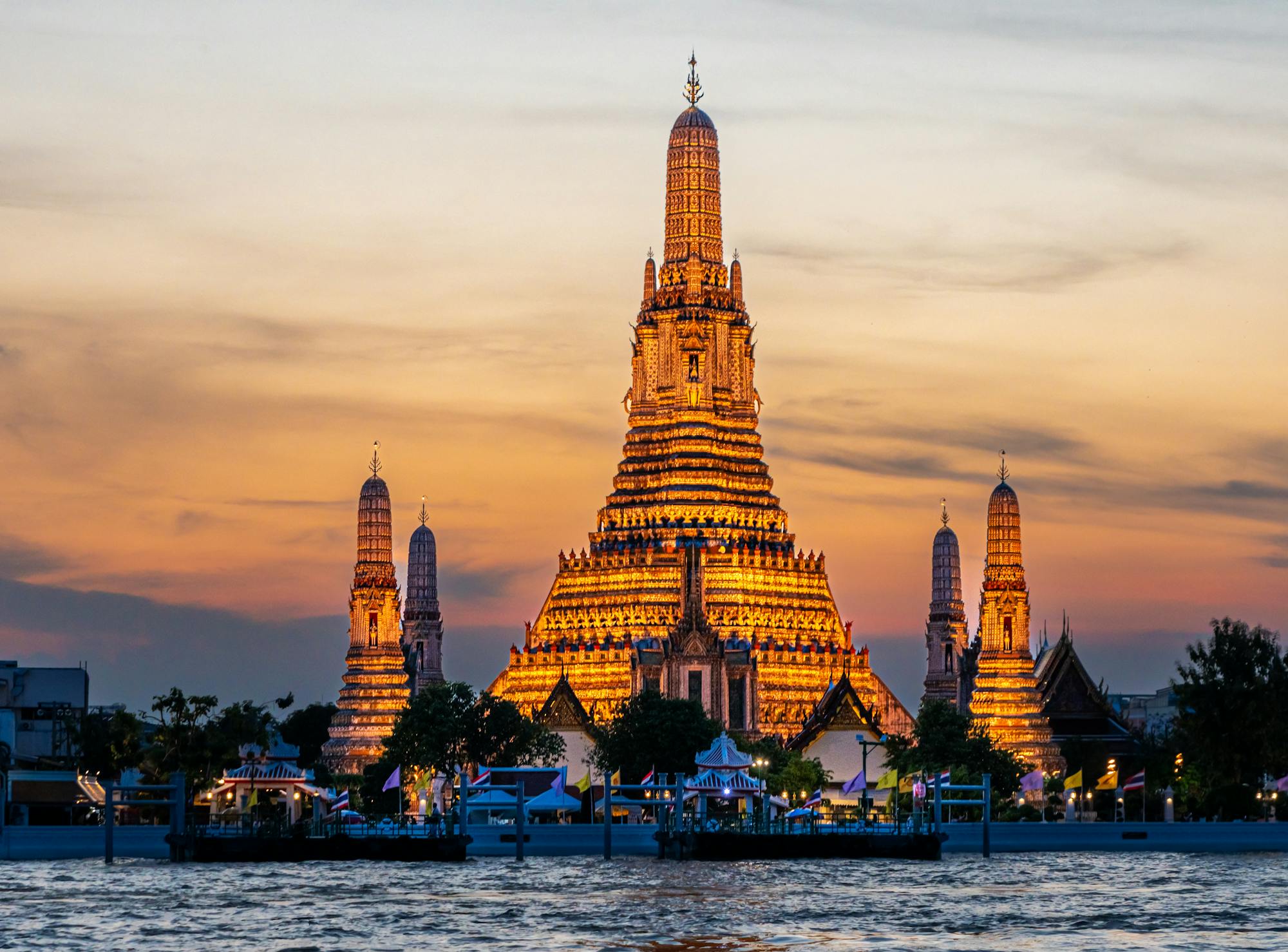
Bangkok is one of the world's great cities — a chaotic, thrilling, exhausting, and endlessly rewarding metropolis that somehow balances ancient temple culture with futuristic skyscrapers, backpacker hostels with world-class luxury hotels, and some of the planet's finest street food with Michelin-starred restaurants. Thailand's capital and by far its largest city, Bangkok is home to over ten million people and receives more international visitors than almost any city on earth. The Grand Palace complex and the golden spires of Wat Arun on the Chao Phraya River represent one of Asia's most magnificent architectural ensembles. By night, the rooftop bars above the city's towers offer views over a sprawling neon grid that stretches to the horizon. Bangkok is often the entry point to Thailand, but it fully deserves several dedicated days of its own.
Top Attractions: Things to Do in Bangkok
The Grand Palace and Wat Phra Kaew (Temple of the Emerald Buddha) is Bangkok's single most important sight in Thailand's capital — a vast, dazzling complex of golden spires, mirrored mosaic towers, and royal halls that has served as the ceremonial heart of the Thai monarchy since 1782, with over 100 royal buildings in the complex. Arrive before 9am to beat the crowds; dress modestly, with shoulders and knees covered throughout the temple grounds, or rent a wrap at the gate. Wat Pho, directly adjacent, houses the 46-metre gold Reclining Buddha, including its giant reclining Buddha statue, and is the birthplace of traditional Thai massage. Wat Arun (Temple of Dawn) across the river is best seen at sunset, when its porcelain-encrusted spires glow in the golden light; entry is 200 baht in 2026. For another elevated view of Bangkok's skyline, head to Wat Saket, also known as the Golden Mount, which rises 80 metres high. The Chatuchak Weekend Market (JJ Market) is one of the world's largest markets: 15,000 stalls selling antiques, ceramics, plants, clothing, street food, and almost everything else imaginable. The Jim Thompson House is a museum showcasing traditional Thai architecture and the history of the silk industry. For thai art and thailand's history, visit the Bangkok National Museum, one of southeast asia's largest museums.
Local Experiences, Night Market, and Activities
A long-tail boat ride through Bangkok's remaining canals (klongs) is one of the city's essential experiences, and other river and canal boat rides add to the appeal — Khlong Saen Saeb connects the old city to the new, passing through neighbourhoods rarely seen by tourists. The Or Tor Kor fresh market near Chatuchak is Thailand's finest fresh produce market — an exceptional place to discover tropical fruits, Thai herbs, and premium local ingredients. Thai cooking classes range from morning market visits to full-day programmes and help visitors learn to make local dishes and thai food; Blue Elephant and Silom Thai Cooking School are well-regarded. Bangkok's Chinatown comes alive at night with street vendors and carts stretching for hundreds of metres, and it is one of the largest in the world — try the dim sum, barbecued pork, fresh oyster omelettes, and a notable street food stall along Yaowarat Road. Khao San Road is another nightlife hotspot, with khao san backpacker energy and a lively street-food atmosphere. A Muay Thai bout at Lumpinee Stadium is a visceral, unmissable spectacle. For a green break from the busy streets, lumpini park in central bangkok offers an easy pause in the city, with monitor lizards roaming freely and locals out jogging or practicing tai chi. Benjakitti Park is a good alternative, with a mini-national park feel, wetlands, and elevated walkways for nature viewing.
Day Trips, Grand Palace, and Nearby Destinations
The ancient capital of Ayutthaya (90 minutes north by train) is Bangkok's finest day trip — hire a bicycle to explore the UNESCO-listed ruins at your own pace. If you want a historical excursion closer to the city, Ancient City is an easy alternative with sprawling replicas of Thailand's landmarks. The Damnoen Saduak floating markets (90 minutes west) are photogenic and best visited early morning; combine it with the extraordinary Maeklong Railway Market, where vendors retract their stalls to let a train pass through. The beach resort town of Hua Hin (3.5 hours south by train) is Bangkok residents' weekend escape — quiet and upscale. Kanchanaburi (2 hours west) is the site of the Death Railway and Bridge on the River Kwai, a sobering but important historical destination. Bangkok also pairs well with a wider Thailand itinerary that includes Chiang Mai.
Food, Drink, and Street Food Culture
Bangkok is a fascinating city with exceptional food. The street food scene is extraordinary: pad thai from a wok cart, boat noodles in rich broth, mango sticky rice from a temple-side cart, khao man gai at a pre-dawn shopfront, and many visitors who love street food also go looking for the best Pad Thai. For a more comfortable take on that scene, SookSiam at ICONSIAM is an amazing food court with authentic Thai street food experiences under one roof. The city also has a thriving restaurant scene from one-Michelin-star Thai tasting menus (Sorn, Le Du, Paste, and R-Haan) to excellent Japanese and Middle Eastern options. Spirit Jim Thompson is another fine-dining option in a lush setting. Bangkok's rooftop bars are unmatched: Sky Bar at Lebua (famous from Hangover II), Vertigo at the Banyan Tree, and Octave at the Marriott Sukhumvit all offer sweeping views of Bangkok's skyline and its towering skyscrapers. A dinner cruise along the Chao Phraya is another memorable evening dining option, and most last about two hours. For something more local, a cold Singha at a plastic-table street restaurant is the true Bangkok drinking experience. Food tours are also a convenient way to sample Thai food in neighborhoods like Chinatown.
Practical Travel Tips
Bangkok is a huge metropolis, so its traffic is legendary — avoid taxis during rush hour (7–9am, 5–8pm) and use public transit instead. Bangkok has 10 metro lines including the BTS and MRT. The Chao Phraya Express Boat is excellent and cheap for riverside attractions on the Chao Phraya River, and river ferries provide a scenic way to navigate Bangkok's waterways. The Chao Phraya Tourist Boat also offers hop-on-hop-off service for 150 baht. Siam Hop runs four sightseeing bus routes. Always insist on the meter in taxis. Tuk tuks are fun for short rides but usually cost more than metered taxis. Dress modestly for temple visits (shoulders and knees covered); cheap sarongs are sold at the Grand Palace gate. Temple scams are common: anyone outside the Grand Palace saying it's closed and offering an alternative tour is lying — proceed to the entrance. The Thai baht is the currency; ATM fees for foreign cards are typically 220 baht per withdrawal. Bangkok is extremely hot and humid April–June; carry water and seek shade at midday. For a break, duck into massive shopping malls or shopping centres with air conditioning, such as Siam Paragon and ICONSIAM, which has over 500 shops. Siam Paragon Mall is also handy if you want a few hours indoors or a shopping spree. MBK Center is a practical stop for electronics and clothing shopping. You can often find similar souvenirs for less in local markets. Where you stay in Bangkok affects transit convenience, so pick a place within walking distance of a station or key sights; the river city also has everything from budget stays with modern rooms to luxury hotels. If possible, visit Bangkok in the cooler dry season, and plan similarly if you also visit Thailand.