<h2>1. Explore Bryggen</h2> <p>Bryggen — Bergen's iconic UNESCO World Heritage wharf — is a row of colorful wooden medieval Hanseatic trading houses lining the harbor. The buildings, dating to the 14th century (with many reconstructed after fires), lean slightly and are packed tightly together, their interior lanes and passages forming a fascinating labyrinth of workshops, galleries, craft shops, and restaurants. The Hanseatic Museum inside one of the original merchant houses brings the history of the Hanseatic League's Bergen trading post vividly to life.</p> <h2>2. Ride the Fløibanen Funicular</h2> <p>The Fløibanen funicular ascends in eight minutes from the city center to Mount Fløyen (320 metres), one of Bergen's seven surrounding mountains. The panoramic view from the top — across the city, the harbor, the Byfjord, and the surrounding peaks — is one of the finest urban viewpoints in Scandinavia. The mountain has excellent hiking trails through forests and to neighboring peaks, a good café, and a family-friendly play area. Fløibanen runs every 15–30 minutes daily.</p> <h2>3. Bergen Fish Market (Fisketorget)</h2> <p>Bergen's famous Fish Market, on the harbor in front of Bryggen, has been a trading point for fresh fish and seafood since the 1200s. Today it's a lively outdoor and indoor market where fishmongers sell fresh shrimp, salmon, cod, king crab, whale, and smoked fish alongside Norwegian handicrafts and souvenirs. It's a great place for a seafood lunch — fresh shrimp with bread and mayonnaise, or a bowl of fish soup, are classic choices. The indoor market hall is open year-round.</p> <h2>4. KODE Art Museums</h2> <p>Bergen's KODE complex comprises four interconnected museum buildings housing one of the largest collections of art and design in Scandinavia. The collection spans Norwegian and international art from the medieval period to the present, including works by Edvard Munch and J.C. Dahl, an extraordinary collection of Asian decorative arts, and a superb design and applied arts collection. KODE 2 has a striking modern gallery for contemporary exhibitions. A combined ticket covers all four buildings.</p> <h2>5. Troldhaugen — Edvard Grieg's Home</h2> <p>Troldhaugen, on the shores of Lake Nordåsvannet 8km south of Bergen, was the home of composer Edvard Grieg for 22 years. The well-preserved villa, composer's hut where Grieg worked each summer, and small concert hall overlooking the lake are open to visitors. Troldhaugen holds regular summer concerts in its modern concert hall, and Grieg and his wife Nina are buried in a simple rock tomb on the property. A small museum traces Grieg's life and compositions.</p> <h2>6. Take a Fjord Cruise from Bergen</h2> <p>Bergen is the gateway to Norway's magnificent fjord country. Day trips from the city reach the Hardangerfjord — Norway's second-longest fjord, famous for its fruit orchards and dramatic waterfalls — and the more famous Sognefjord via the Norway in a Nutshell route. The Norway in a Nutshell tour is a classic combination of fjord cruise, mountain railway (the Flåm Railway), and scenic bus that can be done as a day trip from Bergen to Oslo (or vice versa). For a more intimate fjord experience, the smaller Nærøyfjord (UNESCO-listed) is accessible from Gudvangen.</p> <h2>7. Hike Mount Ulriken</h2> <p>Mount Ulriken (643 metres), the highest of Bergen's seven mountains, can be reached by the Ulriksbanen cable car from the city center or by a strenuous 1.5-hour hike. The summit offers extraordinary 360-degree views — on a clear day you can see across the entire western Norway fjord landscape. A well-marked ridge hike connects Ulriken to the neighboring peaks of Fløyen and Rundemanen, one of Bergen's classic walks. The cable car runs year-round except in storms.</p> <h2>8. Old Bergen Museum (Gamle Bergen)</h2> <p>Gamle Bergen, at Elsesro on the northern edge of the city, is an open-air museum of 55 historic wooden buildings from 18th and 19th-century Bergen, recreating a complete street scene of the period. Costumed guides lead tours through shops, a dentist's office, a school, and middle-class homes, bringing the period to life. The museum is set in a beautiful location beside the sea and is particularly good for families with children.</p> <h2>Practical Tips for Bergen</h2> <p>Bergen is famously rainy — it's one of Europe's wettest cities, receiving rain on average 200 days per year. A waterproof jacket is essential at any time of year; a packable rain shell takes no space and transforms a rainy day into an adventure. Bergen Card (available at the tourist office and online) covers public transport, museum entry, and the Fløibanen funicular. The Bergen Light Rail connects the airport to the city center in 45 minutes. Bergen's compact center is highly walkable; most major sights are within 15 minutes of Bryggen.</p>
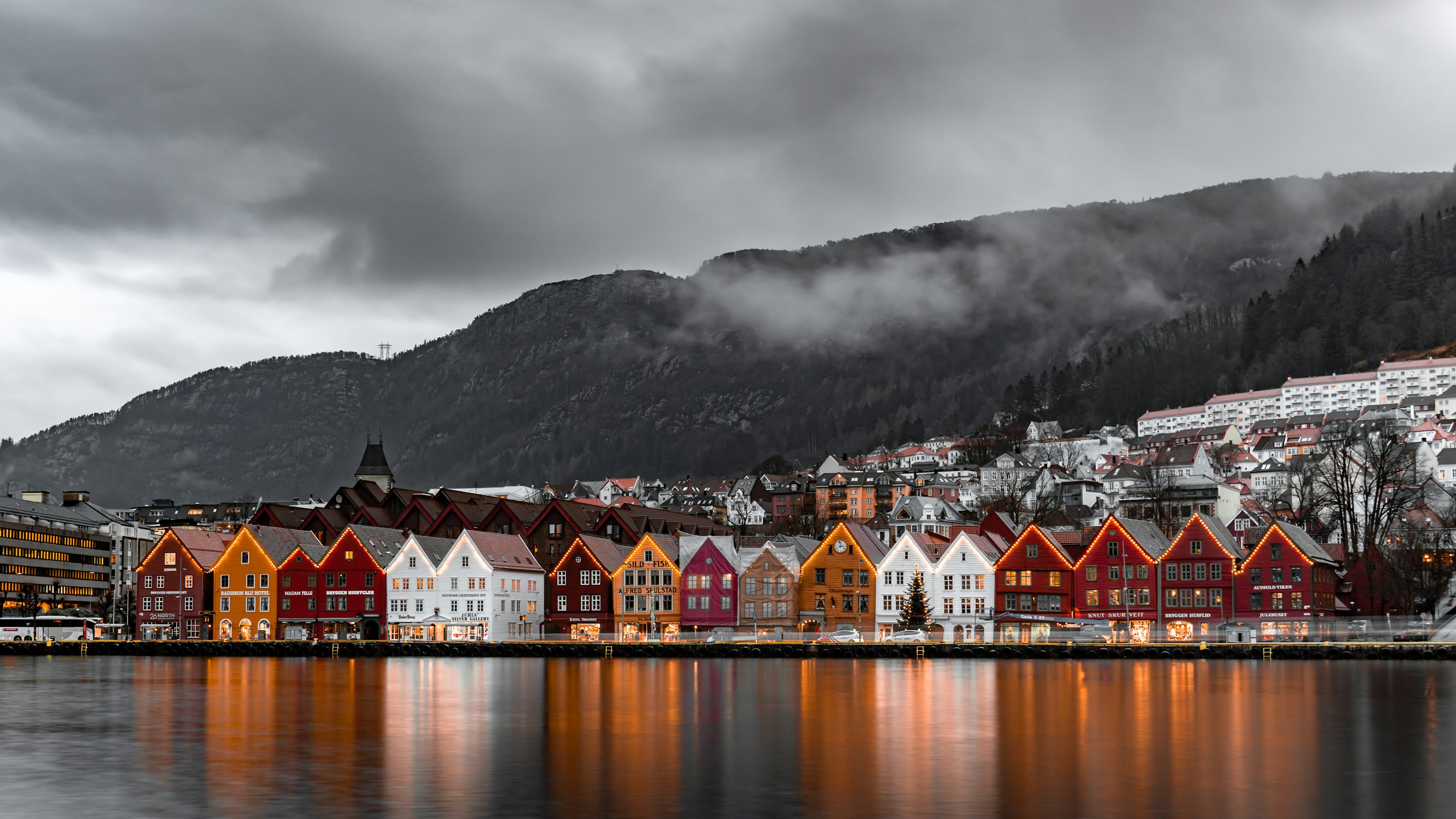
1. Things to Do in Bergen: Explore Bryggen
Bryggen — Bergen's iconic UNESCO World Heritage wharf — is a row of colorful wooden medieval Hanseatic trading houses lining the harbor. The buildings, dating to the 14th century (with many reconstructed after fires), lean slightly and are packed tightly together, their interior lanes and passages forming a fascinating labyrinth of workshops, galleries, craft shops, and restaurants. The Hanseatic Museum inside one of the original merchant houses brings the history of the Hanseatic League's Bergen trading post vividly to life.
2. Ride the Fløibanen Funicular
The Fløibanen funicular ascends in eight minutes from the city center, near Bryggen, a UNESCO World Heritage Site, to Mount Fløyen (320 metres), one of Bergen's seven surrounding mountains. The panoramic view from the top — across the city, the harbor, the Byfjord, and the surrounding peaks — offers spectacular views and is one of the finest urban viewpoints in Scandinavia. The mountain has excellent hiking trails through forests and to neighboring peaks, a good café, and a family-friendly play area. Fløibanen runs every 15–30 minutes daily.
3. Bergen Fish Market (Fisketorget)
Bergen's famous Fish Market, on the harbor in front of Bryggen, is one of the city's top attractions and has been a trading point for fresh fish and seafood since the 1200s. Today it's a lively outdoor and indoor market where fishmongers sell fresh shrimp, salmon, cod, king crab, whale, and smoked fish alongside Norwegian handicrafts and souvenirs. It's a great place for a seafood lunch — fresh shrimp with bread and mayonnaise, or a bowl of Bergen fish soup, are classic choices. The indoor market hall is open year-round.
4. KODE Art Museums
Bergen's KODE museums comprise four interconnected museum buildings housing one of the largest collections of art and design in Scandinavia. The collection spans Norwegian and international art from the medieval period to the present, including works by Edvard Munch and J.C. Dahl, an extraordinary collection of Asian decorative arts, and a superb design and applied arts collection. KODE 2 has a striking modern gallery for contemporary exhibitions. A combined ticket covers all four buildings.
5. Troldhaugen — Edvard Grieg's Home
Troldhaugen, part of the KODE museums and set on the shores of Lake Nordåsvannet 8km south of Bergen, is a short journey from the city center and was the home of composer Edvard Grieg for 22 years. The well-preserved villa, composer's hut where Grieg worked each summer, and small concert hall overlooking the lake are open to visitors. Troldhaugen holds regular summer concerts in its modern concert hall, and Grieg, one of Norway’s most famous composers, and his wife Nina are buried in a simple rock tomb on the property. A small museum traces Grieg's life and compositions.
6. Take a Fjord Cruise from Bergen
Bergen is the gateway to Norway's magnificent fjord country and a perfect starting point for a fjord tour through Norwegian nature. Day trips from the city reach the Hardangerfjord — Norway's second-longest fjord, famous for its fruit orchards and dramatic waterfalls — and the more famous Sognefjord via the Norway in a Nutshell route. The Norway in a Nutshell tour is a classic guided tour combination of fjord cruise, mountain railway (the Flåm Railway), and scenic bus that can be done as a day trip from Bergen to Oslo (or vice versa). For a more intimate fjord experience, the smaller Nærøyfjord (UNESCO-listed) is accessible from Gudvangen.
7. Hike Mount Ulriken
Bergen is the perfect starting point for exploring the fjords, and Mount Ulriken (643 metres), the highest of Bergen's seven mountains, can be reached via the ulriken cable car from the cable car station or by a strenuous 1.5-hour climb if you want a proper hike. The summit offers extraordinary 360-degree views — on a clear day you can see across the entire western Norway fjord landscape and classic Norwegian nature.
A well-marked ridge hike connects Ulriken to the neighboring peaks of Fløyen and Rundemanen, and we recommend hiking this classic Bergen walk if you want to extend the outing. The cable car runs year-round except in storms, and it also works well as part of a fjord tour or an organized option such as Norway in a Nutshell for seeing more of the region.
8. Old Bergen Museum (Gamle Bergen)
Gamle Bergen, at Elsesro on the northern edge of the city, is an open-air museum of 55 historic wooden buildings from 18th and 19th-century Bergen, with the wooden houses recreating a complete street scene of the period. Costumed guides lead tours through shops, a dentist's office, a school, and middle-class homes, bringing the period to life. The museum is set in a beautiful location beside the sea and is particularly good for families with children.
Practical Tips for Bergen
Bergen, Norway is famously rainy — it's one of Europe's wettest cities, receiving rain on average 200 days per year, and a waterproof jacket is essential at any time of year; a packable rain shell takes no space and transforms a rainy day into an adventure. Bergen Card (available at the tourist office and online) covers public transport, museum entry, and the Fløibanen funicular. The Bergen Light Rail connects the airport to Bergen city center in 45 minutes, and Visit Bergen is a useful official resource for current transport and attraction details. Bergen's compact center is highly walkable; most major sights are within 15 minutes of Bryggen.