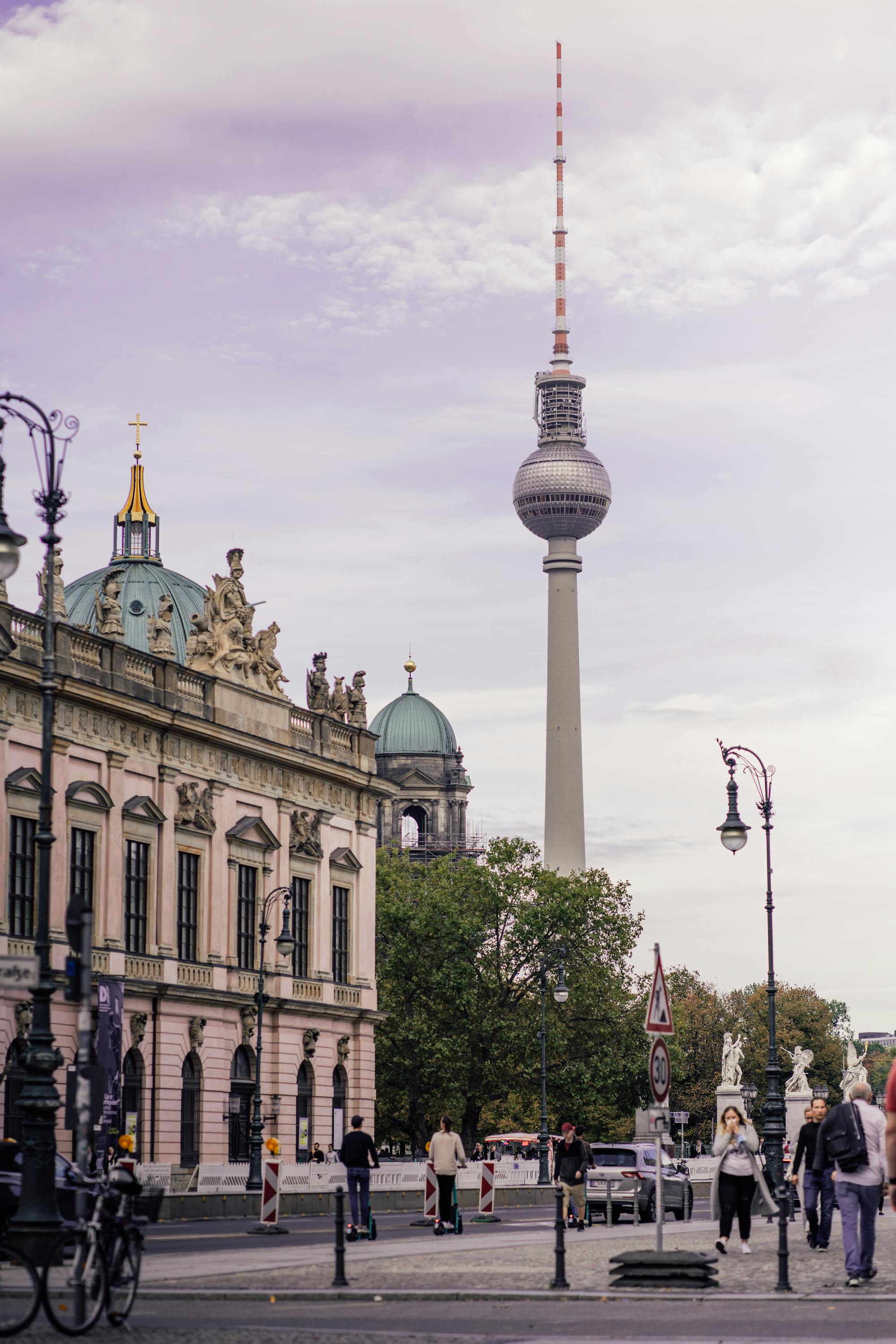
Berlin is a city that has reinvented itself repeatedly and wears every layer of its history openly. Capital of reunified Germany since 1990, it combines heavyweight historical sites — the Brandenburg Gate, the remnants of the Berlin Wall, the Holocaust Memorial — with Europe's most dynamic contemporary culture scene.
Things to Do in Berlin
Berlin is a city that has reinvented itself repeatedly and wears every layer of its history openly. Capital of reunified Germany since 1990, it combines heavyweight historical sites — the Brandenburg Gate, the remnants of the Berlin Wall, the Holocaust Memorial — with Europe's most dynamic contemporary culture scene. Street art, cutting-edge architecture, radical theatre, and a nightclub scene that operates in a different dimension from any other city make Berlin endlessly fascinating. It is also one of Europe's most affordable capitals, with excellent public transport and a thriving café culture that sustains the city's creative class.
Iconic Landmarks, Museum Island, and Museums
The Brandenburg Gate on Pariser Platz is Berlin's most iconic symbol — a neoclassical triumphal arch built in the 18th century that once stood isolated in the no-man's-land of the Cold War and now serves as a national symbol of reunified Germany. Nearby, the Memorial to the Murdered Jews of Europe (Holocaust Memorial) is one of the world's most affecting monuments — 2,711 concrete slabs of varying heights that disorient and provoke contemplation; it opened in 2005 to honor Jewish victims. The Reichstag Building, home to the German parliament, adds another essential stop nearby, with its glass dome open for public visits. Checkpoint Charlie was a Cold War border crossing between East and West Berlin, and while it's one of the city's most famous landmarks, it can feel like a tourist trap without historical context. The East Side Gallery, stretching 1.3km along the Spree, is the longest surviving section of the Berlin Wall, a symbol of division from 1961 to 1989, covered in murals by international artists including Dmitri Vrubel's famous "Brotherly Kiss". Museum Island in the Spree river is a UNESCO World Heritage Site since 1999 housing five museums in one remarkable museum complex, including the Pergamon Museum with its extraordinary ancient Greek altar, the Neues Museum containing the bust of Nefertiti, the Altes Museum, the Bode Museum, and the Alte National Gallery. The Berlin Cathedral and its panoramic dome viewpoint round out the island beautifully beside them. The TV Tower at Alexanderplatz stands 368 meters tall and remains one of the city's famous sights, with an observation deck that requires an entrance fee. The Topography of Terror is a free indoor museum on the former Reich Security Main Office site that documents Nazi atrocities and connects Berlin's history to World War II and the Second World War.
Neighborhoods and the Berlin Wall Worth Exploring
Mitte is the historical and political centre — the city center of the German capital in Berlin, Germany — with Brandenburg Gate, Museum Island, and Unter den Linden all here, making it the logical starting point for first-time visitors, especially with Alexanderplatz serving as a major metro station. Prenzlauer Berg, a former East Berlin district, is now Berlin's most sought-after residential neighbourhood — leafy streets, independent coffee shops, vintage clothing stores, and Mauerpark, which hosts a flea market every Sunday from 7am to 5pm. Outdoor karaoke there starts at 3pm on Sundays. Kreuzberg and Neukölln form Berlin's beating creative heart: Kreuzberg is known for its rebellious, bohemian spirit, with Turkish street food, canal bars along the Landwehrkanal, and legendary clubs like Watergate, while Neukölln also draws visitors for its art galleries and rooftop bar scene. Charlottenburg, in former West Berlin, offers a more polished, upscale atmosphere around the Kurfürstendamm shopping boulevard and the ornate Charlottenburg Palace, while Teufelsberg — an artificial hill built from WWII rubble — is another compelling stop for history buffs on the western side of the city.
Outdoor Activities, Parks, and the Spree River
The Tiergarten, Berlin's 210-hectare central park, is larger than New York's Central Park and a genuine urban lung — perfect for cycling, jogging, or Sunday picnics around the Neuer See lake, with the Berlin Victory Column nearby as a notable viewpoint. The Tempelhofer Feld, a decommissioned airport that has been a public park since 2008, is uniquely Berlin: people cycle, kite-surf, and barbecue on the old runways with views stretching to the horizon. The Mauerpark in Prenzlauer Berg hosts a famous Sunday flea market and outdoor karaoke sessions, making it one of the more popular free things to do. Cycling along the former Wall trail (Berliner Mauerweg) — a 160km circuit that follows the full course of the Berlin Wall — is a remarkable way to understand the city's division. A boat trip on the River Spree is another good outdoor option for seeing major sights, often passing landmarks such as the DDR Museum or Bellevue Palace.
Food, Drink Beer, and Nightlife
Berlin's food scene is as diverse as its population. Döner kebab was effectively invented in Berlin's Turkish community and the city has the world's best — seek out a late-night Imbiss in Kreuzberg for the real thing. Currywurst is another must-try street food in Berlin, and the best way to enjoy it is to drink beer with a cold beer in a casual local setting. The Markthalle Neun in Kreuzberg hosts a Thursday Street Food Market and Breakfast Market on Sundays — the finest concentrated food experience in the city. Berlin's craft beer scene is strong; the Vagabund Brauerei in Wedding and Hops & Barley in Friedrichshain are standouts if you want a proper pint and a cold beer without overthinking it. For nightlife, Berlin operates by different rules — clubs like Berghain, Tresor, and Watergate run from Saturday night through Monday morning and represent the world standard for electronic music. If you want a more mainstream evening, Potsdamer Platz and the Sony Center offer cinemas, bars, and a polished introduction to German film history that feels very different from the club circuit.
Practical Tips
The Berlin Welcome Card provides unlimited public transport on all BVG services (U-Bahn, S-Bahn, trams, buses) plus discounts at over 200 museums and attractions — excellent value for a multi-day visit, a Berlin itinerary, or a short city break. Berlin's public transport network is extensive and reliable; buy an AB zone day pass for unlimited travel within the city. English is widely spoken, especially in Mitte and Prenzlauer Berg. Tipping is customary — round up the bill or add 5–10% in restaurants. Museum Island requires pre-booking at peak times; the Pergamon is partially closed for renovation until 2027 so check which galleries are open, review opening hours in advance, and look at combo-ticket savings for the museum complex. Book Reichstag dome visits ahead, especially if you plan to see the nearby government district, and confirm any entry rules for paid viewpoints like the TV Tower. In winter, Christmas markets are a major reason many travelers visit Berlin and part of why Berlin worth visiting in every season, whether it is your first Berlin visit or a return trip.