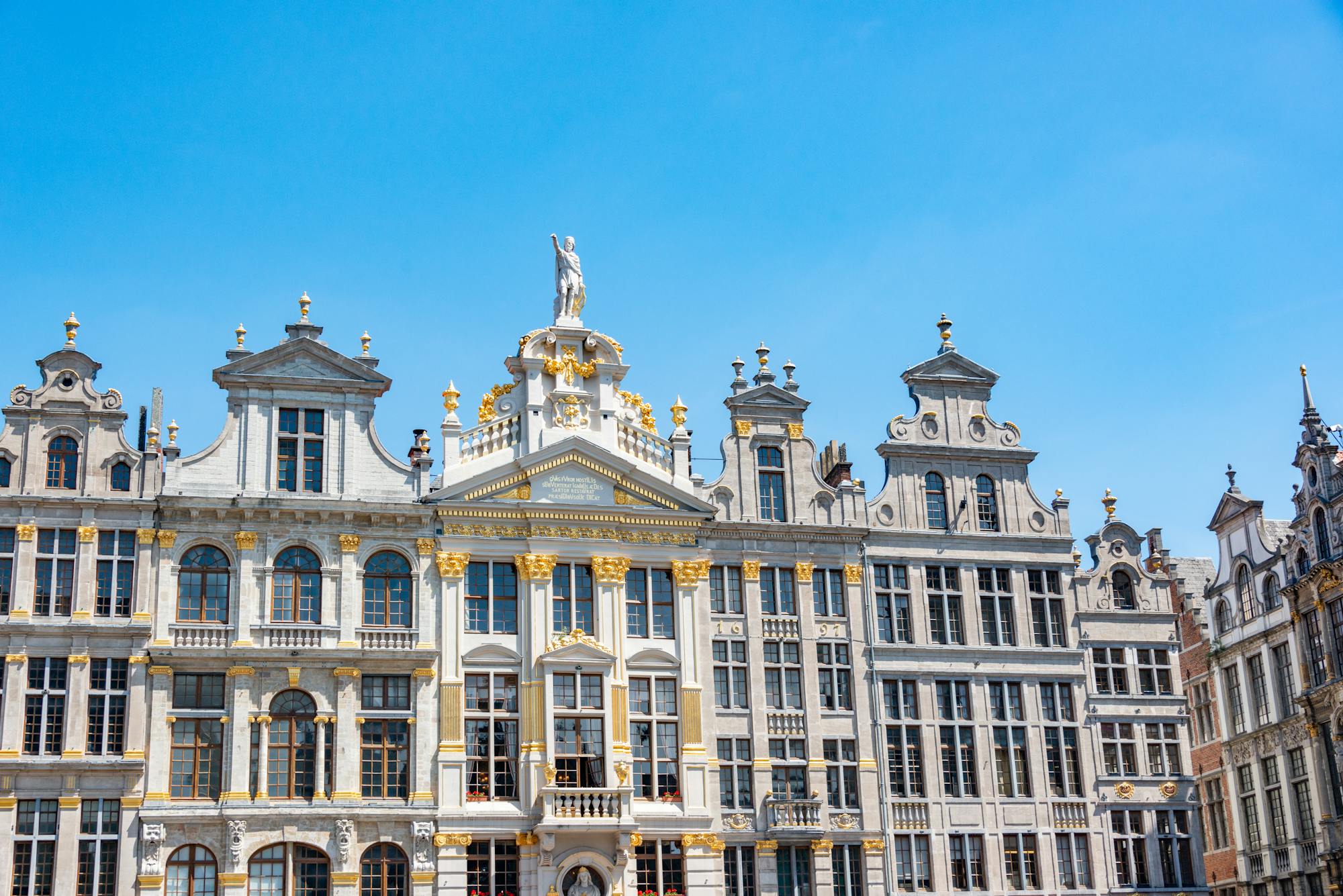
Brussels is a city of surprising contrasts — a medieval Grand Place of breathtaking Gothic and Baroque grandeur surrounded by a European capital that pulses with contemporary art, comic-book culture, and some of the finest food and beer on the continent. Whether you're exploring its lace-making traditions, debating the world's best frites, or gazing up at the futuristic Atomium, Brussels rewards curiosity at every turn.
Things to Do in Brussels
Best Things to Do in Brussels
Brussels is a broad travel category, so a short "top 5" would leave out too many genuinely strong picks. The search intent behind things to do in Brussels is practical: people want standout sights, museums, neighborhoods, food experiences, and easy ways to plan a first trip.
It also helps that Brussels is a very walkable city. Many highlights sit close together in the city centre, so it's easy to visit Brussels on foot from the main train stations like Bruxelles-Central or Bruxelles-Midi. For first-time visitors, that makes it a must visit destination with landmarks, parks, museums, food, beer culture, and major political institutions all packed into one walkable city.
How We Chose the Best Things to Do in Brussels
Brussels has enough depth to justify a longer list, but not every attraction deserves equal weight. We focused on options that are distinctive, easy to fit into a real itinerary, and useful for different kinds of travelers.
The main criteria were cultural importance, visitor appeal, location, and how well each place suits a specific age group or trip style. We also prioritized experiences that feel clearly different from one another, so this ranking helps you choose rather than scroll through filler.
Best 15 Things to Do in Brussels
1. Grand Place
If you do one classic sightseeing stop first, make it the grand place. Better known in Dutch as the grote markt, this is Brussels' central square, the heart of the historic centre, and the city's best introduction to its architecture and atmosphere.
Why It Stands Out
This square is Brussels at its most iconic. It became a unesco world heritage site in 1998, and the setting is framed by ornate Baroque guildhalls that make it one of the most memorable public spaces in Europe.
Best For
First-time visitors, photographers, and anyone who wants the clearest sense of the old city centre.
Key Strengths
It is Brussels' central square and the natural starting point for exploring the old town.
The Gothic town hall, also called city hall, was built between 1401 and 1455.
The king's house, also known as the bread house, contains the brussels city museum.
Possible Limitations
It gets crowded in peak season and around major events.
Cafés on the square are convenient but often pricier than places a few streets away.
One more reason to time your visit well: Grand Place hosts the biennial flower carpet event, when the square is covered with a huge floral display.
2. Manneken Pis
Manneken Pis is tiny, but it is still one of the city's most recognizable landmarks. This little statue of a naked little boy has become a symbol of Brussels precisely because it feels playful rather than grand.
Why It Stands Out
The statue captures the city's humor and independence better than almost any monument. The little guy was erected in 1618, stands just 61 cm tall, and has over 1,000 costumes.
Best For
Travelers who like quirky landmarks, local folklore, and quick stops near the old center.
Key Strengths
It symbolizes the rebellious spirit of Brussels.
The original statue is in the Brussels City Museum.
It is easy to combine with Grand Place and nearby food stops.
Possible Limitations
Its size surprises people expecting a major monument.
The area around it can feel busy and touristy.
3. Royal Museums of Fine Arts of Belgium
The royal museums are one of the strongest cultural stops in the city. If you want major collections rather than a quick photo stop, the royal museums of fine arts deserve real time in your itinerary.
Why It Stands Out
These museums of fine arts bring together centuries of Belgian and European art in one serious museum complex. The collection contains over 20,000 artworks, so this is one of the best places in Brussels for anyone interested in fine arts.
Best For
Art lovers, repeat visitors, and travelers planning museum-heavy days.
Key Strengths
The royal museums of fine arts contain over 20,000 artworks.
The Magritte Museum houses the world's largest collection of works by René Magritte.
Regular temporary exhibitions add variety beyond the permanent collection.
Possible Limitations
You may need to prioritize specific sections rather than trying to see everything.
It is a better fit for visitors who enjoy slower, indoor sightseeing.
4. Musical Instrument Museum
The musical instrument museum is one of Brussels' most appealing specialty museums, especially if you want something cultural without choosing another traditional painting gallery.
Why It Stands Out
It sits in a former department store celebrated for its art nouveau design, which makes the building itself part of the experience. Inside, the museum displays around 1,200 musical instruments from different eras and regions.
Best For
Music lovers, architecture fans, and visitors looking for a museum that feels distinctive.
Key Strengths
The building is a landmark in its own right.
The collection covers around 1,200 instruments.
It offers a different perspective from art or political museums.
Possible Limitations
It may appeal less to travelers who prefer major landmarks over collections.
You will get more from it if you have at least a moderate interest in music history.
5. Belgian Comic Strip Center
Brussels is celebrated as the birthplace of comic icons like Tintin and The Smurfs, so the city's comic heritage is not a niche add-on. The belgian comic strip center is the best single place to understand why the belgian comic strip matters so much here.
Why It Stands Out
Also known to many visitors as the comics art museum, it showcases the history, artists, and characters behind belgian comics. The center highlights famous figures like Tintin and makes the city's love of the comic strip feel immediate rather than nostalgic.
Best For
Families, pop-culture fans, and anyone curious about one of Belgium's most distinctive creative exports.
Key Strengths
It explains the cultural importance of Belgian comics clearly.
It showcases famous characters like Tintin.
It adds depth to a part of Brussels many travelers already recognize from murals and shops.
Possible Limitations
Visitors with no interest in comics may prefer art or history museums.
It works best when paired with related sights in the surrounding streets.
6. Brussels Comic Strip Route
The comic strip route is one of the easiest self-guided ways to explore central Brussels. Instead of staying inside a museum, you follow murals and public art that turn everyday streets into an open-air gallery.
Why It Stands Out
It helps you see the city from neighborhood level while connecting Brussels' comic identity to real places. It is especially useful if you want light sightseeing between bigger stops.
Best For
Walkers, families, and travelers who like flexible sightseeing without fixed entry times.
Key Strengths
It is a creative way to explore murals in the center.
It works well as a self-guided route between major attractions.
It turns ordinary streets into a memorable sightseeing experience.
Possible Limitations
Weather matters more here than with indoor attractions.
Some visitors may prefer a museum with more context.
7. Mont des Arts
If you want one of the best city views, mont des arts is the place to start. The area has beautifully kept gardens and fountains, and the elevated position makes it ideal for photos.
Why It Stands Out
It connects several major sights while also giving you breathing room between them. If you are short on time, head straight here for a classic Brussels panorama.
Best For
Photographers, first-time visitors, and anyone building a compact walking route.
Key Strengths
Great viewpoints over the city.
Well-kept gardens and fountains add to the atmosphere.
Easy to combine with museum visits and central landmarks.
Possible Limitations
It is more of a scenic stop than a long standalone attraction.
Views are best in clear weather.
8. Royal Palace and Parc de Bruxelles
The royal palace area is one of the best places to slow the pace of a sightseeing day. It gives you a more formal, ceremonial side of Brussels without requiring a long detour.
Why It Stands Out
Right nearby, parc de bruxelles offers a pleasant green break between museum and monument visits. The combination is especially worth visiting if you want architecture and open space in the same part of town.
Best For
Travelers who like stately landmarks, easy walks, and open-air sightseeing.
Key Strengths
Combines a major landmark with a central park.
Fits naturally into walking routes around museums and government buildings.
Good option when you want sightseeing without another ticketed attraction.
Possible Limitations
The appeal is more visual and atmospheric than interactive.
It may feel secondary if your trip is focused mainly on food or nightlife.
9. St. Michael and St. Gudula Cathedral
The cathedral is one of the city's strongest religious and architectural sights. Dedicated to st michael and St. Gudula, it is closely tied to Brussels' identity and history.
Why It Stands Out
Its brabantine gothic architecture gives it real presence, and the dedication to the city's patron saints adds local significance that goes beyond the façade.
Best For
Architecture lovers, history-minded visitors, and travelers looking for a quiet stop near central sights.
Key Strengths
Major example of Brabantine Gothic architecture.
Strong historical and religious significance.
Easy to include on a central walking itinerary.
Possible Limitations
Visitors looking for interactive displays may move through quickly.
It is best appreciated by those interested in architecture or church history.
10. Sablon
Sablon is one of Brussels' most pleasant districts for browsing rather than rushing. It combines elegant streets with local shopping and a calmer pace than the busiest central areas.
Why It Stands Out
The neighborhood mixes antique shops, art galleries, and some of the city's best chocolate shops, so it works well for travelers who want atmosphere as much as landmarks.
Best For
Shoppers, couples, and anyone who prefers neighborhoods to checklist sightseeing.
Key Strengths
Great area for browsing shops and cafés.
Square du Petit Sablon features 48 statues representing Brussels' crafts.
Easy place to combine food, walking, and cultural stops.
Possible Limitations
It is more about ambiance than headline monuments.
Shopping here can be expensive compared with other areas.
11. Galeries Royales Saint-Hubert
The galeries royales saint hubert are one of the most elegant covered passages in the city. The royal saint hubert galleries remain a strong stop not because they are huge, but because the setting feels unmistakably Brussels.
Why It Stands Out
Historic saint hubert arcades, refined storefronts, and excellent cafés make this an easy place to linger. It is also one of the best spots to dip into premium chocolate shops and stop for hot chocolate.
Best For
Travelers who enjoy architecture, cafés, sweets, and sheltered strolling in all weather.
Key Strengths
Beautiful historic arcade in a central location.
Good concentration of boutiques and chocolate shops.
Easy to add to a Grand Place walking route.
Possible Limitations
Shopping and café stops here can be pricey.
It is more of a strolling destination than a major museum-style attraction.
12. Parc du Cinquantenaire
Parc du cinquantenaire is one of the city's biggest monument-and-museum combinations. Built in 1880 to celebrate Belgium's independence, it features broad gardens and a monumental triumphal arch.
Why It Stands Out
This is a flexible stop: you can enjoy the park itself, catch events and concerts held here through the year, or go deeper into military history at the Royal Museum of the Armed Forces and Military History, a major history museum on the site.
Best For
Families, history fans, and visitors who want a larger park setting away from the densest central streets.
Key Strengths
Built in 1880 to mark Belgian independence.
Features beautifully made gardens and a triumphal arch.
Home to museums, including collections that appeal to fans of vintage cars at nearby Autoworld.
Possible Limitations
It takes longer to explore properly than a quick central landmark.
Best experienced with a bit of extra time rather than in a rushed half-day.
13. Mini-Europe
Mini europe is one of the most family-friendly attractions in Brussels. It brings together miniature landmarks from across the european union in a format that is easy to enjoy even if you are not planning a museum-heavy day.
Why It Stands Out
The park features 80 cities and 350 buildings in miniature, including a 13-meter eiffel tower model. Visitors can also see an erupting Mount Vesuvius, which gives the attraction a playful edge beyond static models.
Best For
Families, casual sightseers, and visitors pairing it with nearby attractions.
Key Strengths
Located next to the Atomium in Brussels.
Covers 80 cities and 350 buildings in miniature.
Mixes recognizable landmarks with interactive visual moments.
Possible Limitations
It is less appealing if you prefer historic sites to themed attractions.
Weather matters, since much of the experience is outdoors.
14. Atomium
The Atomium is one of Brussels' signature modern landmarks. Built for the 1958 World's Fair, it still feels distinctive enough to deserve a dedicated stop.
Why It Stands Out
Its unusual design gives Brussels a monument that balances the older city center. It also pairs naturally with Mini-Europe for a half-day focused on northwestern Brussels.
Best For
Architecture fans, photographers, and visitors looking to mix classic and modern sights.
Key Strengths
One of the city's most recognizable structures.
Built for the 1958 World's Fair.
Easy to combine with nearby family attractions.
Possible Limitations
It sits outside the oldest central sightseeing zone.
Some travelers may prioritize historic districts first.
15. European Quarter and Parlamentarium
The european quarter shows a different side of Brussels: political, contemporary, and central to the european union. Brussels is the capital of the European Union, the european parliament is located here, and the city also hosts the headquarters of the european commission.
Why It Stands Out
For visitors interested in politics, institutions, or modern Europe, this area is essential. Parlamentarium, the visitor center of the European Parliament, works as an interactive museum that is free to enter and designed to explain how the EU works, including features like an interactive floor map.
Best For
Politics buffs, students, and travelers who want more than just postcard landmarks.
Key Strengths
Shows Brussels' role at the center of European public life.
Parlamentarium is free, interactive, and easy to follow.
Distinct from the medieval and royal parts of the city.
Possible Limitations
Less atmospheric than the old center for some travelers.
Best suited to visitors with at least some interest in EU institutions.
Quick Comparison of the Best Things to Do in Brussels
Grand Place – Best for first-time visitors who want the city's classic landmark
Royal Museums of Fine Arts of Belgium – Best for serious art lovers
Belgian Comic Strip Center – Best for families and comic fans
European Quarter and Parlamentarium – Best for politics and modern Europe
Parc du Cinquantenaire – Best for park time, museums, and bigger open spaces
Mini-Europe – Best for families and lighter sightseeing
How to Choose the Right Things to Do in Brussels
Brussels is easier to plan when you group attractions by travel style rather than trying to see everything.
Choose Based on Location
If you want a compact first day on foot, stay around Grand Place, Manneken Pis, Mont des Arts, the cathedral, and the Saint-Hubert galleries. These are easiest to combine in one central route.
Choose Based on Interests
Art lovers should prioritize the Royal Museums of Fine Arts and the Musical Instrument Museum. Fans of comics should pair the Belgian Comic Strip Center with the mural route. Visitors interested in politics should focus on the European Quarter and Parlamentarium.
Choose Based on Trip Style
Families often get the most value from Mini-Europe, the Atomium, and comic-related sights. Couples and slower travelers may prefer Sablon, the galleries, parks, and food stops. Museum-focused travelers can build entire days around collections, since Brussels has over 50 museums to explore.
Which Option Is Best for You?
Choose Grand Place if you need the clearest first-time introduction to Brussels.
Choose Parc du Cinquantenaire if you want green space, monuments, and museums in one area.
Choose European Quarter and Parlamentarium if your priority is understanding Brussels as a political capital.
Choose Royal Museums of Fine Arts of Belgium if you want the strongest all-around museum experience.
Choose Mini-Europe if you are traveling with children or want something lighter and more playful.
Final Thoughts
Brussels works best when you do not force it into a single travel style. The city combines old squares, comic heritage, major museums, royal landmarks, parks, food culture, and EU institutions in a way that gives different visitors different "best" experiences.
If you want the strongest all-around choice, start with Grand Place and build outward on foot. If your interests are more specific, Brussels is broad enough to reward themed days around art, comics, beer, politics, or neighborhood wandering.