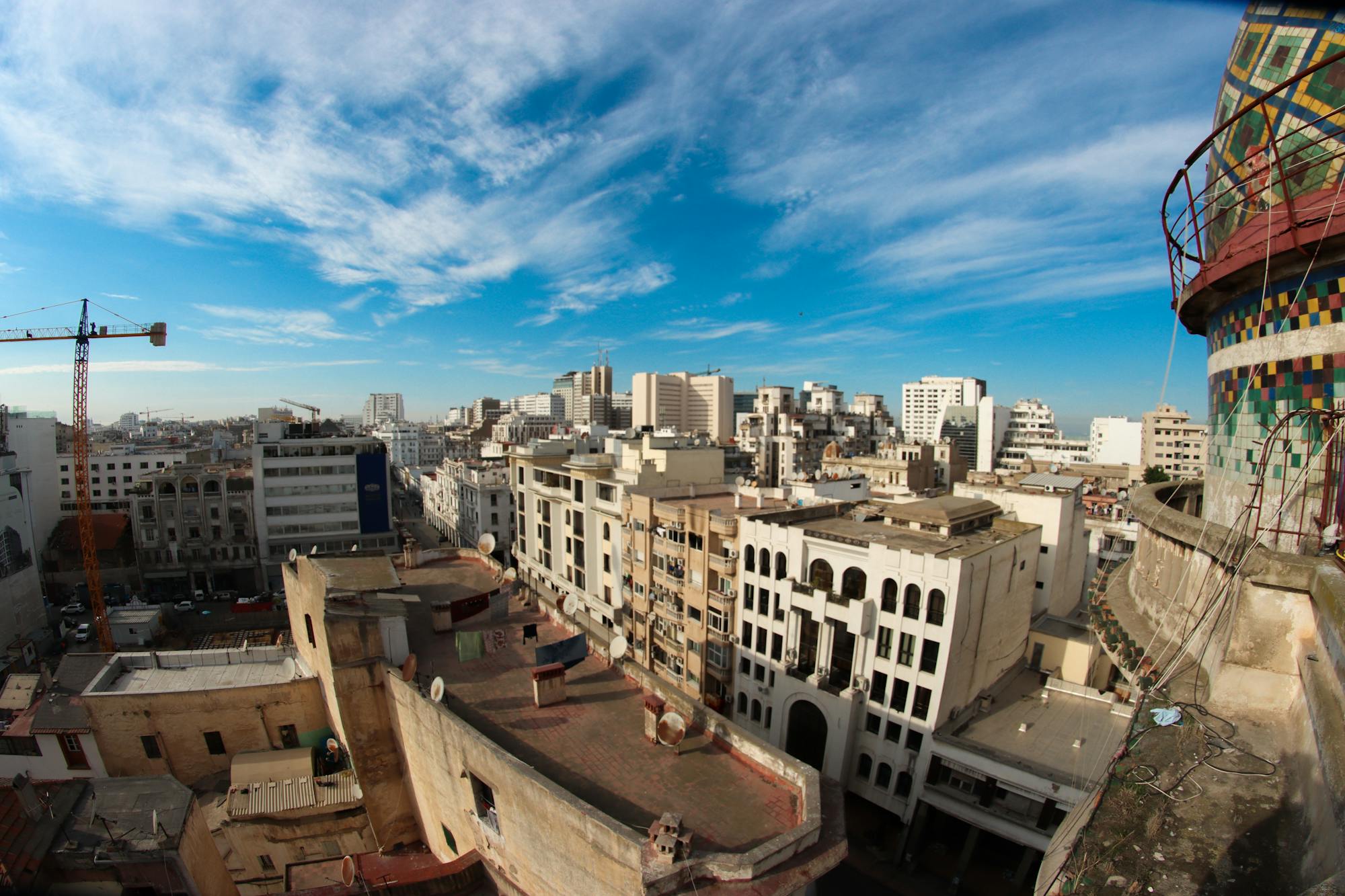
Casablanca is Morocco's largest and most cosmopolitan city, a place that surprises nearly every visitor who arrives expecting a sleepy port. The undisputed highlight is the Hassan II Mosque, the world's seventh-largest mosque and one of the most spectacular pieces of religious architecture built in the 20th century.
Casablanca is Morocco's largest and most cosmopolitan city, a place that surprises nearly every visitor who arrives expecting a sleepy port. The undisputed highlight is the Hassan II Mosque, the world's seventh-largest mosque and one of the most spectacular pieces of religious architecture built in the 20th century.
Things to Do in Casablanca: Hassan II Mosque
The Hassan II Mosque is Casablanca's defining monument and one of the most extraordinary buildings in Africa. Completed in 1993, it can accommodate 105,000 worshippers (25,000 inside, 80,000 in the grounds), features the world's tallest minaret at 210 metres, and is built partly over the Atlantic Ocean on a massive platform — on clear days the sea is visible through the glass floor of the main prayer hall. The retractable roof, the laser beam pointing toward Mecca, and the sheer scale of the craftwork (zellij tilework, carved cedar, hand-painted plasterwork) make guided interior tours — available to non-Muslims — one of Morocco's most impressive experiences. Book morning visits to avoid afternoon tour groups.
Art Deco Architecture
Casablanca possesses one of the world's finest concentrations of art deco buildings outside Europe, built during the French Protectorate period (1912–1956), in a modern city and big city whose heritage is often missed among the world’s misunderstood cities; even its name echoes the Portuguese and Spanish idea of a White House. Guided walking tours are a practical way to explore this architecture, especially around Boulevard Mohammed V and Place des Nations Unies. The streets around Boulevard Mohammed V, the Place des Nations Unies—better known in English as United Nations Square and tied to the broader planning of the United Nations era—and the Quartier Gauthier contain extraordinary examples of the Mauresque style — Art Deco fused with Moroccan Islamic motifs. The Villa des Arts (in a restored Mauresque mansion) and the MACAAL (Museum of African Contemporary Art) are excellent art destinations. Nearby, Arab League Park provides a major city-centre green space spanning 30 hectares. Its lush gardens offer welcome relief in the city centre. Close by, Sacred Heart Cathedral stands out for its blend of Gothic and Art Deco styles, with notable stained glass windows inside. This central district formed part of the French-planned new city, now understood as downtown Casablanca. The Central Market (Marché Central) on Rue Chaouia, completed in 1917, is a beautiful Art Deco building known for seafood stalls, fresh seafood, and local produce. The Central Souk is a bustling stop for seafood, spices, souvenirs, and even traditional Moroccan sweets, with some nearby restaurants cooking market seafood to order. For a deeper look at local heritage, the Jewish museum, officially the Museum of Moroccan Judaism, is the only one in the Arab world.
The Corniche and Hassan II Mosque
La Corniche — the 4km seafront promenade in Aïn Diab — is the city's playground, lined with beach clubs, restaurants, cafés, and major shopping malls that buzz from morning to midnight in summer. Ain Diab Beach stretches along the Atlantic coast, where the atlantic breeze keeps the shoreline comfortable even on warmer days. The beach clubs (private, day-access available from €10–30) offer an entirely different Morocco experience: rooftop pools, DJs, fresh seafood, and a thoroughly cosmopolitan Moroccan crowd. Casa Fish is a good pick for fresh seafood from the fishing port. Boulevard de la Corniche is also where many of the city’s luxury hotels are found, and Morocco Mall nearby is one of the area’s main draws as the largest mall on the entire continent. La Bodega is a lively tapas bar known for live music and dancing. The Corniche gives a glimpse of modern Morocco in Morocco's largest city — a big city on the Atlantic coast with a very different feel from the medina-focused stops many travelers picture first.
The Old Médina (Old Medina)
Casablanca's Old Medina is a medina unlike those in Marrakech or Fes, smaller in scale and more local in atmosphere — it was a relatively minor fishing village until the French developed old casablanca around it. The local population still gives the area a lived-in character despite the modernization around it. The Old Medina sits between the fishing port and Hassan II Mosque, and on broader city explorations visitors may also pass the royal palace, which is mainly admired from the outside. Its Sqala fortress walls, the Mosque of Sidi Allal el-Kairouan, and the covered market streets lead through narrow streets, narrow lanes, traditional souks, and an open-air market. These souks are generally less aggressive than those in Marrakesh and are where locals shop. The clock tower is another notable landmark here, and the Casablanca Clock Tower was originally built in 1908. A stop at rick's cafe also taps into the movie Casablanca, recreating the famous bar with Humphrey Bogart and Ingrid Bergman nostalgia.
The quartier habous, also known as the Nouvelle Medina or new medina, was built by the French in the 1930s and blends traditional moroccan architecture with european architectural styles, making it more architecturally interesting. It is known for its bookshops and cafes, along with good craft shops and an authentic neighbourhood atmosphere. Its bakeries, food stalls, and casual cafés also make it a good place to sample moroccan cuisine.
Day Trips to Visit Casablanca
If you plan to visit Casablanca, it fits well before or after rail-based day trips on a broader Morocco route. Casablanca's location makes it an excellent base for day trips and onward travel to other Moroccan cities, and it is generally considered casablanca safe with the usual big-city caution in crowds and around traffic. Mohammed V is the main international airport serving the city and the main gateway for many travelers. Casa voyageurs is the main long-distance rail hub, while Casa Port railway station, or Casa Port, is more convenient for the city centre and downtown casablanca. For stays, budget hotels cluster near the centre and station areas, including ibis casablanca city center near Casa Port; this also helps orient you between the older districts and the French-planned new city. Rabat (40 minutes by train) offers the Kasbah of the Udayas, Mohammed V Mausoleum, and Chellah necropolis — an excellent full day. El Jadida (95km south) is an extraordinary Portuguese fortified city with a remarkable subterranean cistern that reflects its vaulted Gothic ceiling in shallow water. Azemmour (82km south) is a quieter, less visited walled city with a beautiful old Médina above the Oum Errabia river mouth. For an easy in-city add-on, El Hank Lighthouse has been guiding ships since 1919. A wider Moroccan itinerary often links Casablanca with an imperial city such as Marrakech, the Sahara Desert, and Moroccan cities beyond the coast.