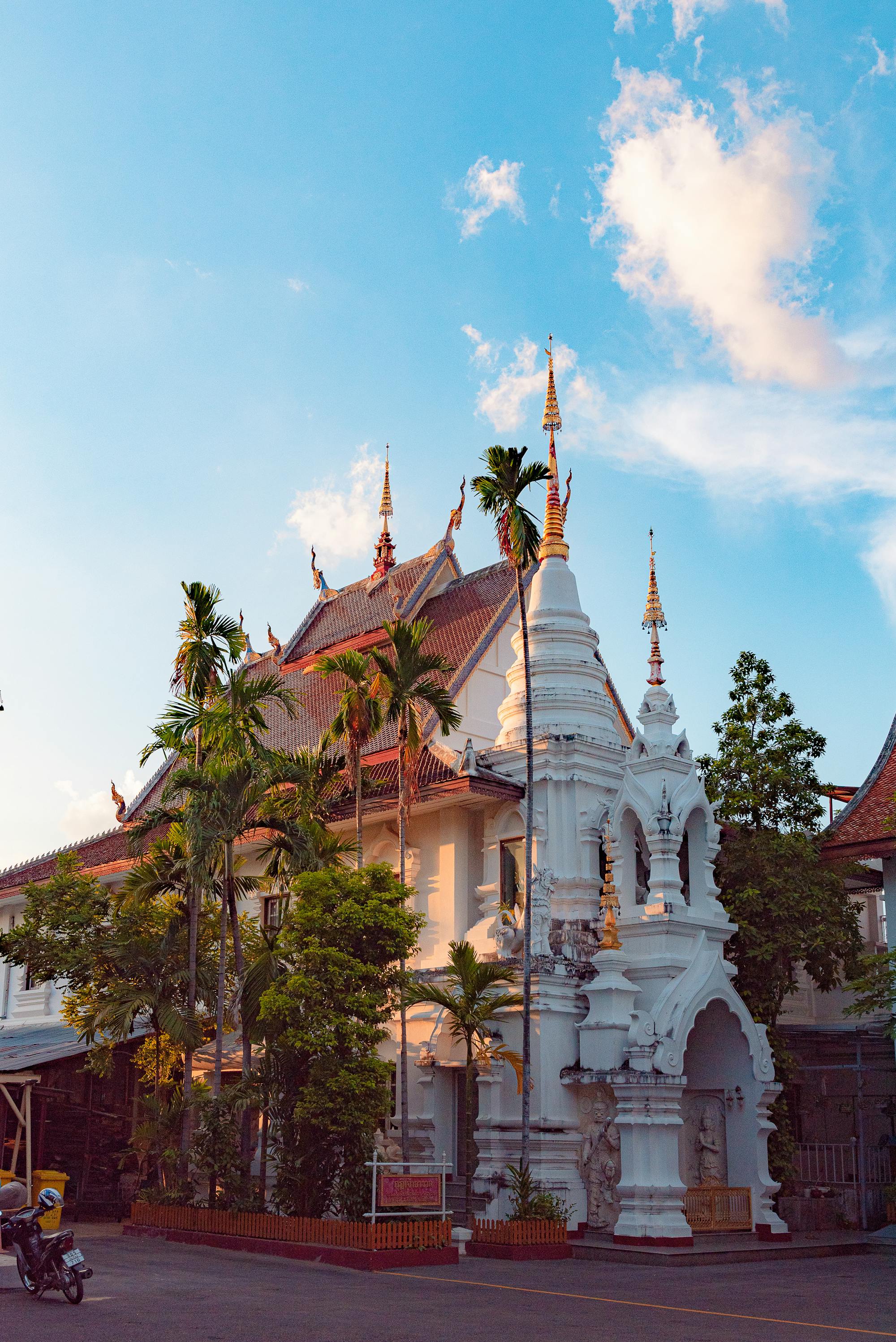
Chiang Mai is the cultural capital of northern Thailand — a city of over 300 Buddhist temples, ethical elephant sanctuaries, outstanding cooking schools, and a thriving café culture set in a broad valley ringed by forested mountains.
Chiang Mai is the cultural capital of northern Thailand and one of Southeast Asia's most rewarding cities for travellers. Set in a broad valley ringed by forested mountains and bisected by the Ping River, Thailand's second city is home to over 300 Buddhist temples within its ancient moated Old City — more temples per square kilometre than almost anywhere else on earth. But Chiang Mai is far more than its temples: it is the gateway to the Thai highlands, to ethical elephant sanctuaries, to some of the best cooking schools in Asia, and to a thriving creative and café culture that has made it one of the world's top destinations for digital nomads. The pace here is deliberately slower than Bangkok, the air (outside burning season) is fresher, and the food — which in northern Thailand has its own distinct identity — is outstanding. Give Chiang Mai at least four or five days; most visitors wish they had more.
Top Attractions
Doi Suthep (Wat Phra That Doi Suthep) is Chiang Mai's iconic golden hilltop temple, visible from the city below and reached by a cable-car or a climb of 309 naga-flanked steps. The views over the city and valley from the gilded chedi are magnificent; arrive early morning to avoid tour groups. Within the Old City moat, the most significant temples include Wat Chedi Luang (a vast 14th-century ruined chedi) and Wat Phra Singh, which houses the most revered Buddha image in northern Thailand. Wat Umong, set in a forest on the western edge of the old city, has a network of underground tunnels decorated with faded murals — quiet, meditative, and often overlooked. The Chiang Mai Night Bazaar on Chang Khlan Road and the Saturday and Sunday Walking Streets offer outstanding shopping for handicrafts, silk, silverware, and local food.
Local Experiences and Activities
A visit to an ethical elephant sanctuary is one of Chiang Mai's signature experiences. Reputable sanctuaries — Elephant Nature Park, Elephant Jungle Sanctuary, and Patara Elephant Farm — allow you to feed, bathe, and walk alongside rescued elephants without riding or performing. Book in advance; spaces fill fast. Thai cooking classes here are among the best in Asia: a typical half-day class visits the morning market, then returns to a home kitchen to prepare four or five northern Thai dishes. Thai massage courses are available at reputable schools like the Old Medicine Hospital for half-day introductions to week-long certifications. The Sunday Night Walking Street on Wualai Road is Chiang Mai's finest market — local artisans sell hand-stamped silver, celadon ceramics, hand-woven textiles, and northern Thai food.
Day Trips and Nearby Destinations
The Doi Inthanon National Park (90 km south) contains Thailand's highest peak (2,565m) and two spectacular royal pagodas set among cloud-forest gardens — a full-day trip including stunning waterfalls and hill-tribe villages. Chiang Rai (3 hours north) is home to the extraordinary Wat Rong Khun (the White Temple), encrusted in white plaster and mirror glass. The Golden Triangle — where Thailand, Laos, and Myanmar meet at the Mekong River — offers a sobering history museum about the opium trade. Mae Hong Son, a small town in a misty mountain valley near the Myanmar border, offers hill-tribe culture and genuine remoteness, reachable by a scenic mountain road or a short flight.
Food and Drink Culture
Northern Thai cuisine is a distinct tradition from the Bangkok food most visitors know. Khao soi — a rich coconut curry noodle soup topped with crispy noodles and pickled mustard greens — is the defining dish of Chiang Mai; Khao Soi Islam and Khao Soi Khun Yai are celebrated spots. Sai ua (northern Thai herbal sausage with lemongrass and galangal) is grilled over charcoal at every market. Larb moo (spiced minced pork salad) and gaeng hang lay (Burmese-influenced pork belly and peanut curry) round out the essential northern menu. The Nimman Road area has Chiang Mai's best coffee shops and craft beer bars. The Saturday morning Kad Muang Mai market near the Old City is the finest local food market in the city.
Practical Tips
Chiang Mai's Old City is walkable, but a hired bicycle or scooter (150–250 baht/day) is the best way to explore further. Always wear a helmet and carry your licence. Use the Grab app for metered tuk-tuk rides. The city's air quality becomes severely problematic from February to April during agricultural burning season — check air quality apps before visiting if you have respiratory concerns. Temple etiquette: dress modestly (knees and shoulders covered) for all temple visits; many Old City temples provide sarongs at the gate. The best month to visit is November, when the Yi Peng lantern festival fills the sky with thousands of illuminated paper lanterns.