China is one of the world's oldest and most complex civilisations — a country of such geographic and cultural range — from Beijing's imperial north to Guangdong's subtropical south — that no single visit can do it justice. From the ancient hutong alleyways of Beijing to the Silk Road heritage of Xi'an and the Art Deco waterfront of Shanghai, China's world-class attractions span 5,000 years of continuous civilisation.
In the span of a few hours, you can travel from the ancient hutong alleyways of Beijing to its gleaming skyscraper districts; from Xi'an's Silk Road heritage to Shanghai's Art Deco waterfront; from the otherworldly karst landscape of Guilin to the terraced rice paddies of Yunnan's ethnic minority villages. Modern China is simultaneously one of the fastest-moving economies on earth and the custodian of 5,000 years of continuous civilisation — a juxtaposition that generates constant fascination and occasional disorientation for visitors. The Great Wall, the Forbidden City, the Terracotta Warriors, the Li River, the Yangtze Gorges, the Tibetan plateau — reason enough for a single trip, yet together they barely cover a country home to 56 recognised ethnic groups and landscapes ranging from Gobi desert to tropical Hainan.
Top Attractions: Things to Do in China
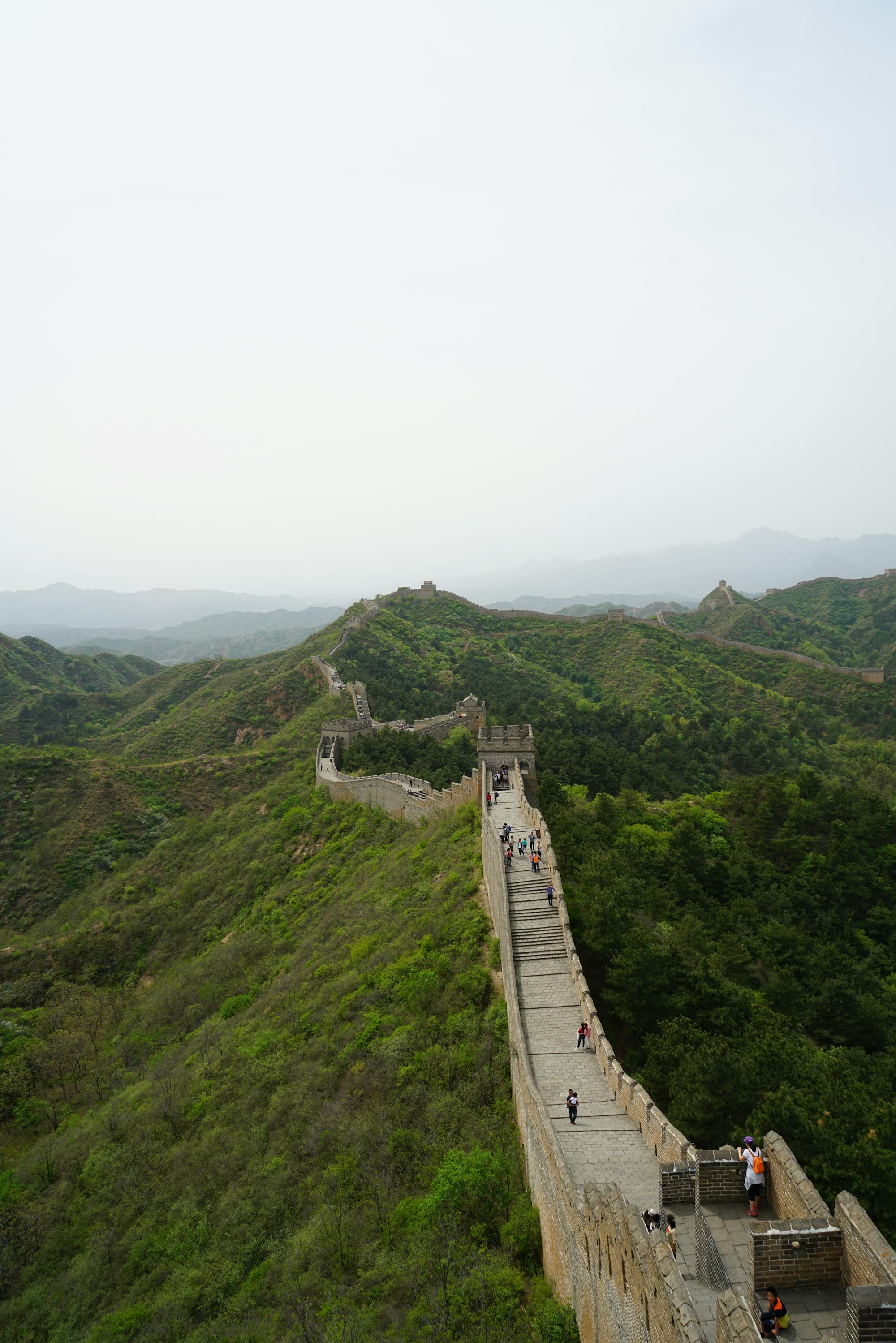
The Great Wall of China is the single most iconic structure in Asia, spanning over 21,196 kilometers. The best-preserved and most accessible sections are at Mutianyu (90 minutes from Beijing — less crowded than Badaling, with a cable car and toboggan run) and Jinshanling (more remote, wilder, and rewarding for hikers). Allow a full day and visit on a weekday for the most atmospheric experience. The Forbidden City (Palace Museum) in Beijing covers 72 hectares of imperial palace complex, was built between 1406 and 1420, and contains 980 buildings — the largest collection of preserved ancient wooden structures in the world — and requires at least three hours; pre-book timed entry tickets online, and most visitors pair it with nearby Tiananmen Square. The Terracotta Army near Xi'an, discovered by farmers in 1974, is one of the greatest archaeological finds in history: over 8,000 life-size soldiers, horses, and chariots created around 210 BC and built to guard Emperor Qin Shi Huang, the first emperor. Xi'an also connects to the Silk Road, where travelers can explore ancient trade routes and camel caravan history. The terracotta warriors were each individually modelled, down to hairstyle and expression, so that no two faces among the 8,000-strong army are alike. The Li River cruise between Guilin and Yangshuo floats through a landscape of limestone karst peaks that inspired classical Chinese landscape painting for centuries; the 83km journey by bamboo raft or boat is one of China's most beautiful experiences. It fits easily into a broader southern China trip. The Bund in Shanghai — the mile-long waterfront of European-style banks and trading houses facing the futuristic Pudong skyline — is the most photographed juxtaposition in Asia.
Cultural Immersion and Chinese Medicine
In Beijing, Beijing's hutongs of Dongcheng and Xicheng districts — narrow lanes lined with courtyard houses (siheyuan) — offer the most authentic surviving glimpse of old Beijing life. Wander the lanes around Nanluoguxiang and Gulou (the Drum Tower area) for independent cafés, craft shops, and glimpses into residential courtyard life. A Peking Opera performance at the Liyuan Theatre in the Qianmen Hotel is one of Beijing's most theatrical experiences, with roots in traditions from ancient China — the costumes, makeup, and acrobatics are extraordinary. In Chengdu, the Sichuan Opera face-changing shows (bian lian) combine feats of theatrical magic with traditional Sichuan opera, and the city is also famous for its spicy Sichuan cuisine and recognized as a UNESCO City of Gastronomy. For tea culture, the teahouses of Chengdu's Renmin Park, where locals play mahjong under bamboo-shaded pavilions while sipping from endless pots of jasmine tea, offer a window into the leisure culture of China's most relaxed major city. Panda viewing is also possible at conservation centers in Chengdu, where the giant panda remains a major draw. Some visitors also encounter Chinese medicine at Tongrentang, the Beijing pharmacy chain founded in 1669, where herbalists still diagnose by pulse and prescribe centuries-old remedies. Traditional arts experiences can also include Kung Fu lessons and performances, and the Shaolin Temple is widely regarded as the birthplace of Kung Fu. Across China, morning tai chi in public parks (particularly around Jingshan Park in Beijing and the Bund waterfront in Shanghai) is a living practice rather than a performance — arrive before 7am to see hundreds of residents moving in peaceful synchrony.
Day Trips: Beijing, Xi'an, Yunnan & Shanghai
From Beijing, the essential day trips are the Great Wall (various sections, 1.5–3 hours from the city), including Simatai for a day trip or a night hike with views of the illuminated wall, the Ming Tombs (Shisan Ling), where 13 of the 16 Ming emperors are buried in a valley 50km north of the city, and the Summer Palace — the Spirit Way avenue of stone animals leading to the tombs is lined with Ming-dynasty stone guardians, and the burial mounds themselves remain largely unexcavated within their wooded valley. From Xi'an, the Huashan Mountain (Mount Hua) offers one of China's most dramatic hikes — the plank walk along sheer cliff faces secured only by chains is terrifying and magnificent, and biking the city wall gives spectacular views. In Yunnan Province, Tiger Leaping Gorge is one of the deepest gorges at 3900 meters, and the region is home to 49 ethnic minorities. From Shanghai, Suzhou (45 minutes by high-speed train) is an old town of classical Chinese gardens, cobbled streets, and preserved Ming Dynasty architecture, including the Humble Administrator's Garden and the Master of the Nets Garden, among the finest examples of landscape design in the world. Hangzhou (1 hour from Shanghai by bullet train), with its West Lake, Song Dynasty tea culture, and nearby scenic spots, is the subject of the classical Chinese saying "above there is heaven, below there is Suzhou and Hangzhou," and remains the most beautiful city in eastern China; farther afield, Yellow Mountain is famous for its dramatic granite peaks and sea of clouds. For a longer excursion, a Yangtze River cruise on the Yangtze River through the Three Gorges links some of the country's most popular attractions along the route. A bamboo raft ride on the Yulong River offers views of limestone karst peaks. The Longji rice terraces, dating back to the Yuan dynasty (1279–1368), are another rewarding southern detour.
Food Culture: Peking Duck and More
Chinese cuisine is not a single cuisine but a collection of eight major regional traditions, each as distinct as the countries of Europe. Culinary tours in China are one of the best ways to experience authentic local cuisine. Peking duck (北京烤鸭) — lacquered, roasted whole duck served with thin pancakes, spring onion, cucumber, and hoisin sauce — is Beijing's greatest culinary export; the best versions are at Quanjude (founded 1864) and Da Dong. Sichuan hotpot — a boiling, fiery broth of dried chillis and Sichuan peppercorns into which you dip raw meat, offal, tofu, and vegetables — is China's most social dining experience; the numbing-spicy flavour of the peppercorns (má là) is addictive. Xiaolongbao (soup dumplings) from Shanghai — thin-skinned dumplings filled with meat and scalding hot broth — are a technical marvel best enjoyed at Din Tai Fung, the hole-in-the-wall shops of the French Concession, or around Yu Gardens for classic versions and nearby street food. In Xi'an, rou jia mo (the "Chinese burger" — braised pork in a flatbread) and a steaming bowl of yangrou paomo (lamb soup with hand-torn flatbread) are the essential street foods of the Muslim Quarter. Hong Kong is another food capital, known for Cantonese cuisine, dim sum, and old-world high tea, while nearby Guangzhou is famed for its exceptional dim sum and a delicious meal built around classic Cantonese flavors. Eat widely and do not miss each region's specialities — Peking duck in the capital, hotpot in Chengdu, xiaolongbao in Shanghai.
Practical Tips to Start Planning
If you plan to visit China, start planning early: China requires a visa for most nationalities, now available online in advance, while a growing number of countries qualify for the 144-hour or 72-hour visa-free transit. The Great Firewall blocks Google, WhatsApp, Instagram, Facebook, and many Western services — download a reputable VPN before arrival and test it; services like ExpressVPN and NordVPN work in China. Use WeChat for messaging (it works without a VPN) and DiDi (China's Uber equivalent) for transport — the DiDi app has an English-language mode. Alipay and WeChat Pay are required for virtually all transactions from street food to museum tickets; link a foreign card to Alipay before arrival or carry sufficient cash (Chinese Yuan/RMB). High-speed rail (高铁, gāotiě) is the most efficient way to travel between cities, but this is a vast country and travel times vary widely across regions — the Beijing–Shanghai journey takes under 5 hours at 350km/h. Book train tickets on the Trip.com app or through hotels. If you want help to explore multiple regions, consider a guided tour. Guided itineraries also make it easier to reach farther-flung places such as Lhasa, known as the roof of the world, where the Potala Palace is a sacred site in Tibet. Pingyao is a UNESCO World Heritage city with preserved traditional courtyard guesthouses. Jiuzhaigou is a UNESCO World Heritage site famed for its turquoise pools. Chongqing is known for its multi-layered urban landscape. Hainan Island is a tropical paradise with golden beaches and palm trees, making it a strong bucket list add-on for a longer trip. Tap water is not safe to drink; bottled water is cheap and ubiquitous. Time your trip by season: Beijing and the north are bitterly cold and dry from December to February and hot, humid, and thunderstorm-prone from June to August, so spring (April–May) and autumn (September–October) are the most comfortable windows for the Great Wall and Forbidden City. The south, including Guilin and Yangshuo, sees its wettest weather from April to June and stays mild through winter. Avoid travelling during Chinese New Year (the date shifts between late January and mid-February) and October's Golden Week, when domestic tourism peaks and trains, flights, and major sites become severely congested. If you're timing a spring visit, the Miao Sisters Meal Festival takes place in April.