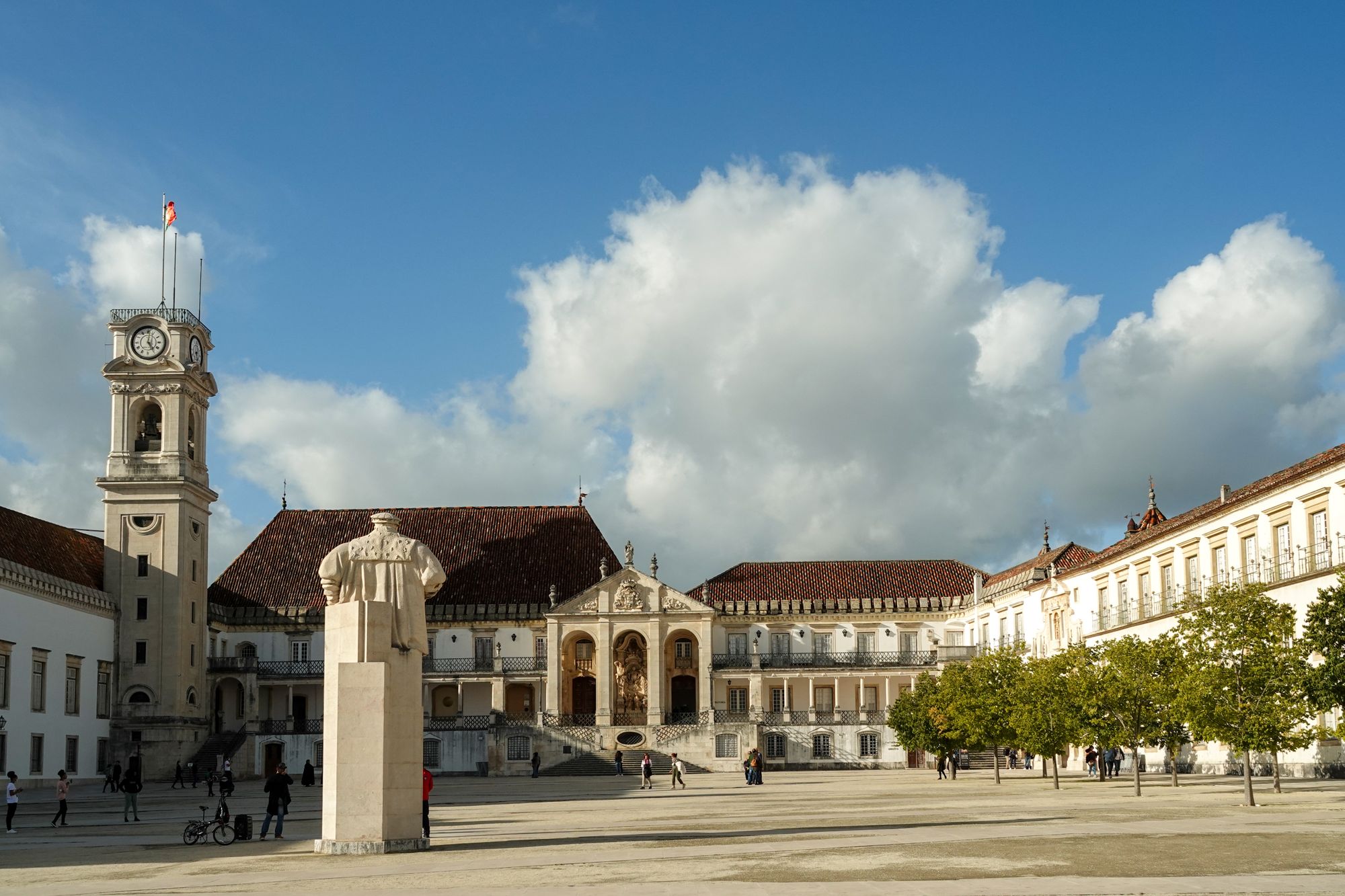
Coimbra is Portugal's ancient university city — a place where medieval scholarship, Fado music, and baroque architecture combine along the banks of the Mondego River, home to one of the oldest universities in the world, founded in 1290. Whether you're drawn here for the UNESCO-listed university, the hauntingly beautiful Coimbra Fado, or the extraordinary Roman ruins nearby, this city rewards slow exploration and curious wandering.
Coimbra is Portugal's ancient university city — a place where medieval scholarship, Fado music, and baroque architecture combine along the banks of the Mondego River. Home to one of the oldest universities in the world, founded in 1290, Coimbra pulses with student energy yet carries centuries of history in every cobblestone. The city climbs steeply from the river to the grand university hilltop, offering dramatically layered views at every turn. Whether you're drawn here for the UNESCO-listed university, the hauntingly beautiful Coimbra Fado, or the extraordinary Roman ruins nearby, this city rewards slow exploration and curious wandering.
Top Attractions: Things to Do in Coimbra
Things to do in Coimbra range from touring the University of Coimbra and its UNESCO-listed hilltop campus to visiting the Sé Velha, the Monastery of Santa Cruz, hearing Coimbra Fado, tasting local food, and using the city as a base for day trips to places like Conimbriga and the Forest of Buçaco. For travelers planning a cultural city break in Portugal — whether you're into history, architecture, museums, family-friendly sights, or more local Portuguese experiences — the University of Coimbra is the undisputed centrepiece of Coimbra, Portugal. Climb to the Alta (upper city) to reach the city's hilltop university, Coimbra University, Portugal's oldest university, where Paço das Escolas forms the baroque courtyard of a UNESCO World Heritage Site that was once a royal palace, alongside the Joanina Library — one of the city's beautiful libraries, with shelves stacked floor to ceiling with gilded volumes and more than 70,000 historic volumes in its collection — and the university tower offering panoramic views over the terracotta rooftops and Mondego valley. The library's resident colony of bats famously protects the books from insects each night. A university ticket also covers key highlights such as the Capela de São Miguel and the botanical garden. Nearby, you can also see Sé Nova, the Jesuit church, the bishop's palace, and the Museu Nacional Machado de Castro, named for the sculptor Joaquim Machado de Castro and one of Portugal's top art museums, with a notable Roman cryptoportico.
The Sé Velha (Old Cathedral), dating to 1139, is one of Portugal's best-preserved Romanesque churches, with a fortress-like exterior, notable choir stalls, and a beautiful gilded altar inside. Further down the hill, the Monastery of Santa Cruz, built between 1132 and 1223, has been a National Pantheon since 2003 and contains the tombs of Afonso Henriques and other early rulers; King Afonso Henriques, the first king, helped establish Coimbra's early importance. Nearby, Santa Cruz Church and Jardim da Manga, also known as Jardim de Manga, are easy stops in the historic center. At the base of the city, Portugal dos Pequenitos is a charming open-air museum featuring miniature replicas of Portugal's most important monuments, delightful for families. Don't miss the Quinta das Lágrimas, a romantic garden associated with the tragic love story of Dom Pedro, Prince Pedro, and Inês de Castro. This guide also points you toward Coimbra's food, music, and practical visiting tips, so you can decide which landmarks to prioritize and which nearby excursions fit your trip.
Local Culture, Fado de Coimbra, and Food
Coimbra is the home of Coimbra Fado and Fado de Coimbra, a distinctive, more academic form of the mournful Portuguese song tradition. Unlike Lisbon Fado, Coimbra's version is performed exclusively by men in academic capes, often outdoors on university steps at dusk. Catch a fado show or fado performance in an intimate setting for a genuinely moving experience. The city's food scene centres on hearty central Portuguese cuisine: try chanfana (slow-cooked goat stew in red wine), leitão da Bairrada (crispy suckling pig from the nearby Bairrada region), and pastéis de Tentúgal, gossamer-thin pastry parcels filled with egg custard. The Mercado Municipal is the best place to sample local produce, regional cheeses, and smoked sausages. Students and locals gather in the cafés of Praça 8 de Maio in the old town and hear music at Café Santa Cruz, a former chapel. University students also help give downtown Coimbra and the city center their lively café culture and street life.
Day Trips and Excursions in Downtown Coimbra
The most important day trip from Coimbra is Conimbriga, just 15 km south — Portugal's finest Roman ruins and among the best-preserved in the Iberian Peninsula. As a base in central Portugal, Coimbra also makes day trips easy. The site features extraordinary intact mosaic floors, forum ruins, baths, and a fascinating site museum. Buses run regularly from Coimbra's main bus station. Coimbra is also worth visiting for the Santa Clara sights across the river. Santa Clara-a-Velha is the old monastery, founded in 1330, while the Santa Clara Monastery****a Nova was built later to replace it. This part of the west side is easy to reach via the Santa Clara Bridge. Along the Mondego River, Parque Verde is a pleasant riverside stretch for walking or cycling. The Forest of Buçaco, 30 km north, is a magical 105-hectare forest surrounding a fairy-tale palace hotel. The nearby Aveiro, the 'Venice of Portugal', is an hour away by train and makes a lovely half-day trip for its colourful moliceiro boats. Figueira da Foz on the Atlantic coast offers wide sandy beaches just 45 minutes away. Coimbra also fits well into a Portugal road trip between Lisbon and Porto, and can be paired with longer itineraries that include the Douro Valley.
Practical Tips for Visiting Coimbra University
Coimbra is easily reached by train from Lisbon (1.5–2 hours) or Porto (1 hour), with the main train station serving the center while many intercity services use Coimbra B, which sits outside the city center and usually requires a quick onward transfer. Within the city, the steep terrain means comfortable shoes are essential — the Alta is connected to the Baixa by an elevator and escalator system near the university. The city is compact and very walkable, especially around the historic center, where Rua Ferreira Borges is a main pedestrian street and the old town unfolds as a maze of narrow streets and timeworn shops; Avenida Sá da Bandeira is another useful central street when moving between the historic core and newer areas. Largo da Portagem is a useful orientation point in the city center.
The university charges around €12–15 for the library and main buildings; book tickets in advance during summer, and note that the Botanical Garden of Coimbra, founded in 1772, sits right by the university complex. A guided tour can be worth it for the university complex, and local tips are especially useful for finding cultural events. The best times to visit are May (for Queima das Fitas) or September–October when the light is beautiful and crowds are thinner. Budget €60–90 per day for accommodation, meals, and sightseeing, with enough choice to suit budget travelers. For downtime, Choupal National Forest covers 80 hectares near Coimbra, while Santa Cruz Park offers another easy green-space option with gardens from the 18th century, and Penedo da Saudade remains one of the city’s best viewpoints.