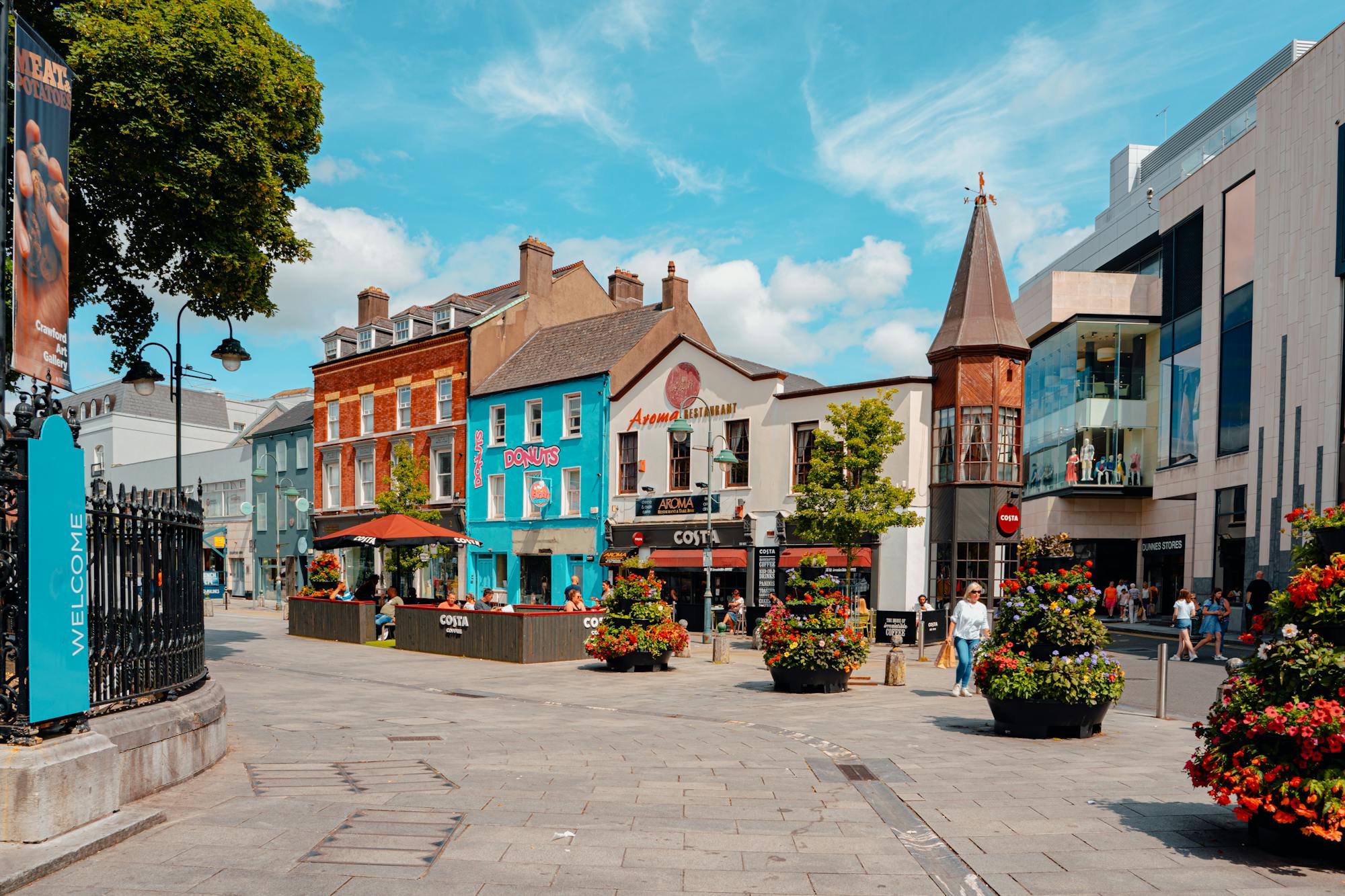
Cork is Ireland's second-largest city and its self-proclaimed food capital — a compact, hilly island city built on channels of the River Lee, with a culture of fierce local pride, extraordinary culinary ambition, and a music and arts scene that punches well above its size. Known as the "rebel city" for its history of resistance, Cork has an energy and distinctiveness that sets it apart from Dublin: smaller, warmer, more personal, with a remarkable concentration of excellent restaurants, artisan producers, street food markets, and independent shops.
Cork is Ireland's second-largest city and its self-proclaimed food capital — a compact, hilly island city built on channels of the River Lee, with a culture of fierce local pride, extraordinary culinary ambition, and a music and arts scene that punches well above its size. Known as the "rebel city" for its history of resistance (it played a central role in the Irish War of Independence), Cork has an energy and distinctiveness that sets it apart from Dublin: smaller, warmer, more personal, with a remarkable concentration of excellent restaurants, artisan producers, street food markets, and independent shops. Its coastal hinterland — Kinsale, the Mizen Head, Garnish Island, and the wild Beara Peninsula — is some of the most spectacular in Ireland.
Top Attractions: Things to Do in Cork
English Market is one of the best things to see in Cork — a covered Victorian market of extraordinary character, selling specialist cuts of meat (including the famous spiced beef), artisan cheeses, smoked fish, fresh produce, and street food on two levels. Queen Elizabeth II visited here in 2011 and called it "a treasure." Blarney Castle, 8 km north-west, is Ireland's most visited attraction — a 15th-century tower house where visitors queue to kiss the Blarney Stone and allegedly gain the "gift of the gab." Entry is 18 euro for adults, so arrive early if you do not want to wait too long for the stone. The castle grounds with their poison garden and Rock Close are genuinely beautiful regardless of the stone. Cork City Gaol is a magnificently preserved Victorian prison on a hill west of the city, with costumed guides and an exhibition on social history and 19th-century penal conditions. St Fin Barre's Cathedral is a Victorian Gothic masterpiece in the French Gothic style, built in the late 1700s, with a spectacular interior and three ornate spires visible from across the city. Elizabeth Fort is a 17th-century fort with panoramic city views and now attracts over 40,000 visitors annually. Blackrock Castle, built in 1582, sits by the River Lee as another scenic historic stop. The Crawford Art Gallery on Emmet Place is Cork's finest gallery, housing the city's public collection of Irish art from the 17th century to the present in a beautiful custom-built space — free to enter.
Local Culture and Food: Exploring the English Market
Cork's food identity is exceptional, and these are some of the best things to do in Cork. The English Market is the heart of it — it opened in 1788 and is Ireland's oldest indoor market, with fresh local produce alongside Gubbeen farmhouse cheese from Schull, Arbutus sourdough bread, Ballycotton smoked salmon, and the extraordinary deli counter at On The Pig's Back. If you want to grab a bite, Marina Market is another cool stop for good food, great food, and coffee, with plenty of options to eat in a fun, family-friendly setting. The city's restaurant scene is led by critically acclaimed venues including Ichigo Ichie (Michelin-starred Japanese-Irish tasting menu), Greenes Restaurant, and a cluster of brilliant independent places around MacCurtain Street and the Victorian Quarter. Traditional Irish music sessions happen nightly in pubs on Union Quay and around the Shandon area, and live music gives the city plenty to do at night. For a structured evening out, you can also book a dinner show or guided course. Cork's Jazz Festival (October) is one of Ireland's most beloved, bringing international and Irish artists to venues across the city for four days, while other events keep the atmosphere lively year-round. The Shandon Bells at St Anne's Church can be played by visitors — a unique Cork tradition, and if you've heard it's one of the best viewpoints in town, that's because climbing the tower costs 5 euro per person and you can ring the bells for a small fee.
For culture beyond the food scene, the Crawford Art Gallery is a popular place to browse paintings, sculpture, and contemporary crafts, while city walks also pick up murals and street art around Anglesea Street. If you're exploring with another person, these stops are easy to pair with an evening of music or a relaxed pub crawl.
Day Trips and Excursions: Crawford Art Gallery Highlights
Kinsale, 25 km south, is perhaps Ireland's most beautiful harbour town — a tangle of colourful Georgian streets climbing above a sheltered inlet, with excellent seafood restaurants and the star-shaped Charles Fort on the harbour mouth, where you can take a short walk for stunning views. Cobh (pronounced "Cove"), 24 km east, is the poignant historic port where the Titanic made its last stop before sinking and where 2.5 million Irish emigrants departed for America — the Cobh Heritage Centre is outstanding, and the Titanic Experience adds another strong stop in town. Fota Wildlife Park is a standout wildlife park nearby and a fun option for families with kids. The Mizen Head, Ireland's most south-westerly point (90 km), offers spectacular cliffs and a 1909 signal station accessible via a dramatic suspension bridge over crashing Atlantic waves. For more coastal exploring in the county, the Sheep's Head Peninsula is known for scenic walking trails. Garnish Island in Bantry Bay (90 minutes) is an extraordinary Italian garden on a wild island, reached by ferry through waters populated by basking seals. Bere Island also makes a nice place for a day trip from Castletownbere, while Dursey is a cute and cool spot to explore by cable car.
Practical Tips for Your Ireland Trip
Cork Airport has excellent connections to the UK and Europe, making Cork an easy stop on an Ireland trip. The city centre is compact and walkable, built on an island between two channels of the River Lee — most attractions are within 20 minutes on foot, so it’s easy to explore without a car. For a quiet break and easy outdoor activities, Fitzgerald's Park covers 18 acres with tree-lined pathways and a large playground for children. The Cork Public Museum is also located there. While walking the city, street art around Anglesea Street is another easy self-guided stop. The English Market is open Monday–Saturday; check opening hours before you go and arrive by 11am for the best choice. Buses and taxis connect easily to Blarney (30 minutes), Kinsale (40 minutes by bus, with Charles Fort built in the 17th century overlooking the harbour), and Cobh (30 minutes by train from Kent Station, where the Titanic Experience serves as the official ticket office, distinct from the Heritage Centre). From Cobh, Spike Island makes a worthwhile day trip; it was a prison until 2004 and you can now visit its prison remains.
Fota Wildlife Park in county Cork is a strong family option for kids, spanning 100 acres, attracting over 440,000 visitors annually, and standing out because many animals roam freely. A car is needed for the Mizen Head, Beara Peninsula, and other west Cork destinations, though tours can save time and money if you do not want to drive. The Sheep's Head Peninsula is also worth considering for outdoor time, with the Sheep's Head Way covering 93 km. From Castletownbere, Bere Island is an easy extra trip. On a nice day, Inchydoney Beach is a great pick for its beautiful sandy shores. If you head farther west, the Dursey Island cable car is Europe’s only over-water cable car.
Cork is generally affordable — accommodation, dining, and entry prices are lower than Dublin. Jameson Irish Whiskey is produced in Cork. If you visit Cork for a full week, you will have more time to see beyond the city into county Cork. The best time to visit is May–September, when the weather is usually best; the Jazz Festival in late October is well worth planning around.