Dublin is a city of extraordinary warmth and wit — a compact, walkable capital where Georgian squares and Viking foundations underpin a contemporary metropolis of literature, live music, and legendary pub culture. The city that produced Jonathan Swift, Oscar Wilde, James Joyce, Samuel Beckett, and Bram Stoker wears its literary heritage proudly, and the craic in a traditional Dublin pub remains one of Europe's most authentic and enjoyable social rituals.
Dublin is a city of extraordinary warmth and wit — a compact, walkable capital where Georgian squares and Viking foundations underpin a contemporary metropolis of literature, live music, and legendary pub culture. The city that produced Jonathan Swift, Oscar Wilde, James Joyce, Samuel Beckett, and Bram Stoker wears its literary heritage proudly, and the craic in a traditional Dublin pub — conversation, music, and Guinness flowing — remains one of Europe's most authentic and enjoyable social rituals. Despite rapid modernisation, Dublin has retained a human scale and a genuine friendliness that makes it one of the most immediately likeable capitals in Europe.
Things to Do in Dublin: Must-See Attractions
Dublin offers no shortage of memorable things to do, whether you want to tour historic landmarks, hear live music in traditional pubs, taste the city’s food and drink, or use the capital as a base for easy day trips into places like the Wicklow Mountains and Glendalough. For travelers who want a well-planned mix of history, culture, local experiences, and practical ideas for getting around, this guide pulls together the Dublin sights and experiences most worth your time so you can shape a trip that feels both efficient and authentic.
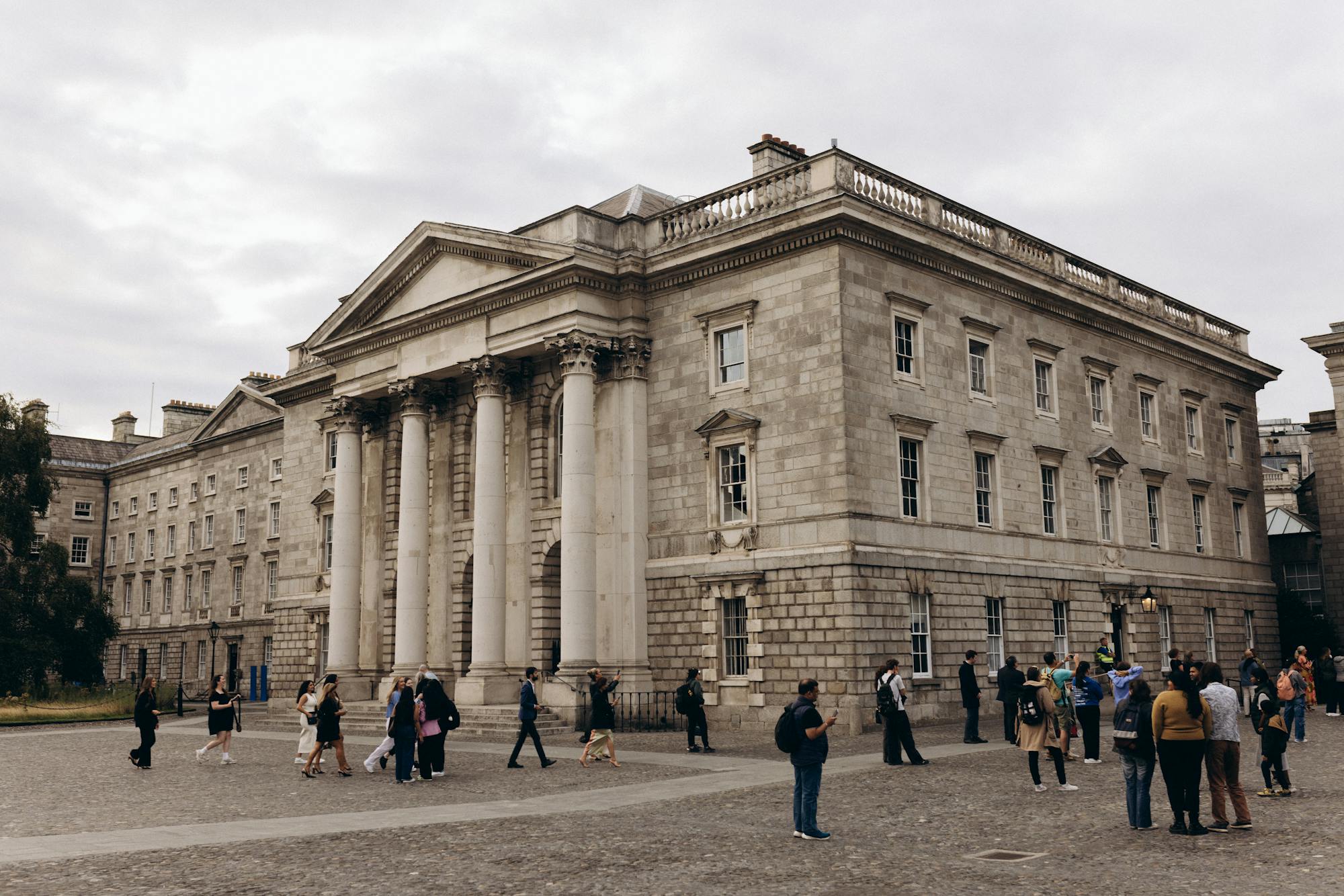
Trinity College Dublin, founded by Elizabeth I in 1592, is a prestigious university known for the beautiful architecture of its campus and for one of the world's greatest treasures — the Book of Kells, a breathtakingly illuminated 9th-century New Testament manuscript on display in the Old Library alongside the magnificent Long Room, a cathedral of books housing 200,000 of the library's oldest volumes; seeing the Book of Kells and Old Library requires an entrance fee. The Guinness Storehouse at St James's Gate is Dublin's most visited attraction — a seven-storey interactive experience tracing the history of the world's most famous stout, and the tour finishes with a complimentary pint at the rooftop Gravity Bar with panoramic city views. It's also a strong rainy day option because the experience explains the brewing process in depth. Dublin Castle, at the heart of the medieval city and dating back to the 13th century, is one of the best places to understand Dublin's history and Irish history; the State Apartments and Record Tower are open on a guided tour for €8.00, and some visits also include the medieval undercroft. Nearby, Christ Church — formally Christ Church Cathedral — is another essential stop, a nearly 1,000-year-old landmark prized for its medieval architecture and location close to Dublin Castle and Temple Bar. The National Museum of Ireland — Archaeology on Kildare Street houses extraordinary Celtic and Viking treasures including the Ardagh Chalice and the Tara Brooch, helping visitors understand Ireland's history. Nearby, Marsh's Library, Dublin's first public library, was built in 1707 and makes another rewarding historic stop in the same cultural cluster. Kilmainham Gaol, a decommissioned Victorian prison where the leaders of the 1916 Easter Rising were executed, is the most moving and historically significant site in Dublin — a guided visit is essential, so book ahead. The National Gallery of Ireland on Merrion Square contains Caravaggio's "The Taking of Christ" and an outstanding collection of Irish and European art, all free to visit.
Cultural Experiences: Trinity College and More
Dublin's pub culture is a genuine living cultural tradition, not a tourist performance. The Cobblestone in Smithfield, Mulligan's on Poolbeg Street, The Long Hall on South Great George's Street, and Kehoe's on South Anne Street are among the city's finest traditional pubs — Victorian interiors, perfectly kept Guinness, and the possibility of spontaneous trad sessions (traditional Irish music). The Temple Bar area, the cultural quarter on the south bank of the Liffey, has become touristy but retains genuine energy and is known for live music — the Temple Bar pub (different from the quarter) and the Irish Film Institute are genuine cultural institutions. The Clockwork Door is also a board game café in Temple Bar. The ha'penny bridge over the river liffey is just a short walk away and a famous spot around golden hour. Nearby, The Winding Stair doubles as a bookshop and restaurant. The Merrion Square neighbourhood, with its Georgian terraces, the National Gallery, and the park where Oscar Wilde's colourful statue lounges on a rock, is Dublin at its most literary and elegant. Nearby, st patrick's cathedral, founded in 1191, honours ireland's patron saint and is closely linked with jonathan swift, whose final resting place is here. St. Michan's Church is another unusual historic stop, known for crypts with 17th-century mummies. The National Leprechaun Museum is a wonderful museum focused on irish folklore, with guided storytelling tours. The city's street music culture — particularly on Grafton Street — is extraordinary; buskers here are often professional musicians. george's street arcade is another central stop nearby for browsing independent stalls.
Day Trips, Excursions, and Day Trip Ideas
The Wicklow Mountains — wild, heathered hills and deep glacial valleys just 30km south of the city — make the most accessible and rewarding day trip from Dublin. After visiting Dublin, use a day trip to see more of the Emerald Isle beyond the Irish capital. Glendalough, an early Christian monastic settlement in a glacial valley with two lakes, is one of Ireland's most atmospheric and beautiful sites, reachable by bus in 90 minutes. The Boyne Valley to the north contains Newgrange, a 5,200-year-old passage tomb aligned with the winter solstice sunrise — older than Stonehenge and the Pyramids of Giza, and one of the world's most significant Neolithic monuments. Kilkenny, a beautifully preserved medieval city with a magnificent Norman castle, is 90 minutes by bus or train and makes an excellent full-day excursion. The seaside villages of Dalkey and Killiney, accessible by DART train in 30 minutes, offer dramatic cliff walks, coastal scenery, Dublin Bay boat views that can include Dalkey Island, and nearby The Forty Foot, a famous spot for swimming in the Irish Sea. Curated guides and themed destination collections can also help plan your next trip beyond Dublin's main day trips.
Local Food, Irish Whiskey, and Drink Scene
Dublin's food scene has undergone a renaissance since the 2010s, with a thriving restaurant culture that draws on Ireland's exceptional artisan produce — grass-fed beef, wild Atlantic seafood, farmhouse cheeses, and soda bread. Dublin also has over 1,000 pubs and remains one of the best cities to explore Irish whiskey. The Docklands and Portobello districts have the most exciting contemporary restaurant scenes. Fallon & Byrne on Exchequer Street is a superb food hall and restaurant. The Woollen Mills serves contemporary Irish fare overlooking the Liffey. The English Market in Cork is a day trip away, but Dublin has its own excellent food markets: Temple Bar Food Market (Saturday) and the Flea Market in Newmarket. The Dublin Flea Market focuses on local retro and vintage goods. Iconic Dublin food experiences include a full Irish breakfast (bacon, sausages, eggs, white and black pudding, soda bread), a bowl of seafood chowder with brown bread at a Docklands restaurant, and of course a pint of Guinness — which genuinely tastes different in Dublin, owing to freshness and the quality of the water. Leo Burdock's has served fish and chips since 1913. The Brazen Head is Ireland's oldest pub, dating back to 1198. The city's craft beer scene has exploded: Porterhouse, Against the Grain, and Mulligan Grocer are excellent craft beer destinations. Dublin is packed with historical distilleries, including Jameson Distillery and Teeling Whiskey. The Irish Whiskey Museum offers guided tours with tastings. Jameson Distillery offers whiskey tasting sessions from €26 for a small fee.
Tips for Getting Around
Downtown Dublin is compact and best explored on foot, and many major sights are only a short walk apart — Trinity College, Temple Bar, Grafton Street, Merrion Square, and St Stephen's Green, with its beautifully landscaped lawns in the city centre, are all within a 15-minute walk of each other. O'Connell Street is a useful central landmark for getting your bearings. The Spire of Dublin is an iconic landmark for photos and city strolling. The Luas tram network has two lines connecting the city centre to the suburbs; it's clean, frequent, and easy to use. Phoenix Park is also easy to reach from the city centre and, as Europe's largest city park, includes Dublin Zoo as well as the official residence of the President. Nearby, the Irish Museum of Modern Art hosts cutting-edge exhibitions in contemporary art and modern and contemporary art. The DART (Dublin Area Rapid Transit) coastal rail line runs north–south along Dublin Bay and is the best way to reach the coastal suburbs of Dalkey, Killiney, and Howth. The National Botanic Gardens are another easy outing by public transport. For an easy central museum stop, the irish emigration museum has interactive displays for kids and explains the history of Irish people and their impact worldwide. Dublinia is another family-friendly stop with interactive exhibits about medieval dublin. The National Wax Museum Plus has a Kids Zone, and the science gallery is another good interactive rainy-day option for families. Dublin Bus covers the entire city but can be slow in traffic; the Leap Card is a contactless smart card usable across all public transport (Luas, DART, Dublin Bus) at discounted rates. Cycling has improved significantly with the Dublinbikes scheme (300+ stations) covering the city centre. Taxis are readily available; the FreeNow app (formerly Hailo) is widely used. Dublin Airport is 12km north of the city and the main gateway for trips to Dublin Ireland; the Aircoach and Dublin Bus 747/757 routes connect it to the city centre.