Egypt is the birthplace of one of history's greatest civilisations and home to monuments of such scale and ambition that they continue to astonish 5,000 years after their construction. The Pyramids of Giza, the temples of Luxor and Karnak, the rock-cut tombs of the Valley of the Kings, the Colossi of Memnon, the Temples of Abu Simbel — Egypt's ancient heritage is simply without parallel anywhere on earth.
Egypt is the birthplace of one of history's greatest civilisations and home to monuments of such scale and ambition that they continue to astonish 5,000 years after their construction. The Pyramids of Giza, the temples of Luxor and Karnak, the rock-cut tombs of the Valley of the Kings, the Colossi of Memnon, the Temples of Abu Simbel — Egypt's ancient heritage is simply without parallel anywhere on earth.
Things to Do in Egypt: The Pyramids of Giza and the Sphinx
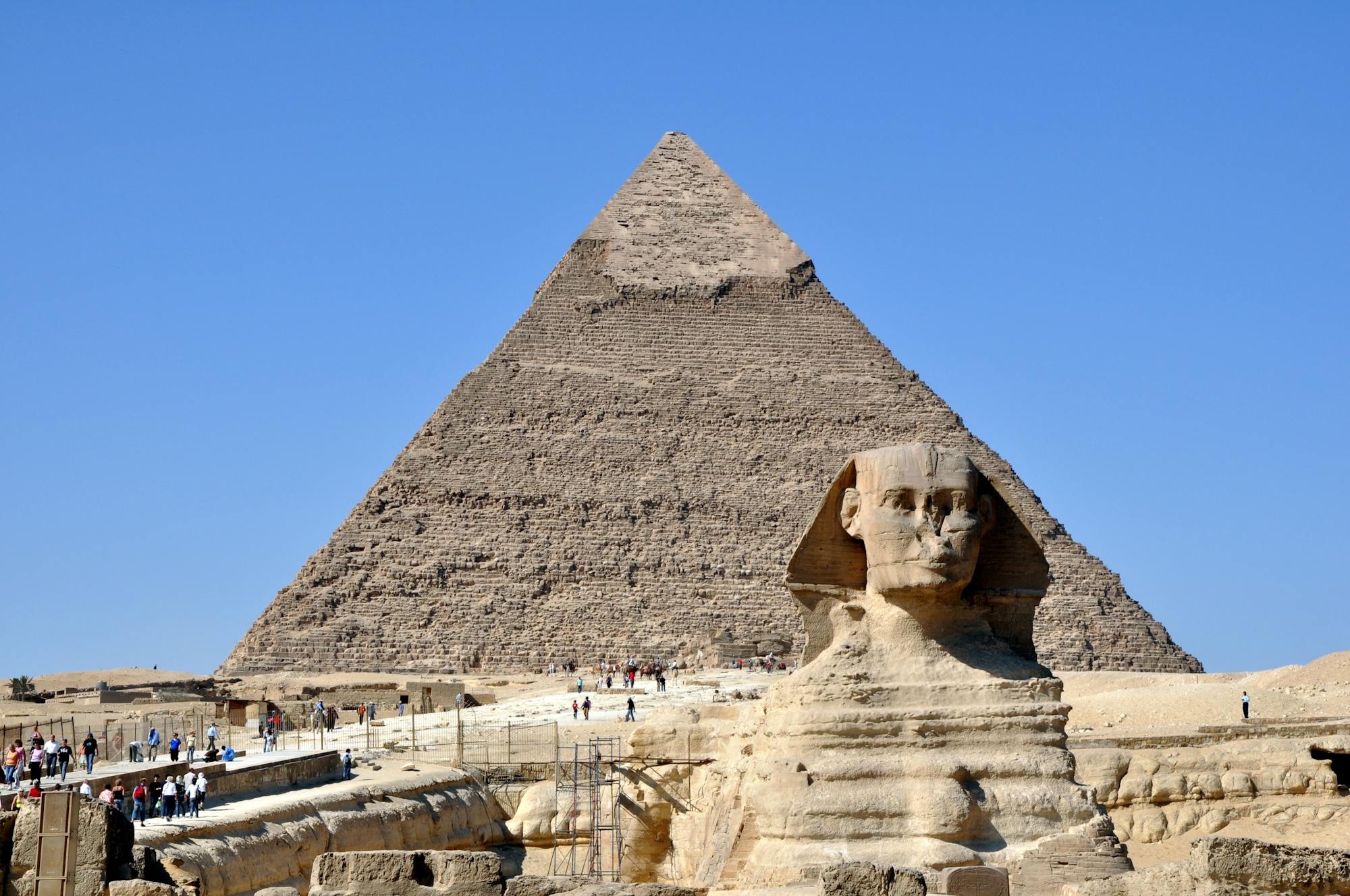
The Great Pyramid of Khufu (Cheops), built around 2560 BC, is the oldest and largest of the Seven Wonders of the Ancient World and the only one still standing. Standing before it for the first time, the scale defeats expectation — photographs cannot prepare you for the reality of 2.3 million stone blocks, each weighing 2.5 tonnes, stacked to 146 metres. The Giza plateau contains the three main Pyramids of Giza — the great pyramids of Khufu, Khafre, and Menkaure — along with the Great Sphinx and the Valley Temple, so allow a full morning. Entering Khafre or Menkaure comes at an extra cost beyond the standard ticket. Enter one or more of the pyramids (Khufu's burial chamber is included in the standard ticket; Khafre and Menkaure require separate tickets) and see the Great Sphinx, the iconic mythical creature with a human head and lion's body, for a claustrophobic but extraordinary experience crawling through 4,500-year-old passages to the empty granite sarcophagus.
Luxor: The World's Greatest Open-Air Museum
Luxor demands at least 3–4 days minimum — and many visitors find themselves wishing for more. The Karnak Temple Complex is the largest religious building ever constructed — a 2km² complex built over 2,000 years by successive pharaohs, with a forest of 134 papyrus columns in the Great Hypostyle Hall, sacred lakes, obelisks, and sanctuaries. The Luxor Temple, connected to Karnak by the Avenue of Sphinxes, is magnificent at night when it is illuminated. If you visit Luxor Temple, aim for the fading light or after sunset.
On the West Bank, the Valley of the Kings contains 63 known royal tombs — Tutankhamun's is the smallest but most famous because other tombs were looted, while Seti I's stands out for the intricate carvings inside its royal chambers. The Mortuary Temple of Hatshepsut, the female pharaoh who ruled for 20 years as king, is architecturally extraordinary. For many travelers, visiting Luxor also means taking a hot air balloon ride for sweeping views over the Nile River and the monuments.
Cairo's Heritage
The Egyptian Museum on Tahrir Square houses an astonishing collection of ancient Egyptian artefacts — a vast number of objects, including the entire contents of Tutankhamun's tomb (golden mask, throne, chariot, and all) — and remains one of the most important museums in the Middle East. The new Grand Egyptian Museum (GEM) adjacent to the Giza Pyramids is now open — a purpose-built facility of extraordinary scale designed to house Egypt's greatest treasures and ancient artefacts in proper conditions. Islamic Cairo — the Al-Azhar Mosque district, the Khan el-Khalili bazaar, the Citadel of Saladin — is a UNESCO World Heritage Site and the most complete surviving medieval Islamic city in the world. The Hanging Church is another major historic stop in Cairo. Alexandria's modern library also recalls the city's ancient great library.
Abu Simbel
The twin temples of Abu Simbel, carved into a Nubian sandstone cliff by Ramesses II, also known as Ramses II, in the 13th century BC, are among the most spectacular ancient monuments on earth. The Great Temple's four colossal seated figures of Ramesses (each 20 metres high) face the rising sun, which twice yearly (21 October and 21 February) penetrates the inner sanctuary to illuminate the statues of the gods. The temples were saved from the rising waters of Lake Nasser in one of the most ambitious engineering operations of the 20th century — dismantled block by block and reassembled 65 metres higher. The move was necessary because of the Aswan Dam. They are served by daily flights from Aswan, and many travellers make the journey as a day trip, often as part of a wider Nile cruise or Nile River cruise itinerary on the Nile River; if you have extra time in Aswan, add philae temple, the island temple there. A visit to a Nubian Village can also include traditional meals and local handicrafts. Abu Simbel is one of Egypt's most famous temples, so do visit Abu Simbel.
The Red Sea and Sinai
Egypt's Red Sea coast offers world-class diving and snorkelling among vibrant coral reefs in the Ras Mohammed National Park, the SS Thistlegorm wreck (one of the world's top dive sites), and the spectacular coral gardens of Sharm el-Sheikh. The Sinai Peninsula combines beach access with the extraordinary experience of climbing Mount Sinai (2,285m) before dawn through the Sinai Desert to watch the sunrise from the biblical summit — a 3–4 hour night ascent via the Steps of Repentance, often under a clear night sky. The Saint Catherine's Monastery at the foot of the mountain, founded in the 6th century AD, is one of the world's oldest Christian monasteries and houses a remarkable library of early manuscripts. This area of the Sinai Peninsula offers some of Egypt's most magical experiences.