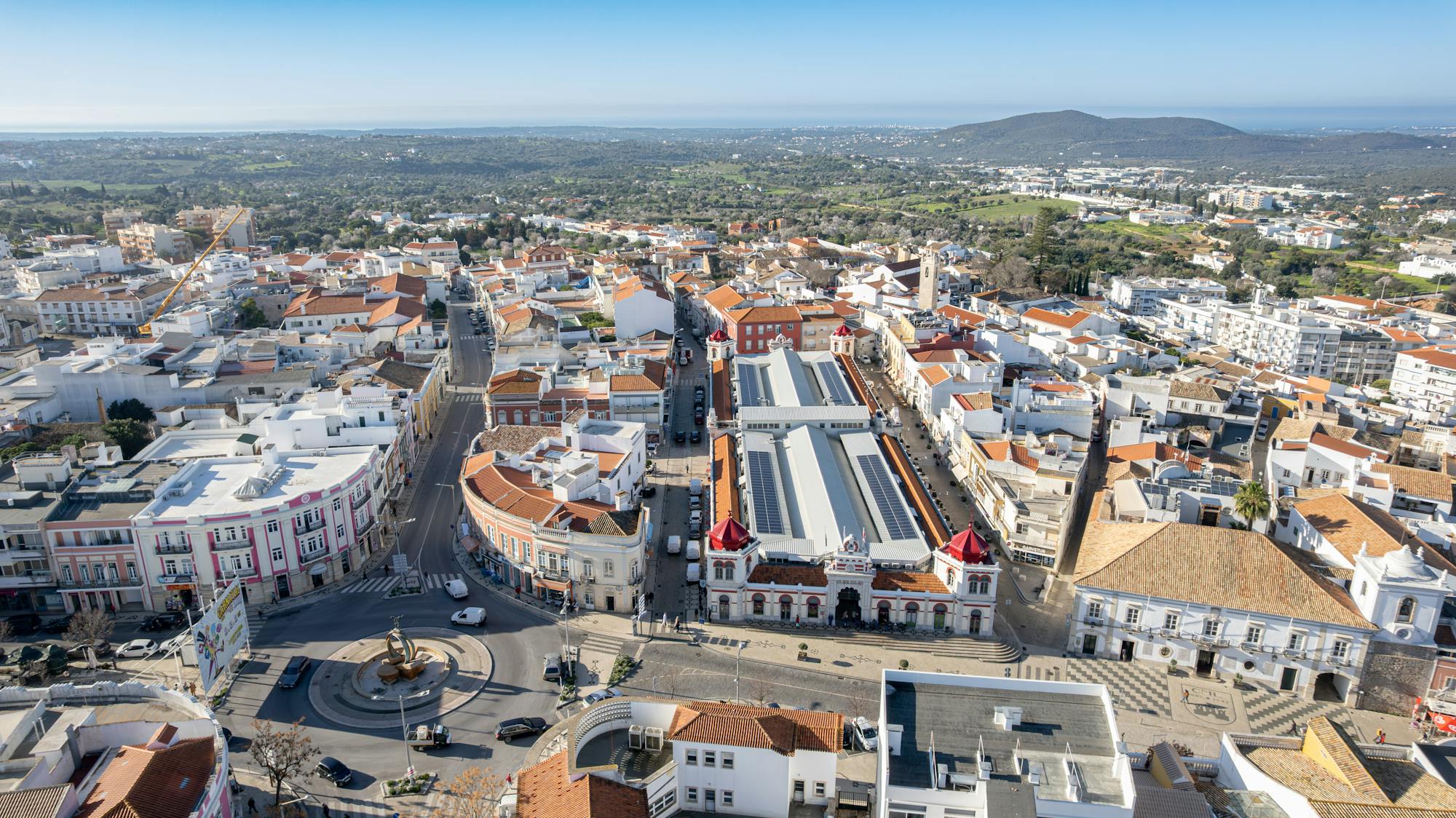
Faro is the Algarve's understated capital — a working Portuguese city with a genuinely beautiful medieval old town, one of southern Europe's most remarkable natural lagoon systems on its doorstep, and none of the mass tourism excess that characterises the coastal resort towns to its west. Faro is simultaneously a gateway city and a destination in its own right.
Faro is the Algarve's understated capital — a working Portuguese city with a genuinely beautiful medieval old town, one of southern Europe's most remarkable natural lagoon systems on its doorstep, and none of the mass tourism excess that characterises the coastal resort towns to its west. Most visitors to the Algarve pass through Faro Airport without pausing, which is a significant mistake: the city rewards visitors who stop for even two or three days with its walled Cidade Velha, its extraordinary Ria Formosa Natural Park, its bone chapel (Capela dos Ossos), its excellent fish restaurants serving the Algarve's finest cataplana, and its role as the most authentic and characterful urban base for exploring the surrounding coast and countryside. Faro is simultaneously a gateway city and a destination in its own right.
Top Experiences and Attractions: Things to Do in Faro
Things to do in Faro range from exploring the Cidade Velha old town and climbing Faro Cathedral for views over the Ria Formosa to visiting the Capela dos Ossos and taking boat trips for birdwatching, dolphin spotting, and beach landings on the barrier islands. For travelers who want a more polished, culturally rich Algarve stay — whether you're planning a tailored luxury escape, a convenient short break, or a trip that balances history with outdoor time — Faro offers a distinctly Portuguese base beyond the region's resort-heavy coast.
The Cidade Velha (old town) is Faro's historical core — a walled medieval enclave of cobbled streets, orange trees, and old city walls, entered through the 18th-century Arco da Vila gateway and opening onto Largo da Sé, with the town hall nearby, sheltering the 13th-century Sé, also known as Faro Cathedral and Santa Maria, whose bell tower offers panoramic views across the Ria Formosa lagoon, a bishop's palace, and a handful of excellent restaurants in the quiet lanes between ancient walls. The Museu Municipal de Faro, the city's municipal museum, housed in a former convent, contains an exceptional Roman mosaic floor from the nearby Milreu archaeological site. The Igreja do Carmo and its adjoining Capela dos Ossos — a small chapel with walls lined with the skulls and bones of approximately 1,245 monks — is one of the Algarve's most unusual and affecting cultural sites.
Beyond the historic centre, Faro's appeal lies in the Ria Formosa Natural Park — a vast lagoon system of channels, salt marshes, salt pans, and barrier islands — where boat trips, kayaking, paddleboarding, and cycling deliver some of southern Portugal's best outdoor experiences. This guide focuses on Faro's top sights and activities, practical visitor tips, and worthwhile day trips to nearby towns, so you can decide how to spend a few hours, a full day, or a longer stay.
Outdoor Adventures in Ria Formosa Natural Park
The Ria Formosa Natural Park, which you may also see called Rio Formosa, is the principal outdoor destination around Faro — kayaking through the lagoon channels among herons and egrets, stand-up paddleboarding across the shallow tidal flats, and cycling the flat coastal paths along the lagoon edge are all excellent options. A boat trip is another easy way to explore the lagoon and reach quieter stretches of the reserve. The barrier island beaches — with Praia de Faro as Faro’s most accessible main beach before you continue to Ilha Deserta (Desert Island), which has no permanent inhabitants and only a single restaurant — offer completely unspoiled swimming and walking, with the Atlantic Ocean beyond the lagoon system. Surfing on the Atlantic coast west of Faro (around Meia Praia near Lagos and Arrifana) is world-class. Road cycling through the Serra do Caldeirão hills north of Faro reveals the authentic rural Algarve — cork oak forest, orange groves, and whitewashed villages with almost no tourism. The Via Algarviana long-distance footpath crosses the interior of the Algarve from Alcoutim to Cabo de São Vicente, passing through the hills north of Faro and offering multi-day hiking through unspoiled landscapes.
Cultural and Historical Highlights of the Old Town
Faro's cultural identity is distinctly Portuguese rather than touristic — the city's markets, festivals, and daily rhythms follow the patterns of a working Algarve town rather than a resort, and Faro Town Hall sits in the Old Town. The Mercado Municipal de Faro, also known as the Faro Municipal Market, operates every weekday morning, selling fresh fish, vegetables, local food, and local cheese in a building that dates from the 1920s, and it's also an easy place to stop for a pastel de nata if you want to compare a good de nata with others in town. Browsing the stalls is one of the easiest ways to get a feel for local culture. The university presence (Universidade do Algarve) gives this small city a young, lively character, particularly in the evenings around the Rua do Prior and the old town bars. Faro’s street art is another part of that cultural mix, including works by Daniel Eime. In the centre, you'll also find independent shops and at least one notable art gallery, with Gama Rama Art Gallery supporting local artists slightly away from the main tourist trail, where the surrounding back streets can reveal more murals. Faro Cathedral dates back to 1251 and offers panoramic views of the city, while the nearby Paço Episcopal is noted for its 18th-century azulejos. If you visit Igreja do Carmo, the Chapel of Bones costs just €2 to enter; it was built to remind visitors of mortality, and its bones are arranged in geometric patterns. The Festa do Atum (Tuna Festival) at nearby Tavira in June celebrates the traditional bluefin tuna harvest with markets, music, and exceptional food. Day trips from Faro to the historic towns of Tavira (perhaps the most beautiful town in the Algarve, with its Roman bridge and Moorish architecture, about 45 minutes from Faro by train), Silves (with its magnificent Moorish castle), and the cliffside village of Monsaraz add considerable depth to a Faro-based itinerary. Nearby Milreu adds another layer of history with ancient Roman ruins that echo the Roman mosaic heritage found elsewhere in the region. Back in Faro, arco de vila was built in 1812 and is one of the best places to spot storks. Faro has many stork nests on buildings, and White Storks, with wingspans up to 215cm, are most commonly seen nesting in April and May.
Practical Visitor Tips for Faro Portugal
Faro Airport serves as the main gateway to the Algarve, making Faro Portugal an easy place to start a wider regional itinerary, and while many people are visiting Faro as a base for a wider regional itinerary, the city itself is worth time, with direct flights from most European cities. The city centre is 6km from the airport and reachable by bus (line 14 and 16, €2.35) or taxi (€10–€15), with the train station also serving as a useful orientation point once you arrive in town. Within Faro, the old town, waterfront, and main attractions are all walkable from the city centre, including Faro's marina, a palm tree lined marina that makes for an easy stroll and often shows beautiful turquoise waters. Faro’s best rooftop bar also looks out across the marina. A boat tour into the Ria Formosa departs from the jetty on the Jardim Manuel Bivar waterfront; book in advance in summer. The regional bus network (Eva Transportes) connects Faro to other Algarve towns; the IC4 train line connects Faro west to Lagos and east to Tavira and Vila Real de Santo António. Faro is consistently more affordable than the resort towns of the western Algarve — restaurants are excellent and priced for locals rather than tourists, making this one of the best-value destinations in southern Portugal. For specifics, Faro's best cataplana is served at Chefe Branco, Portas de São Pedro offers delicious octopus dishes for €16, and Francesinha is a must-try sandwich. Demo Urban Bakery serves the best pastel de nata in Faro. Alcachofra offers homemade vegan lunches in Faro. It is still worth visiting even if you are only using it as a base for day trips.