Fes is Morocco's most intellectually and historically significant city — a living medieval metropolis that has functioned continuously for over 1,200 years and remains, in many ways, as it was in the 13th century. Its ancient medina, Fes el-Bali, is the world's largest car-free urban area and the largest living medina, a UNESCO World Heritage Site of astonishing density and complexity.
Fes is Morocco's most intellectually and historically significant city — a living medieval metropolis that has functioned continuously for over 1,200 years and remains, in many ways, as it was in the 13th century. Its ancient medina, Fes el-Bali, is the world's largest car-free urban area and the largest living medina, a UNESCO World Heritage Site of astonishing density and complexity.
The Chouara Tanneries: Things to Do in Fes
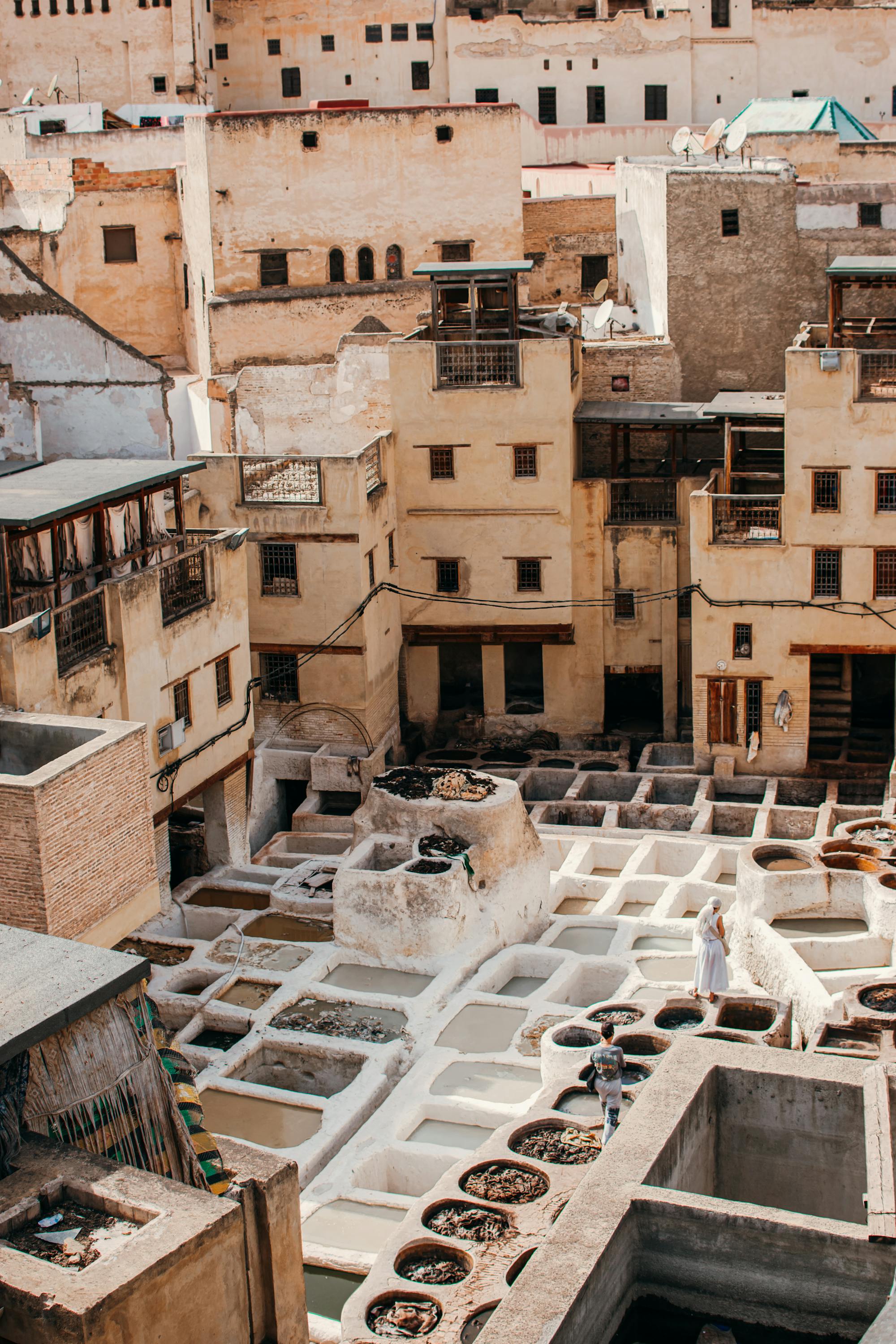
The Chouara tanneries are the most visited sight in Fes and one of the most visually arresting spectacles in Morocco — a series of stone vats filled with coloured plant dyes (saffron yellow, poppy red, indigo blue, henna brown) and white limestone, into which workers tread hides in an ancient process unchanged since the 11th century. The standard viewing point is from the leather goods shops that surround the tanneries at rooftop level — shop owners will invite you to their rooftop terrace (free, though a purchase or tip is courteous). The smell is significant — you'll be offered sprigs of mint to hold beneath your nose.
The Qarawiyyin Mosque and University
The University of al-Qarawiyyin, founded in 859 AD by Fatima al-Fihri and also known as al-Karaouine, is recognised by UNESCO and Guinness World Records as the oldest university in the world — older than Oxford, Bologna, or Paris. It stands in the Fes el-Bali medina, a UNESCO World Heritage Site designated in 1981. The Karaouine Mosque complex that surrounds it can only be partially viewed from outside by non-Muslims, but it remains one of the most significant sites in Islamic intellectual history. The scholars' library attached to the complex recently underwent major restoration and houses manuscripts of extraordinary age and importance.
The Fes el Bali Medina's Monuments and Bou Inania Madrasa
The Bou Inania Madrasa (1350–1355 AD), built in the 14th century, is the only medrassa in Fes to also function as a mosque and is open to non-Muslims — a masterpiece of Marinid architecture and one of the most beautiful buildings to visit, with three tiers of decoration (zellij tilework below, carved plaster in the middle, cedarwood screens above) of breathtaking complexity and precision. The Al-Attarine Madrasa adjacent to the Qarawiyyin is similarly magnificent, a 14th-century masterpiece of craftsmanship and among the medina’s most beautifully decorated beautiful buildings. The Mausoleum of Moulay Idriss II is another important monument in the medina and a significant pilgrimage site. The Dar Batha Museum in a 19th-century palace houses the finest collection of traditional Moroccan arts — zellige, woodwork, embroidery, and ceramics — in Fes. The Nejjarine Museum of Wooden Arts and Crafts is also one of the key places to visit for its focus on local woodworking traditions.
The Souks and Chouara Tannery
Fes's souk system sits within the Fez Medina, the largest medina in the world, with over 9,000 narrow alleyways containing an estimated 300 mosques, 200 medersas, and countless specialist trade quarters. The Talaa Kebira and Talaa Seghira (the "two slopes") are the main arteries running from Bab Bou Jeloud, the Blue Gate and main entrance to the medina, down into its heart; it's also a popular photo spot. A walking tour with a local guide can help tourists get oriented while exploring the narrow alleys and streets before deciding which places to visit in the Fez medina first.
Each trade occupies its own quarter: the woodworkers (marquetry of extraordinary delicacy), the brass and copper smiths (Seffarine Square, which rings with hammering as it has for centuries), the embroidery workers, the pottery district, the henna souk. If you visit, you'll also find a spice market, street food, food stalls, and bakeries that reveal daily life and the depth of Moroccan food.
Day Trips from Fes: Royal Palace and Beyond
For a rewarding day trip from Fes, a guided tour is an easy way to link nearby highlights without worrying about transport. The Roman ruins of Volubilis (60km north, 1 hour) are North Africa's best-preserved Roman city — extraordinary mosaics, triumphal arches, and olive presses spread across a hilltop site with views across the Saiss plain. Combined with the royal city of Moulay Idriss (nearby, a sacred town and Morocco's holiest city), this makes one of Morocco's finest trip ideas. The Middle Atlas cedar forests south of Fes shelter the last Barbary macaque populations in Morocco — accessible at Azrou (75km). The imperial city of Meknes (60km west) warrants a half-day or full day for its monumental Bab Mansour gate, granaries, and mellah, and we recommend spending enough time to enjoy all three stops at a relaxed pace.
Back in fes medina, Fes El Jdid is worth a detour for the Royal Palace and its immense brass gates, while nearby Bou Jeloud Gardens offer a peaceful escape from the chaotic medina. The historic Jewish Quarter here also includes the Jewish cemetery and the 17th-century Ibn Danan Synagogue, an important reminder of the city's Jewish heritage. For where to stay, we recommend staying in a riad for an authentic experience — its central courtyard, intricate tilework, and warm hospitality provide a calm retreat after exploring.