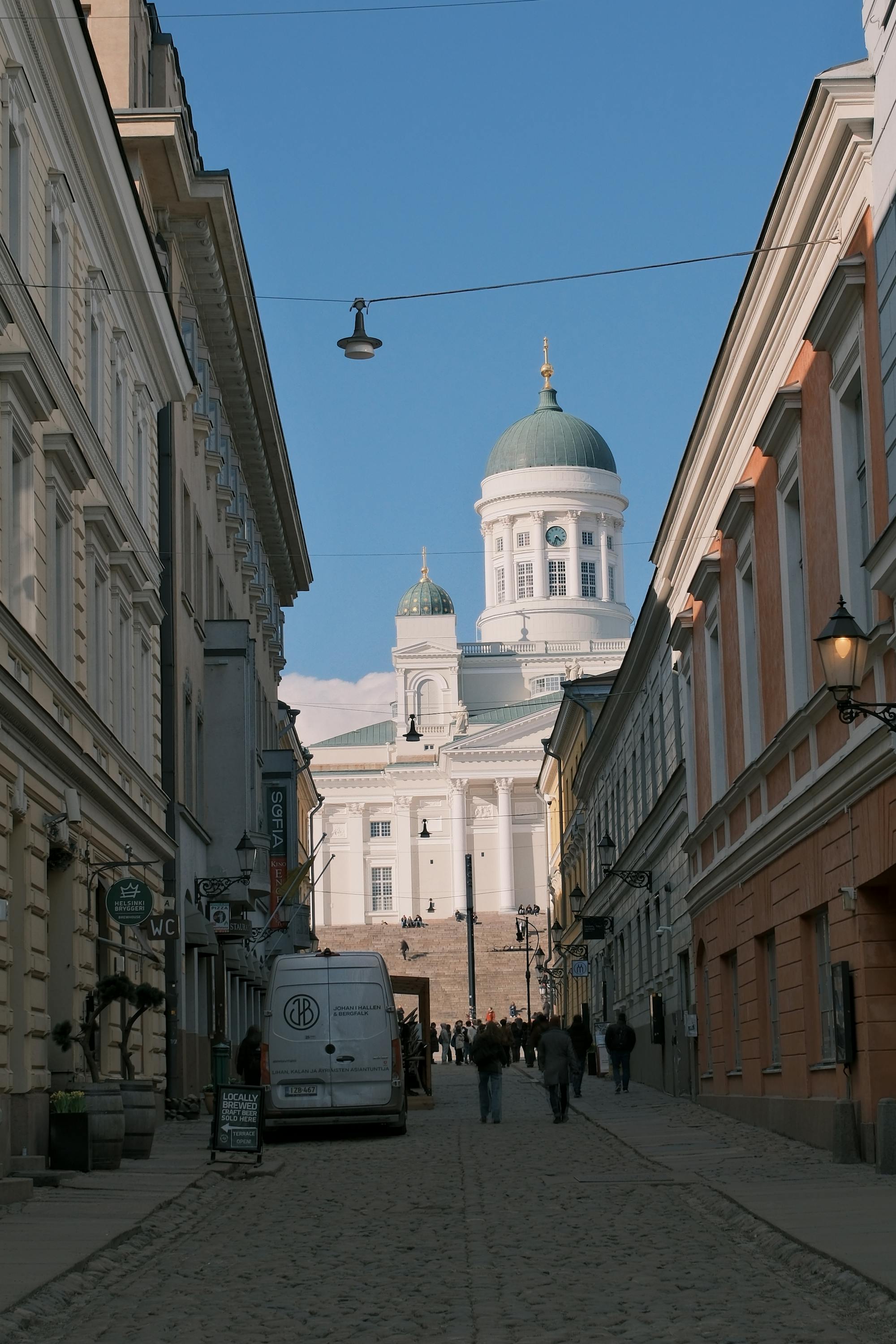
Helsinki is the Baltic's most quietly confident capital — a city of neoclassical grandeur, Nordic design excellence, and a deeply personal relationship with nature that expresses itself through sauna culture, archipelago islands, and forests reachable within the city limits. Finland's capital sits on a peninsula jutting into the Gulf of Finland, surrounded by 330 islands, and its harbour is one of Europe's most beautiful.
Helsinki is the Baltic's most quietly confident capital — a city of neoclassical grandeur, Nordic design excellence, and a deeply personal relationship with nature that expresses itself through sauna culture, archipelago islands, and forests reachable within the city limits. Finland's capital sits on a peninsula jutting into the Gulf of Finland, surrounded by 330 islands, and its harbour is one of Europe's most beautiful — ferries to Tallinn and Stockholm depart from just below the Market Square. Helsinki has a raw, honest quality that feels distinctly different from the polished capitals of Central Europe: it is a city that invites you to engage with it on its own terms, and rewards those who do.
Things to Do in Helsinki: Iconic Landmarks and Museums
Helsinki Cathedral (Tuomiokirkko) on Senate Square is the city's defining image — its white neoclassical facade and green dome, designed by Carl Ludwig Engel in the 1830s, are best appreciated from the broad granite steps leading up from the square. Senate Square itself, surrounded by the Government Palace, University, and National Library — all Engel designs — constitutes one of Europe's finest examples of neoclassical urban planning, and the nearby city museum is an easy cultural stop. The Helsinki City Museum, just by the cathedral, offers a concise introduction to the capital's history. Suomenlinna Sea Fortress, a UNESCO World Heritage Site spread across six islands off the city coast (15 minutes by public ferry), is an 18th-century maritime fortress and one of the largest in the world — the tunnels, museums, cafes, and rampart walks occupy a full day. The Ateneum Art Museum contains the finest collection of Finnish art, including classics by Akseli Gallen-Kallela and Albert Edelfelt. The Temppeliaukio Church (Rock Church), carved directly into a granite bedrock outcrop, is an architectural marvel of 1969 — its interior of exposed rock, copper dome, and acoustic perfection is extraordinary. Also known as Temppeliaukio Rock Church, it is hewn from solid rock and widely regarded as an unusual church. Uspenski Cathedral, with its red-brick Orthodox design influenced by St Petersburg, reflects the legacy of Russian rule and remains one of the largest such churches in Western Europe.
Neighborhoods Worth Exploring: Helsinki Cathedral
The Design District in the Punavuori and Ullanlinna neighbourhoods (southwest of the city centre) contains over 200 design shops, galleries, studios, and museums within walking distance — anchored by the Design Museum and the Museum of Finnish Architecture. Helsinki's Finnish design identity (Marimekko, Iittala, Artek) is best understood by walking these streets.
Huvilakatu is often called the most famous street here for its striking Jugendstil architecture and photogenic facades.
Kallio is Helsinki's alternative neighbourhood — working-class roots now overlaid with a vibrant bar and café scene, independent music venues, and some of the city's most affordable and creative restaurants. Hakaniemi adjacent to Kallio hosts an excellent covered market hall and the popular Sunday flea market on the square. Together, these central areas help make Helsinki a walkable city for exploring on foot.
Outdoor Activities and Parks: Nuuksio National Park
Helsinki, Finland's capital city and the Finnish capital, has a relationship with the outdoors that is fundamental to Finnish identity. The city's archipelago — 330 islands, many accessible by public ferry — offers kayaking, swimming, and hiking from May through October. On the Baltic Sea, island hopping is easy, with many spots just a short ferry ride from central areas. From spring to fall, a boat tour or canal cruise is also a scenic way to take in the waterfront and nearby islands. Pihlajasaari island (30 minutes by ferry) has the best natural swimming beaches. The Central Park (Keskuspuisto) extends 11km from the city centre northward — a genuine wilderness corridor of forest, meadows, and streams where moose have been spotted. Esplanade Park is another easy stop to relax, people watch, and in summer pick up treats from the ice cream kiosks. In winter, the seafront Allas Sea Pool with its heated outdoor pools and sauna offers year-round waterfront bathing. Cross-country skiing trails open throughout the park system in January and February. On a central walk, you'll also pass Finlandia Hall and the Finnish Parliament. For another outdoor stop, head to Sibelius Park for the monument to Finnish composer Jean Sibelius, then continue to nearby Café Regatta for cinnamon buns and decent coffee.
Food, Drink, Traditional Finnish Food, and Nightlife
Finnish cuisine has undergone a remarkable renaissance — Helsinki's culinary scene is world-class, with Restaurant Olo, Grön, and Nolla among Scandinavia's finest. Finnish food culture celebrates forest and sea, and traditional food as well as traditional Finnish food centers on reindeer, elk, salmon, cloudberries, lingonberries, and rye bread. The Old Market Hall (Vanha Kauppahalli) on the harbour by Market Square, also known as Kauppatori Market Square, is the most atmospheric place for Finnish specialities and a good stop for souvenir shopping. The Hakaniemi Market Hall is more local and less touristic. This harbour area is also one of the city's main attractions and popular tourist attractions. It's also an easy place to find decent coffee. Finnish sauna culture is the social counterpart to Denmark's hygge — public saunas like Löyly (architecturally stunning, on the waterfront) and Kulttuurisauna are the places to experience it. Craft beer culture is strong — Pyynikin Käsityöläispanimo and Bryggeri Helsinki are excellent.
Practical Tips to Get Around Helsinki
The Helsinki Card covers unlimited public transport (metro, trams, buses, and the ferry to Suomenlinna) plus free entry to over 30 attractions, including many worth visiting sights in downtown Helsinki — good value for 2+ day visits. Helsinki's tram network is the most enjoyable way to explore the city; Tram 2/3 makes a circular route past most major sights. Helsinki Central Station is also a major transport hub and an architectural landmark. English is spoken fluently throughout the city. Helsinki is Scandinavian in pricing — budget €15–€25 for lunch and €40–€60 for dinner with drinks. The public sauna experience typically costs €10–€20 including towel rental — essential to do at least once. Helsinki Airport is served by Finnair and budget carriers; the city centre is 30 minutes by train (Ring Rail Line) from the airport. The best time to visit Helsinki is June August for long days, though winter is also a strong season for snow, saunas, and festive markets. If you plan to visit Finland more broadly, match your route to the season so city breaks, lake regions, and Lapland all work well together. Helsinki also makes an easy base for a day trip to Nuuksio National Park. From the ferry terminal, it’s simple to reach the Estonian capital on the same trip and explore Tallinn's medieval old town. As a capital city in the Nordic countries, Helsinki worth visiting is an easy conclusion when planning what’s worth visiting nearby.