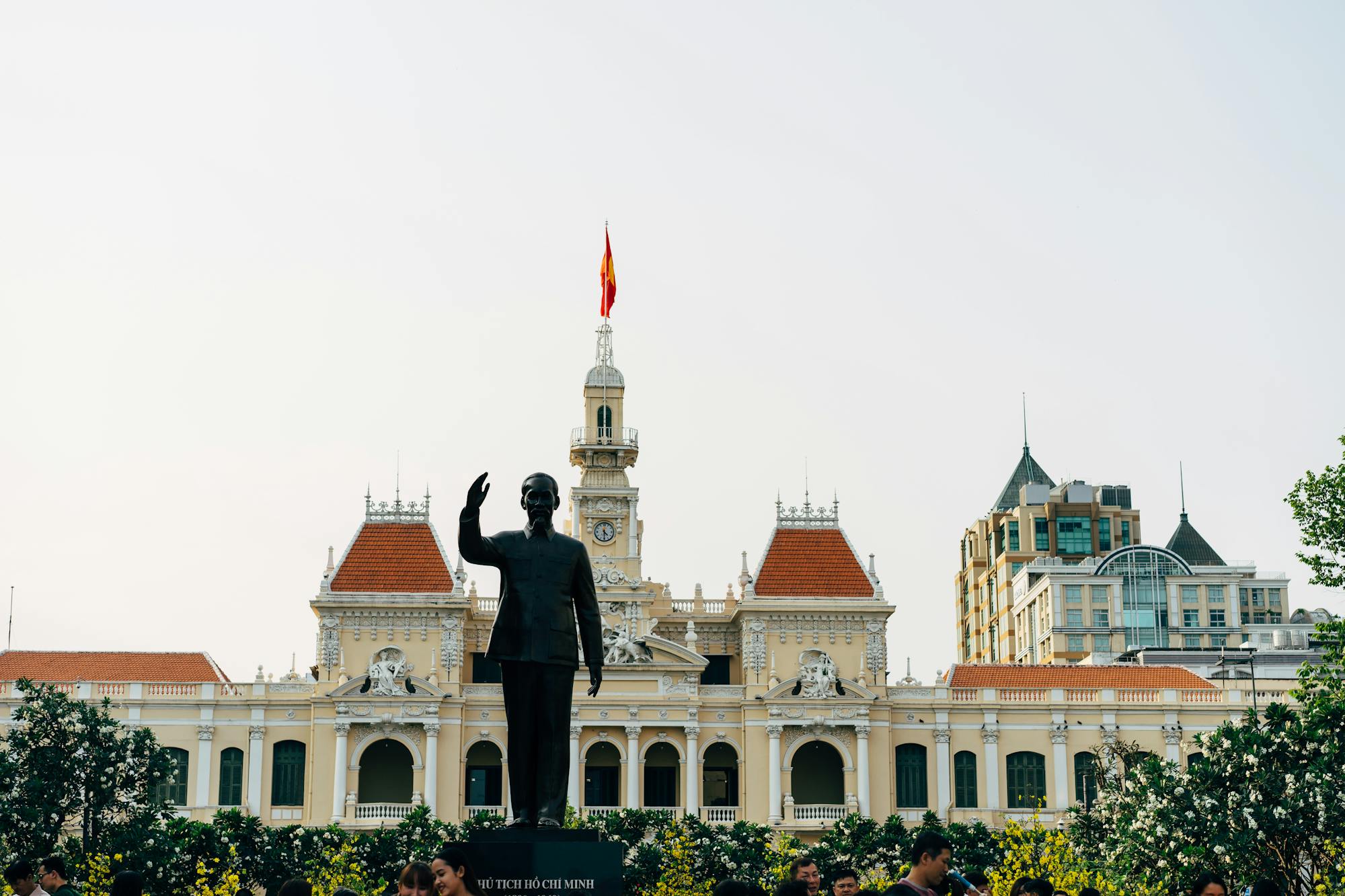
Ho Chi Minh City — still called Saigon by most locals — is a city of extraordinary contrasts. The scent of pho mingles with motorbike exhaust on streets where French colonial architecture stands beside glittering skyscrapers, a place defined by its turbulent history and relentless forward momentum that rewards history buffs, foodies, night owls, and adventurers alike.
Ho Chi Minh City — still called Saigon by most locals — is a city of extraordinary contrasts. The scent of pho mingles with motorbike exhaust on streets where French colonial architecture stands beside glittering skyscrapers. This is a place defined by its turbulent history and its relentless forward momentum: a city that lived through war and emerged as one of Southeast Asia's most dynamic metropolises. With more than 10 million residents, chaotic but thrilling traffic, world-class street food, and a museum culture that pulls no punches, Ho Chi Minh City rewards every type of traveller — history buffs, foodies, night owls, and adventurers alike.
Top Attractions
The War Remnants Museum in District 3 is essential, if confronting. Its exhibits of weaponry, photographs, and Agent Orange documentation provide a raw, unfiltered account of the Vietnam War from the Vietnamese perspective — allow at least two hours and prepare to be moved. A few blocks away, the Reunification Palace (also known as Independence Palace) preserves the moment history froze: the building where the last South Vietnamese president surrendered in 1975 still has its original 1960s décor, including the basement war room and communication centre. The Notre-Dame Cathedral Basilica of Saigon, a red-brick neo-Romanesque landmark built by French colonists in 1880, dominates Ben Thanh district and is best photographed at golden hour. Nearby, the Central Post Office — designed with input from Gustave Eiffel — is a functioning post office and one of the finest examples of French Indochina architecture on the continent. For contemporary culture, the Fine Arts Museum in a restored French colonial villa houses Vietnamese lacquer paintings, war-era posters, and rotating modern exhibitions.
Cultural Immersion
Wander into Cholon, the city's vast Chinatown in District 5, where the 19th-century Thien Hau Temple fills with incense smoke and worshippers burning offerings to the sea goddess. The buzzing Ben Thanh Market is touristy but authentic in its chaos — push past the souvenir stalls to find the covered food section where vendors have been serving bún bò Huế and bánh mì since dawn. For a deeper culinary dive, book a street food motorbike tour that whisks you through Districts 1, 3, and 4 after dark, stopping at hole-in-the-wall com tam (broken rice) spots and late-night chè (sweet soup) stalls. The Ao Dai Museum in District 9 offers a surprisingly absorbing look at Vietnam's traditional silk dress, with tailoring demonstrations and a collection spanning several centuries. On weekend evenings, the pedestrianised Nguyen Hue Boulevard becomes an open-air social club where families picnic, skaters perform, and food vendors roll out their carts.
Day Trips
The most significant day trip from Ho Chi Minh City is to the Cu Chi Tunnels, about 40km northwest of the city centre. This extraordinary network of underground passages — used by Viet Cong guerrillas to shelter, communicate, and launch attacks — extends over 250km. Visitors can crawl through sections of tunnel (some widened for Western frames) and explore the booby traps and bunkers that baffled American forces for years. Combine with a stop at the Cao Dai Temple in Tay Ninh to witness the noon ceremony of one of Vietnam's most distinctive syncretic religions, whose colourful architecture blends Buddhist, Taoist, Confucian, and Catholic imagery. Closer to the city, the Mekong Delta can be explored on a full-day boat tour from My Tho, weaving through waterways lined with coconut palms, stopping at floating markets and riverside workshops producing coconut candy and rice wine. For beach lovers, the coastal resort town of Vung Tau is just 90 minutes by high-speed ferry.
Food Culture
Ho Chi Minh City is arguably Vietnam's greatest food city. Start every morning with a bowl of hủ tiếu — the southern-style noodle soup with pork bone broth, minced pork, and fresh herbs — at a pavement stall. Bánh mì here is a revelation: baguettes baked fresh at dawn, stuffed with pâté, pickled daikon, coriander, and chilli. For the city's best, queue at Bánh Mì Huynh Hoa on Lê Thị Riêng Street, where the fillings spill over the sides. Bún thịt nướng (grilled pork vermicelli) and gỏi cuốn (fresh spring rolls with peanut dipping sauce) are street staples. At night, head to Bui Vien Street — known as the "backpacker street" — for cheap beer, grilled corn, and whole seafood. For something more refined, District 1's dining scene now includes acclaimed restaurants exploring modern Vietnamese cuisine with French technique. The city's craft beer scene has also exploded; try Pasteur Street Brewing Company for jasmine IPA and kumquat saison.
Practical Tips
Visa requirements depend on nationality — citizens of many countries now qualify for e-visas valid for 90 days, available at evisa.xuatnhapcanh.gov.vn. The best app for getting around is Grab, Southeast Asia's answer to Uber, which covers cars, motorbikes (GrabBike), and food delivery — essential for negotiating the city's labyrinthine traffic. The local currency is the Vietnamese Dong (VND); USD is widely accepted in tourist areas but always negotiate in VND to avoid unfavourable exchange rates. The city is hot year-round (28–35°C) with humidity levels that can be punishing; carry water and avoid outdoor sightseeing between noon and 3pm during the April–November wet season. Most temples require covered shoulders and knees — carry a sarong. Petty theft on motorbikes (bag-snatching) is a real risk: keep bags on the building-side of the pavement and avoid dangling cameras. Tap water is not safe to drink; bottled water is extremely cheap.