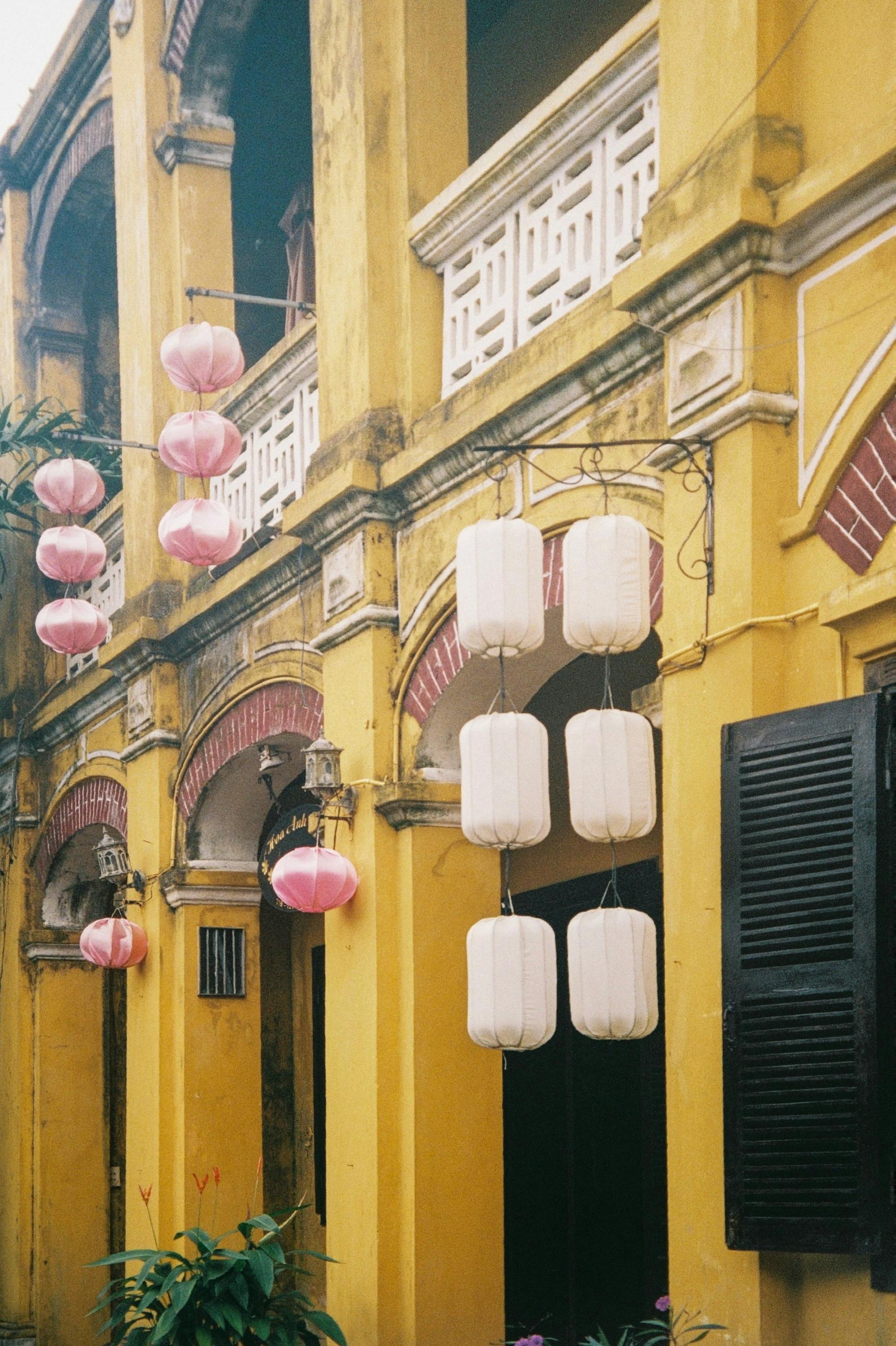
Hoi An is one of Southeast Asia's most perfectly preserved ancient trading ports — a lantern-lit riverside town in central Vietnam where yellow-washed merchant houses, ornate assembly halls, and Japanese-influenced covered bridges have stood largely unchanged since the 15th century. Today it captivates visitors with extraordinary beauty, a thriving tailor trade, some of Vietnam's finest cuisine, and the easy-going pace of a town that seems blissfully unrushed despite receiving millions of visitors a year.
Hoi An is one of Southeast Asia's most perfectly preserved ancient trading ports — a lantern-lit riverside town in central Vietnam where yellow-washed merchant houses, ornate assembly halls, and Japanese-influenced covered bridges have stood largely unchanged since the 15th century. This UNESCO World Heritage-listed Ancient Town was once one of the busiest trading posts in Southeast Asia, receiving Chinese, Japanese, Portuguese, and Dutch merchants who left their architectural DNA woven through every narrow alleyway. Today Hoi An captivates visitors with its extraordinary beauty, its thriving tailor and silk trade, some of Vietnam's finest cuisine, and the easy-going pace of a town that seems blissfully unrushed despite receiving millions of visitors a year. Beyond the Ancient Town, nearby An Bang Beach, the Cam Kim handicraft villages, and the sacred My Son Sanctuary add depth to any stay.
Top Attractions
The Ancient Town itself is the main attraction — a tangle of lanes lined with historic merchant houses, temples, and atmospheric tea houses, best explored on foot in the early morning before the tour groups arrive. The Japanese Covered Bridge (Chùa Cầu), built by Japanese merchants in the 16th century and adorned with carved monkeys and dogs, is the town's most photographed landmark and the symbol on the 20,000 VND banknote. Inside the Ancient Town, the Tan Ky Old House is an exquisitely preserved 200-year-old merchant's residence that has been lived in by the same family for seven generations — its interior blends Japanese, Chinese, and Vietnamese design elements in a single extraordinary space. The Assembly Halls of the Chinese communities — particularly the Fujian and Cantonese Assembly Halls — are lavishly decorated temples where incense spirals hang from the ceiling in massive coils. At night, paper lanterns of every colour illuminate the streets and the Thu Bon River, especially magical during the Full Moon Lantern Festival on the 14th of each lunar month, when electric lights are switched off and the town glows entirely by candlelight and lantern.
Cultural Immersion
Hoi An is Vietnam's tailoring capital — hundreds of shops can produce custom-made suits, dresses, ao dai (traditional Vietnamese tunics), and leather shoes within 24–48 hours. The quality varies enormously; established names like Yaly Couture and Bebe Tailor are reliable choices, though a walk down Tran Phu Street will reveal dozens of options. For culinary immersion, Hoi An is considered by food writers to have one of Vietnam's finest regional cuisines. Join a cooking class — most include a morning market tour where you choose ingredients — and learn to make cao lau (a smoky noodle dish unique to Hoi An, made with water drawn from a specific local well), white rose dumplings (bánh bao vac), and Hoi An-style pancakes (bánh xèo). The Hoi An Traditional Art Performance Theatre hosts nightly shows of Vietnamese music, dance, and martial arts. For handicrafts, visit the Tra Que Vegetable Village outside town, where farmers grow herbs using ancient organic methods and welcome visitors to join in planting and harvesting.
Day Trips
The most significant day trip from Hoi An is to My Son Sanctuary, a cluster of ancient Cham Hindu temples set in a jungle valley 40km southwest. Built between the 4th and 13th centuries by the Champa kingdom, this UNESCO World Heritage site is Vietnam's most important collection of Hindu religious architecture — though heavily bombed during the Vietnam War, the remaining towers are deeply atmospheric, especially in the early morning mist. Guided tours depart from Hoi An from around US$12. Da Nang, just 30km north, makes an easy half-day trip: the Marble Mountains (Ngũ Hành Sơn) are five limestone hills riddled with caves converted into Buddhist and Hindu shrines, and the city's seafront is lined with some of Vietnam's best mid-range seafood restaurants. An Bang Beach, just 4km from the Ancient Town by bicycle, offers a long stretch of uncrowded sand backed by simple shacks serving fresh seafood and cold beer — a world away from the tourist bustle of the old town.
Food Culture
Hoi An has a culinary identity distinct from both Hanoi and Ho Chi Minh City, shaped by its history as a trading port. Cao lau — thick noodles with pork, crispy croutons, and fresh herbs in a barely-there broth — is the dish most associated with the town, and it tastes best at Trung Bac restaurant or the stalls at the covered market. White rose dumplings (bánh bao vac) are translucent rice flour dumplings filled with shrimp and served with crispy shallots — delicate, beautiful, and unique to Hoi An. Bánh mì Phuong on Phan Chu Trinh Street became globally famous after Anthony Bourdain called it the world's best bánh mì; the queue still forms by 7am. For street food, the Central Market (Chợ Hội An) along the riverside is the place: a chaotic, fragrant maze of noodle stalls, fruit vendors, and spice merchants. At night, the market transforms into a string of open-air restaurants serving whole grilled fish, morning glory stir-fry, and pots of mì Quảng (turmeric-tinted noodles with pork and prawns). For drinks with atmosphere, the riverside bars along Bach Dang Street offer front-row seats to the Thu Bon River, especially magical during lantern festival nights.
Practical Tips
Entry to the Ancient Town is controlled via a ticket system: a combined ticket (around 120,000 VND) grants access to five heritage sites from a list that includes old houses, assembly halls, the covered bridge, a museum, and a performing arts venue. Tickets are checked at entrance booths. Bicycles are the ideal way to explore — every guesthouse rents them for US$1–2 per day, and the flat terrain and compact layout make cycling thoroughly practical. The town is extremely walkable but can feel overwhelming at peak times (10am–4pm); rise early and explore the quietest alleys before breakfast for the most atmospheric experience. Taxis and Grab operate here, though the Ancient Town's central lanes are pedestrian-only. The nearest airport is Da Nang International Airport, 40 minutes by taxi; no direct trains serve Hoi An (the nearest station is Da Nang). Most shops and restaurants accept Vietnamese Dong; some accept USD. Bargaining is expected at the market but not at the tailors, where prices are usually fixed after the initial quote.