India is the world's most overwhelming destination — and its most rewarding. No other country packs such extremes of beauty, chaos, spirituality, history, and sensory intensity into a single subcontinent.
India is the world's most overwhelming destination — and its most rewarding. No other country packs such extremes of beauty, chaos, spirituality, history, and sensory intensity into a single subcontinent. From the marble perfection of the Taj Mahal to the cremation pyres on the ghats of Varanasi; from the tiger reserves of Madhya Pradesh to the houseboat canals of Kerala; from the pink sandstone palaces of Rajasthan to the snow-capped Himalayan trekking routes of Ladakh and Uttarakhand — India defies easy summary. It is a country that simultaneously baffles and captivates first-time visitors, demands patience and rewards curiosity, and leaves almost every traveller who survives the initial sensory overload with a compulsion to return. With 29 states, each with its own language, cuisine, architecture, and cultural calendar, India is better understood as a continent than a country.
Top Attractions
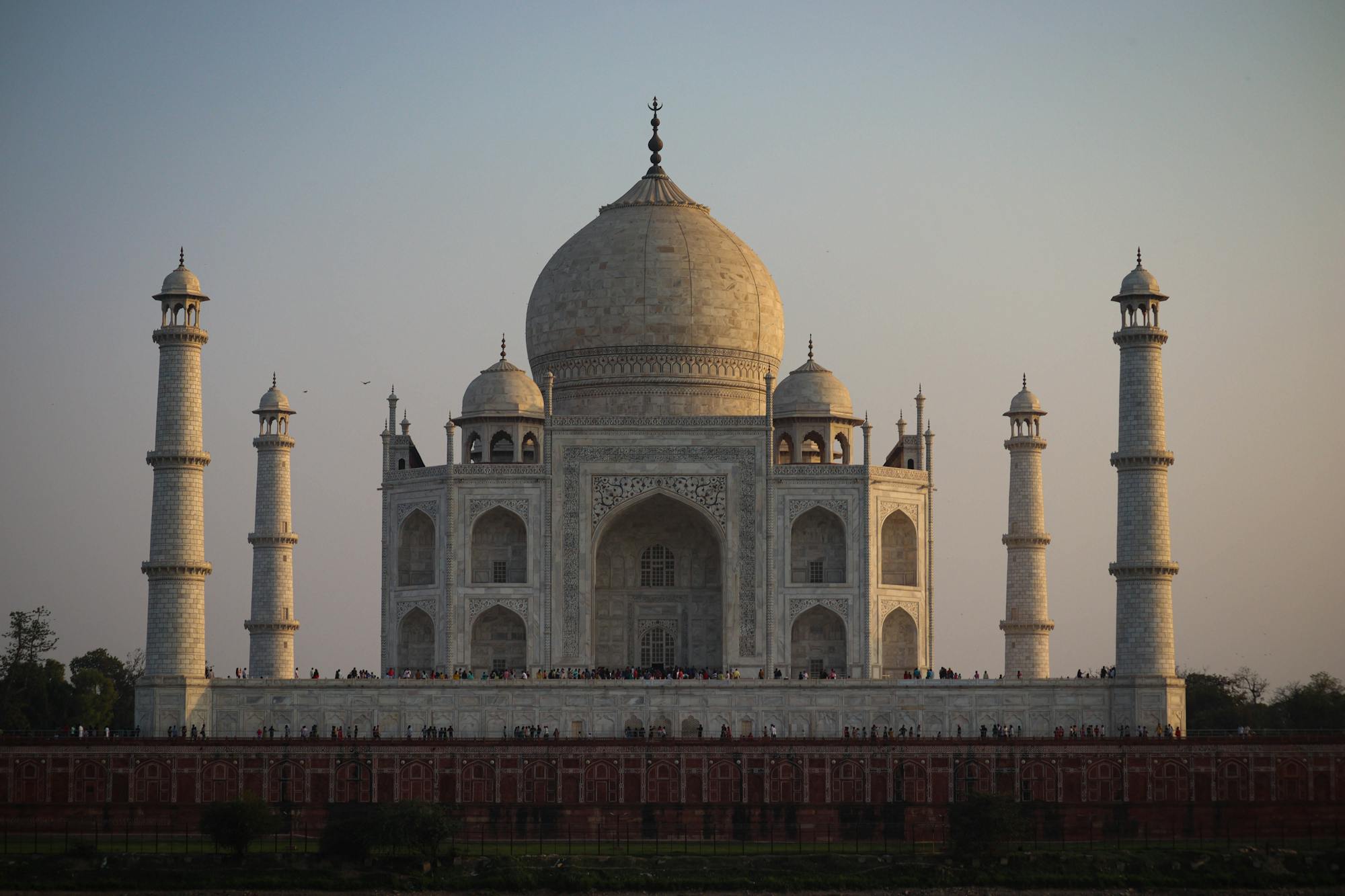
The Taj Mahal in Agra, built by Mughal Emperor Shah Jahan as a mausoleum for his beloved wife Mumtaz Mahal between 1631 and 1653, is the most perfect building on earth — a symphony of white marble inlaid with semi-precious stones, its proportions so mathematically precise that it appears to float. Visit at sunrise when the marble turns blush pink and the gardens are empty of midday crowds; book timed entry tickets online at asi.payumoney.com. Varanasi on the Ganges is Hinduism's holiest city and one of the world's oldest continuously inhabited settlements — its ghats (riverside steps) are the site of bathing ceremonies, cremations, and the nightly Ganga Aarti fire ceremony that draws thousands of worshippers and visitors to the river at dusk. The experience of watching the burning ghats at dawn from a rowing boat on the Ganges is among the most profound travel experiences anywhere on earth. Jaipur's Amber Fort, a fortified palace complex of honey-gold sandstone rising from a rocky hillside above Maota Lake, is Rajasthan's finest fort — its Sheesh Mahal (Mirror Palace) and Diwan-i-Khas (Hall of Private Audience) rank among the most beautiful interiors in India. Hampi, the ruined capital of the Vijayanagara Empire in Karnataka, scatters boulder-strewn landscapes with extraordinary 14th-century temple complexes, royal enclosures, and elephant stables — one of UNESCO's most underappreciated World Heritage Sites.
Cultural Immersion
India's cultural depth is inexhaustible. A cooking class in any Indian city is a revelation — whether learning to make Kerala fish curry with fresh coconut in Fort Kochi, rolling rotis and tempering dal in a Delhi home kitchen, or mastering the spice blends of Rajasthani cuisine in a Jaipur haveli. Classical dance performances — Bharatanatyam in Tamil Nadu, Kathakali in Kerala (with its elaborate makeup applied over two hours before the performance), Odissi in Orissa — preserve movement vocabularies thousands of years old and are among the world's most sophisticated performing arts. Attend a Sufi music concert (qawwali) at the Dargah of Nizamuddin Auliya in Delhi or the Ajmer Sharif Dargah in Rajasthan — the devotional music, performed late into the night, reaches an ecstatic intensity that transcends religious boundaries. For yoga and meditation, Rishikesh in Uttarakhand on the Ganges is the world's yoga capital — serious practitioners can study at traditional ashrams (Parmarth Niketan, Sivananda Ashram) for weeks or months, while shorter courses are available throughout the year.
Day Trips and Regions
India's scale means "day trips" often translate to overnight train journeys — the vast rail network connecting all major cities is the authentic way to experience the country. From Delhi, the Golden Triangle (Delhi–Agra–Jaipur) is the classic first-time itinerary, combining Mughal architecture with Rajput grandeur in a manageable circuit. From Mumbai, the Elephanta Caves (an hour by ferry across Mumbai Harbour) contain remarkable 6th-century rock-cut sculptures of Shiva, while the Ajanta and Ellora Caves (a full-day excursion or overnight) house the world's finest collection of ancient Buddhist, Hindu, and Jain rock-cut temples and paintings. The Kerala backwaters — a network of canals, lagoons, and lakes stretching 900km along the southern coast — are best explored from Alleppey (Alappuzha) on a rented houseboat, drifting through villages of coconut palms and rice paddies accessible only by water. From Kolkata, the Sundarbans mangrove delta — home to Royal Bengal tigers and the world's largest river delta ecosystem — makes a memorable two-day excursion.
Food Culture
Indian cuisine is not a single cuisine but dozens of distinct regional traditions united by a genius for spice, a reverence for fresh ingredients, and a philosophical approach to cooking that understands food as both nourishment and spiritual practice. North Indian cuisine — butter chicken, dal makhani, naan, biryani, kebabs — is what most of the world knows as "Indian food," shaped by the Mughal court's Persian and Central Asian influences. South Indian food is entirely different: crispy dosa (fermented rice and lentil crepe) served with coconut chutney and sambar, idli (steamed rice cakes), and the extraordinary rice-based thali meals of Tamil Nadu and Karnataka. Street food varies city by city: Mumbai's vada pav (potato fritter in a soft roll) and pav bhaji (spiced vegetable mash with buttered bread); Delhi's chaat (crispy puri with spiced potatoes, tamarind, and yoghurt); Kolkata's kathi rolls (flatbread stuffed with spiced egg and meat). The spice markets of Old Delhi (Khari Baoli, Asia's largest spice market) are an overwhelming, aromatic experience that clarifies why India changed the course of world history — the smell of cumin, cardamom, saffron, and dried chilli fills entire city blocks.
Practical Tips
Most nationalities require an e-visa, available online at indianvisaonline.gov.in — apply at least 4 days before travel, ideally earlier. India's rail network is the most efficient and atmospheric way to travel between cities; book tickets on irctc.co.in (requires registration) or through MakeMyTrip. Grab-equivalent apps: use Ola or Rapido for app-based auto-rickshaws and taxis in most cities — far more reliable than negotiating with street taxis. Cash (Indian Rupee, INR) remains essential for street food, markets, and smaller businesses, though UPI payments (Google Pay, PhonePe) are now accepted almost universally. Tap water is never safe to drink; carry a water filter bottle (LifeStraw or Grayl) to reduce plastic waste. Vaccinations recommended: Hepatitis A and B, Typhoid, Japanese Encephalitis (if going rural), and Rabies pre-exposure if trekking. The best months to visit most of India are October through March — the cooler, drier winter season — though the Himalayan regions are best in summer (June–September) and Kerala's monsoon (June–August) transforms the landscape into lush green abundance.