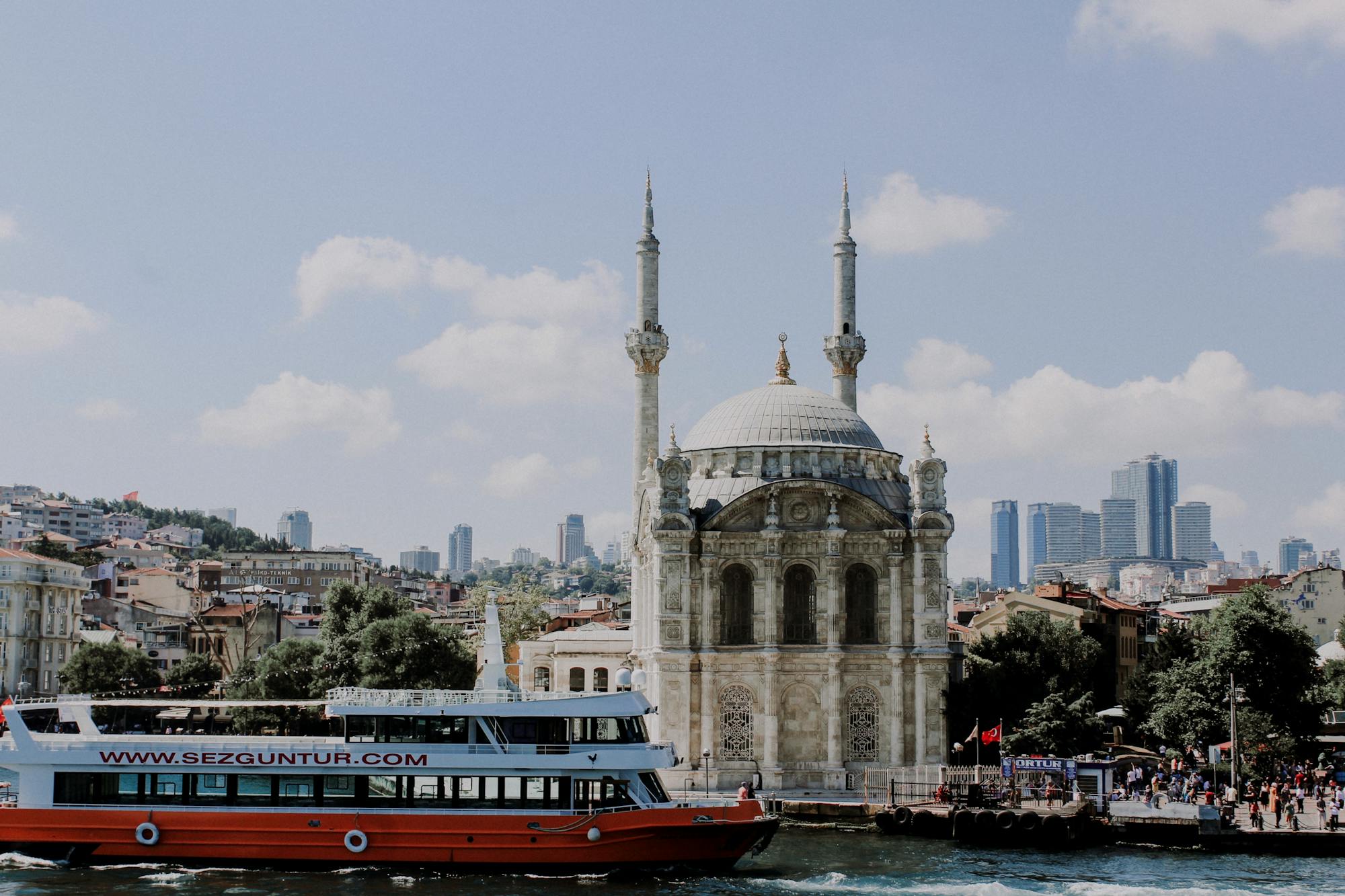
Istanbul is one of the world's great cities — a place where Europe and Asia meet across the shimmering waters of the Bosphorus, and where Byzantine domes and Ottoman minarets pierce a sky that has witnessed centuries of empire. Whether you're exploring its UNESCO-listed Old City, haggling for spices in the Grand Bazaar, or watching the sun set from a rooftop terrace with a glass of çay, Istanbul rewards every traveller with unforgettable moments.
Things to Do in Istanbul
Istanbul is one of the world's great cities — a place where Europe and Asia meet across the shimmering waters of the Bosphorus, and where Byzantine domes and Ottoman minarets pierce a sky that has witnessed centuries of empire. No other city on Earth so seamlessly blends the ancient with the contemporary, the sacred with the bazaar, the grand imperial with the intimate neighbourhood teahouse. Whether you're exploring its UNESCO-listed Old City, haggling for spices in the Grand Bazaar, or watching the sun set from a rooftop terrace with a glass of çay, Istanbul rewards every traveller with unforgettable moments.
Must-See Attractions: Blue Mosque and More
The heart of Istanbul's Old City (Sultanahmet) contains one of the densest concentrations of world-class monuments anywhere on the planet. Hagia Sophia — also widely called Hagia Sofia — is the city's defining landmark, built in 537 AD under Emperor Justinian as a cathedral and a foundational monument of byzantine architecture; it later became a mosque, then a museum, and now operates as a mosque again, its 32-metre dome a masterpiece of engineering that has awed visitors for nearly 1,500 years. Directly opposite stands the Blue Mosque (Sultan Ahmed Camii), also known as the Sultan Ahmed Mosque, constructed between 1609 and 1617 and famous for its cascade of domes and six minarets; visit in the early morning to see sunlight filtering through hundreds of Iznik tiles. The Topkapi Palace, home of the Ottoman sultans for four centuries, served as an administrative center of the Ottoman Empire, housed up to 4,000 people at its peak, and sprawls across the promontory above the Bosphorus with treasures including the Spoonmaker's Diamond and sacred Islamic relics; note that some sections, including the Harem, require an extra cost beyond the main entrance fee. Just below Topkapi, the Basilica Cistern is a hauntingly beautiful underground reservoir supported by 336 marble columns — the Medusa heads at the base of two columns are an unforgettable sight, and it's especially welcome in the summer heat. Across the Golden Horn, the medieval Galata Tower offers sweeping panoramic views over the city skyline and waterways. Round out your sightseeing at the Istanbul Archaeological Museums, which hold the Alexander Sarcophagus and thousands of artefacts spanning Mesopotamia, Egypt, and the ancient Aegean. These are among Istanbul's top attractions and key historical sites for a first visit.
Cultural Experiences at the Grand Bazaar
No visit to Istanbul is complete without losing yourself in the Grand Bazaar (Kapalıçarşı) — one of the world's oldest and largest covered markets, drawing around 400,000 visitors daily and housing over 4,000 shops selling everything from hand-painted ceramics and leather goods to gold jewellery and Turkish delight. Nearby, the Spice Bazaar (Mısır Çarşısı), also known as the Egyptian Bazaar, doubles as the city's historic spice market with around 85 stores. Haggling is expected in both markets. The Süleymaniye Mosque, built in the 16th century under Suleiman the Magnificent, is one of the city's most beautiful buildings, with elegant stained glass windows. The neighbourhood of Balat has been reborn as a bohemian hub of colourful houses, independent cafés, and vintage shops. The galata neighborhood adds another layer with cobbled streets, narrow streets, eclectic boutiques, and art galleries. In the evenings, head to Karaköy or Beyoğlu for live music, meyhane (tavern) dining, and the famous Istiklal Avenue. A traditional Turkish hammam experience — try the 16th-century Çemberlitaş or Cağaloğlu bathhouses — is a non-negotiable cultural ritual. The pera museum is a hidden gem for Ottoman and Orientalist art.
Day Trips and Excursions
A Bosphorus cruise is arguably the finest day trip from Istanbul, sailing along the Bosphorus Strait between the two continents past waterfront Ottoman palaces, including dolmabahçe palace with its 285 rooms and 46 halls, wooden yalıs (summer villas), and the dramatic Rumeli Fortress. Istanbul is the only city spanning two continents, which is why these crossings feel so distinctive. For anyone visiting Istanbul, a ferry ride is one of the best ways to experience both the European side and the Asian side of the city. Full-day cruises continue through to the Black Sea, while shorter trips depart regularly from Eminönü pier.
The Princes' Islands (Adalar) — a cluster of nine islands in the Sea of Marmara — make a wonderful escape: no cars are permitted, and visitors explore by bicycle or horse-drawn carriage. The largest island, Büyükada, can be reached on a short ferry ride of about 1.5–2 hours from Kabataş. Gülhane Park and Yıldız Park are also excellent free green spaces within the city.
Local Food and Drink Scene: Turkish Delight and More
Istanbul's food scene is a revelation. A food tour is one of the best ways to explore the city, and a typical one includes at least four food stops. Start each morning with a full Turkish breakfast (kahvaltı) — a spread of cheeses, olives, tomatoes, cucumbers, menemen, simit, and honey — best experienced in Karaköy or along the Bosphorus. Kadıköy Produce Market operates daily, with additional outdoor markets on Tuesdays and Fridays. Street food is outstanding: grilled corn, midye dolması, and balık ekmek (fish sandwiches served on the Galata Bridge) are quintessential Istanbul bites. Don't leave without trying İskender kebab, Cag Kebab, or the silky tavuk göğsü milk pudding. Drink Turkish tea (çay) constantly and finish the night with rakı alongside white cheese and melon at a Bosphorus-view meyhane, then end with baklava for traditional Turkish dishes.
Tips for Getting Around and Using Turkish Lira
Istanbul is a vast, hilly city of over 15 million people, but its main tourist areas are manageable. The İstanbulkart is an essential reloadable transport card that works on all public transport — trams, metro, buses, ferries, and funiculars — at a significant discount over single tickets. The T1 historic tram connects Eminönü through Sultanahmet to Kabataş. Ferries across the Bosphorus are not just practical but scenic — the Kadıköy to Eminönü route takes about 20 minutes, and fares are paid in Turkish lira. Use Google Maps or the Moovit app for real-time public transport navigation. Istanbul Airport connects to central districts like Taksim and Sultanahmet by shuttle bus, metro, or taxi, including for some Turkish Airlines layover passengers.